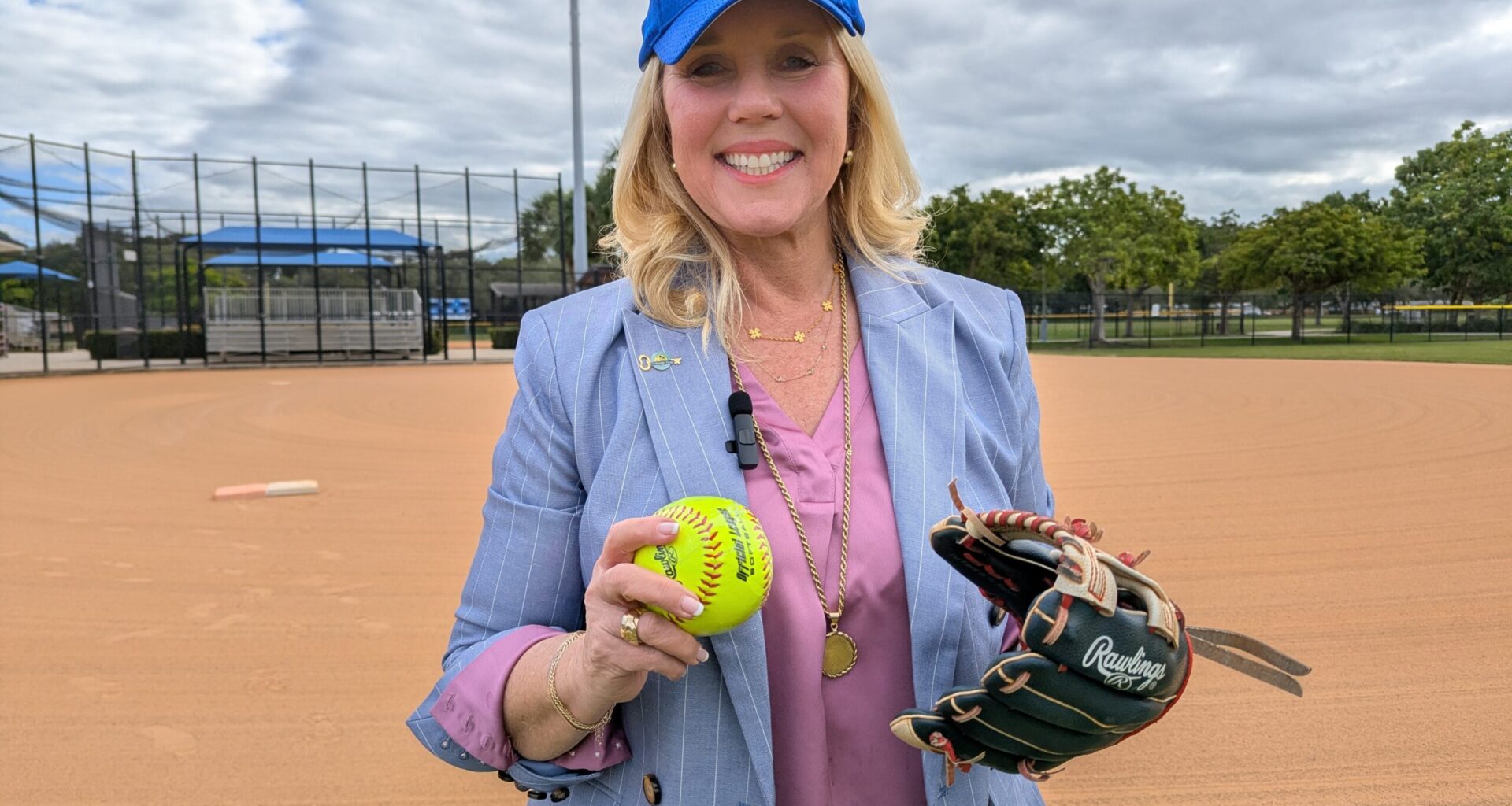
Mayor Karyn Cunningham on community, second chances, and the strength behind her leadership
For Palmetto Bay Mayor Karyn Cunningham, progress isn’t measured only in new sidewalks, improved drainage, or expanded parks. It’s also measured in neighbors looking out for one another, families gathering, and a village that still feels like home.
As she approaches the end of her final term, Cunningham reflects on her journey from first-grade teacher to mayor, the election loss that changed her approach, and why loving her community “too hard” became her greatest strength.
You’ve helped guide improvements throughout Palmetto Bay, yet you’re proud that some things haven’t changed. What do you mean by that?
“We’ve made some great advances over those years. The Complete Streets projects, the new sidewalks, a new green space (Veterans Park), a new Rec Center, stormwater projects, and in a few months a brand-new indoor pickleball facility, to name a few. But that’s the bones of the village. That’s what keeps us strong. The heart of the village is our people and our sense of community, and that hasn’t changed one bit.”
The Village of Parks has added and upgraded recreational spaces during your time in office. What makes those accomplishments meaningful to you?
“Those are all wonderful accomplishments, and we’re proud of them. While the structures and spaces themselves are amazing, it’s what happens there that really counts. It’s families gathering, and friends and neighbors coming together, and people making new memories and enjoying each other’s company. That’s what Palmetto Bay is all about.”
What first inspired you to run for office?
“I had gone to some Council meetings and didn’t feel like they were talking about the same things my neighbors were talking about, like street signs and potholes and the regular issues that affect your quality of life. I felt like if I ran for office, I could be a voice that was a little closer to the people.”
You lost your first election in 2012, then won a council seat in 2014. What did that first loss teach you?
“I find people in the Village to be exceptionally kind and compassionate and very educated. When I lost in 2012, I did my own research by asking folks if they voted for me and if not, why so I could better understand. Many of them said they had seen my mailers and liked what they saw on paper, but they didn’t know who I was. They hadn’t seen me involved in the community. So, I made a point of joining conversations happening throughout Palmetto Bay, not just in my own neighborhood, and I also became a member of the Education Advisory Board, which was a natural fit because of my long career as a teacher. I ran again in 2014 and won! I think it’s because I had more exposure and people felt more connected to me.”
How did becoming mayor change you personally?
“Honestly, it changed me more than I expected. Before I took office, I thought I understood this community well. I’d lived here for most of my life. But sitting in this chair, you start hearing from people you might never have crossed paths with otherwise. The conversations I had with residents at their doorsteps reshaped how I think about what this kind of service is for. I’ve also become a much better listener. Early on, I wanted to have an answer for everything. Now I’ve learned that people often just want to know they’ve been heard before anything gets fixed. And I’ve gotten more comfortable with the fact that not every decision will make everyone happy. That was hard for me at first, but I’d rather make the right call than the popular one. On a personal level, it’s made me even more patient and, I hope, humbler. My family and friends would probably tell you I’m busier than ever, but they’d also say I’ve grown. Serving this community has been the privilege of my life, and it’s made me a better neighbor, not just a better public servant.”
How did teaching first grade prepare you for the role of mayor?
“Everything I learned from teaching first grade has helped me as mayor in some way. You must be patient, and listen, and be able to connect. You also have to shift the focus sometimes, especially if a person is stuck on something and can’t seem to get past it. You can still address the issue, but we also need to keep things moving and get things done.”
You put a lot of emphasis on being accessible. What does that look like in everyday life?
“I’m a big believer in being present in the community and connecting with people in their own environments. People only tend to come to a Council Meeting when there’s an item on the agenda they feel very passionate about, but they have plenty of everyday issues on their minds too. Before I ran for office, I could go to the grocery store and finish my shopping in 30 minutes. Now I plan on spending twice that much time because people stop me to say hello or ask for an update on a project or to tell me about a concern. And sometimes people stop me to say they didn’t like something I did, and that’s fine too. Being able to speak our minds is what makes democracy so wonderful!”
What have those conversations taught you about the people of Palmetto Bay?
“Honestly, the main thing I’ve learned is that the people here really love Palmetto Bay. The people who moved here didn’t choose Coral Gables or a high-rise in Brickell. They chose Palmetto Bay because of our great schools, our low crime rate, and all the recreational opportunities. It’s just a really cool way of life. And people take so much pride in their community. Every neighborhood thinks theirs is the best. They become micro-communities where people care about each other and look after one another. People want to be here. It feels like home.
Your mother worried that you “loved too hard.” How did that become a strength in public service?
“My mother always told me I loved too hard, and she worried that would be my greatest flaw. It turns out, though, that’s been my greatest strength as a leader. When you love hard, you feel things deeply. You care deeply. You take things personally because they matter to you.
When people are hurting, you hurt with them. When something you care about is threatened, you stand ready to defend it. And when you believe in someone, or something, you give it everything you have. Palmetto Bay has believed in me and in turn I have loved Palmetto Bay hard. It’s the only way I know to serve.”
Does caring that deeply make leaving office more difficult?
“I’ve been preparing myself for a year, but it’s still going to be tough because I love Palmetto Bay so much. We have done a lot of great work in the last eight years, but I am also a believer that the best years are still ahead of us.”
What do you envision for your next chapter?
“My next chapter will bring new opportunities through Board work and good deeds in the areas that I am passionate about: children, historic preservation, and the underserved. It will be nice to do things that don’t always need a spotlight and spend more time with the family who has shared this journey with me.
I’m honored to be stepping in as the incoming Chairwoman of the Salvation Army Board. I will be the first woman in this role. I also was just appointed to the Board of ChamberSouth, which is very meaningful to me as we have done so much work with our local businesses. My calendar will look a little different, but I suspect some of the most meaningful days are still ahead of me.”
What legacy do you hope your time in office leaves behind?
“We have so much to love and be proud of here, and despite some negative politics, I think we’re more of a community now than we were before I took office. That was a team effort, because our staff members love hard too. They love Palmetto Bay and have done a great job taking care of it, so hopefully that legacy of love will pave a smooth path forward for the next mayor and council.”
As Palmetto Bay looks ahead, what should it hold on to?
“Residents want to keep what they have now. They want nice houses surrounded by lots of trees, and they want to wave to their neighbors as they walk to the park. That’s the fabric that’s been woven over the years, and they want to maintain it. Residents don’t want more development; they want safe streets and park amenities and great neighbors! There’s an old expression that if it’s not broke, don’t fix it, and there’s plenty here that’s not broken.”
Her mother worried she loved too hard, but Palmetto Bay is the proof that she loved it just right.
Connect To Your Customers & Grow Your Business