
TEMPLE TERRACE, Fla. — A bill introduced in Congress could allow qualifying small farmers to slaughter and process their own red meat livestock and sell directly to customers without a federal inspection, a change one Temple Terrace farmer said would help address limited access to inspected slaughterhouses.
The Red Meat Inspection Exemption Act would apply to small farmers who process and slaughter their own livestock for direct sale to customers. The legislation would also limit how many cattle, swine, sheep, or goats producers can slaughter annually.
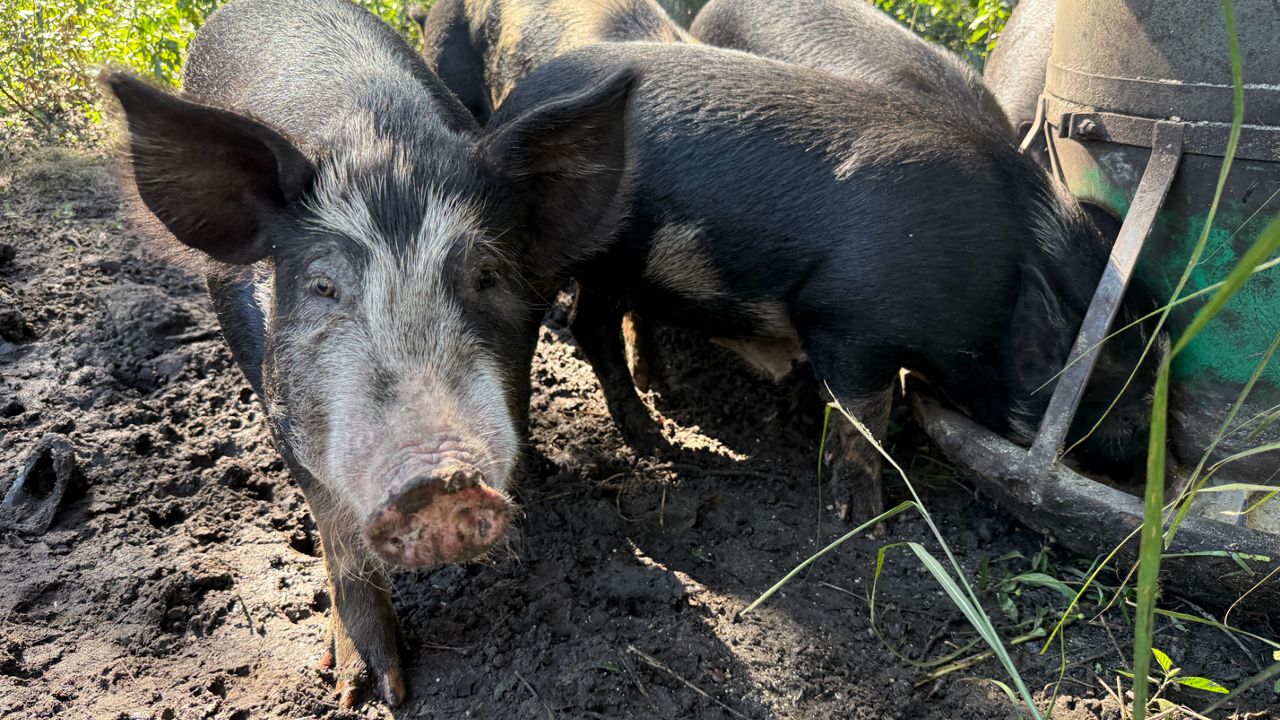
At TrailBale Farm in Temple Terrace, owner Travis Malloy raises chickens, pigs, and turkeys. Malloy, who has been a farmer for more than a decade, said he can already slaughter chickens and sell them directly to customers under certain inspection exemptions.
For pork, Malloy said he has to bring the animals to a U.S. Department of Agriculture-inspected slaughterhouse for processing.
“There are limited resources for slaughterhouses, for small farmers in Florida,” Malloy said. “They’re a far drive or they’re multiple steps. It’s a huge issue.”
Malloy said the bill would allow him to keep more of the process on the farm.
“The pigs wouldn’t have to leave the farm in trailers and be stressed, and we’d be able to take that stuff right to our customers who already know us and look them in the eye and tell them what we did,” Malloy said.
Lauri Wright, a registered dietitian and associate professor of nutrition at the University of South Florida, said she understands farmers face barriers related to transportation and cost. But she said removing the federal inspection requirement raises food safety concerns.
“Without that inspection, we are really losing a whole line of defense,” Wright said. “Just because a meat looks OK, it doesn’t tell us whether or not there are actual microorganisms that could make us sick.”
Wright said people often believe locally grown food is safer, which she said can be true for produce, but meat raises other questions.
Malloy said food safety remains a concern, but added that his customers can see the process firsthand.
“Food safety is a huge concern, and it can be done wrong, but it is something that there’s tons of experience and tons of knowledge out there on how to do it properly,” Malloy said. “And like I said, nobody wants to see anyone sick.”
The legislation requires exempted products to still comply with any food safety or special handling requirements established by the USDA.