
As housing and living costs continue to climb across South Florida, some people are turning to an unexpected place for help: community court.
Held at a community center in Pompano Beach rather than a traditional courthouse, the jail diversion program is designed to assist people charged with city ordinance violations, including panhandling and trespassing. Many participants are experiencing homelessness.
Cassandra Rhett is the community court coordinator and Pompano Beach’s housing and social services manager.
“If they feel like it’s a regular courtroom it’s scary, you know, and we don’t want them to feel scared,” Rhett said.
“There is a judge, but she doesn’t judge,” she added.
“Welcome to Community Court. We’re glad you’re here,” Broward Judge Kathleen Angione told a participant.
There’s a table set up for defendants with cases in front of the judge.
But an increasing number of people – who are not charged with anything — are showing up simply seeking help. The program’s services include mental health, medical screenings, help getting identification, employment, and housing.
One of those walk-ins was 34-year-old Yessenia Hernandez. The single mother arrived at Community Court in July with her three children.
“It’s a struggle,” Hernandez said.
After the day’s official proceedings ended, she had the chance to speak with Judge Angione.
“I’m just coming to see what kind of help I can get for my family,” Hernandez said.
During their discussion, Hernandez described the challenges of finding affordable housing.
“They’re all asking for like three months of rent to move in,” she said.
Angione asked Hernandez about her employment history.
“What kind of work do you do?” the judge asked.
“I was doing FedEx and before that I was waitressing,” Hernandez replied. “I wasn’t working for a little while because we were in a situation where we didn’t want to pay for childcare because it was more than rent.”
After the hearing, Hernandez told NBC6 she was considering leaving South Florida.
“I can’t stay here, it’s not sustainable for me,” Hernandez said. “My plan is to move to Tallahassee in the next year.”
Her teenage daughter said the prospect of relocating has been difficult.
“It’s kind of hard for me hearing that we might move to Tallahassee,” she said.
Hernandez’s situation reflects a broader affordability crisis affecting many families.
“People are really, really hurting,” Rhett said.
She said long waiting lists for affordable housing limit what service providers can do.
“We cannot house everyone. It’s just impossible. It’s just not there,” Rhett said.
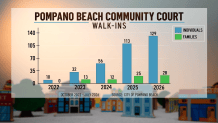
According to Pompano Beach data, the number of community court walk-ins, including both individuals and families, has steadily increased over the years since the program began in 2022.
The court’s goal is to connect people with resources. “Do we have the job list that we can give her?” the judge asked.
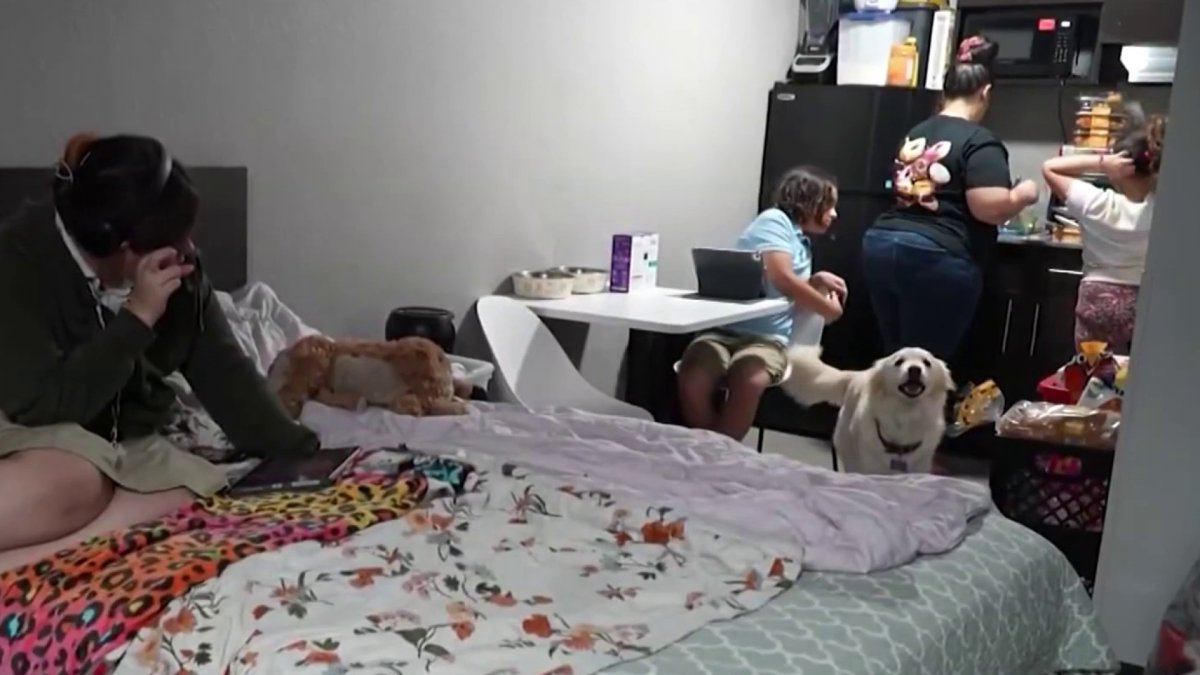
Nearly three months later, NBC6 caught up with Hernandez after she finished a shift at a Dunkin’ location. She has been employed there since August but still does not have permanent housing.
Hernandez and her children are living in an extended-stay motel. She said she followed up with a service provider she met through community court in hopes of receiving assistance with move-in expenses and initial rent payments. But so far, she’s had no luck.
“They told me my case was closed and they didn’t know why. That I had to restart the process all over again. So, I’m doing that now. It’s probably a shelter after that,” Hernandez said.
NBC6 asked Rhett about Hernandez’s case, and she said she’s looking into it.
Despite the setbacks, Hernandez remains optimistic.
“I’m hopeful that we’ll get to a point where something will come through where we can live in a stable place, in one place for a while,” she said.
There are three community court locations in Broward County: Pompano Beach, Fort Lauderdale, and Hollywood. All accept walk-ins for those looking to access the program’s basic services.