
Two state measures are changing both how much money Florida municipalities might have to spend and which programs they may fund with it.
Amendment 3, which goes before voters in November, could sharply reduce property-tax revenue. Meanwhile, Senate Bill 1134, effective Jan. 1, 2027, will prohibit counties and municipalities from funding offices, employees and programs that support diversity, equity and inclusion (DEI).
In Miami Gardens, North Miami and Opa-locka, officials have reduced or proposed eliminating cultural celebrations and frozen vacant positions as a result. City leaders are debating whether limited event money should support infrastructure and essential services instead.

The North Miami mayor and city council during budget hearings.
(NoMi TV)
Together, these municipalities are showing how decisions in Tallahassee are reaching into budgets across Miami-Dade County and Florida.
Amendment 3 puts future revenue at risk
“Over the last several months, we’ve been dealing with an issue — or issues, I should say — that have come about via state recommendations from the governor and the state Legislature regarding property tax,” Miami Gardens City Manager Cameron Benson said during the municipality’s first budget hearing. “That issue has been a driving force not only for the City of Miami Gardens, but a driving force throughout the state of Florida.”
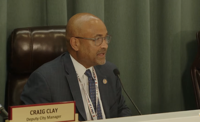
Miami Gardens City Manager Cameron Benson.
(City of Miami Gardens via YouTube)
The amendment would raise the homestead exemption from $50,000 to $150,000 in 2027, and again to $250,000 in 2028. It would also lower the annual assessment cap for non-homesteaded and commercial properties from 10% to 5%.
Miami Gardens maintained its 6.9363-mill operating rate and passed a general-fund budget of approximately $128 million. Officials estimate Amendment 3 would cost the city about $9.7 million in the first year and $14.2 million in the second.
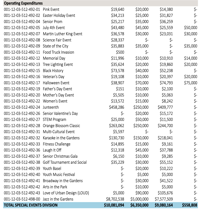
Miami Gardens’ FY 2027 budget cuts and event allocations.
(City of Miami Gardens)
“What does it impact? Obviously, it reduces the single greatest revenue source for local governments,” Deputy City Manager Craig Clay said. “It impacts our bond ratings, making it more expensive to borrow money if we so choose to do so.”
Cities might also have to raise user fees because, Clay said, “the revenue source has to be made up somewhere.” Miami Gardens officials froze vacant positions and reduced discretionary spending, including for events, reducing the city’s special-events allocation from approximately $6.3 million in the 2026 adopted budget to $558,808 in the proposed 2027 budget.
Meanwhile, North Miami adopted a 7.4-mill rate and a $238 million budget without incorporating a possible loss resulting from Amendment 3. Still, during budget hearings, officials estimated the city could lose about $5 million in the first year and another $7 million in the second.
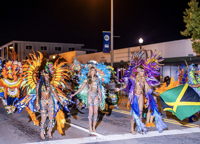
North Miami celebrates diverse cultures and heritages through special events.
(North Miami via Facebook)
“If it does pass, a lot will be changed,” Desulme said. “We did not budget on something that may happen in the future. We have a balanced budget based on the current situation.”
He warned of the amendment’s effects anyway.
“It’ll eliminate when you call the police, because we won’t have that many police out there,” he said. “Libraries are going to be cut. Your streets won’t be cleaned at the same time. All of these things — I think a lot of people take for granted the services that they get because they don’t understand local government.”
The Florida Policy Institute estimates the measure would reduce funding for public services by $13.7 billion statewide during its first two years.
“Half of our budget comes from property tax,” Desulme said. “If you eliminate that, we’ve got to make that up somewhere.”

“When it restricts our ability to support local programming and puts us local officials under threat, it’s just a blatantly discriminatory bill.” -North Miami Mayor Alix Desulme
(City of North Miami)
SB 1134 redraws local event calendars
Florida lawmakers passed SB 1134 in March, and Gov. Ron DeSantis signed it in April. Clay said the law prohibits the use of public money “to support, staff or promote DEI offices, officers or programs.” It covers activities based on race, color, sex, ethnicity, sexual orientation or gender identity, with exemptions for federal and state holidays and federally required activities.
Miami Gardens, the largest Black-majority city in Florida, eliminated numerous events meant to honor its community’s culture.
The eliminated events include the Black History Celebration, Broadway in the Gardens, Easter activities, the golf tournament and social, Karaoke in the Gardens, Laugh It Off, Love of Urban Design, the Orange Blossom Classic, the women’s event, Youth Basel, the Youth Music Festival and the Pink Event. Together, they were allocated $720,000 in the 2026 fiscal year budget, though actual spending reached $824,788.

Women’s events are also cut from the Miami Gardens budget.
(City of Miami Gardens via Facebook)
The most significant cut was against Jazz in the Gardens, the city’s annual festival celebrating Black music, art and culture. The 2026 adopted budget designated $5 million for the event, but its actual cost was about $7 million, according to the budget document. There is currently no funding for the city’s premiere entertainment event in the 2027 proposed budget, though city council members said they’d reassess how much money they can restore for events if Amendment 3 does not pass.
The budget kept the Fall Festival, July Fourth, Memorial Day, Martin Luther King Jr. Day and Veterans Day. The city’s fitness challenge, holiday tree lighting, senior prom, senior Valentine’s Day, senior holiday gala and Father’s Day, Mother’s Day and Juneteenth were all moved into regular Parks and Recreation programming.

The 2026 rendition of Jazz in the Gardens.
(Jazz in the Gardens via Facebook)
Benson said the cuts also reflected the city’s reassessment of event costs.

Miami Gardens’ special event cuts.
(City of Miami Gardens via YouTube)
“Over the years, the City has grown accustomed to hosting multiple events on an ongoing basis,” Benson said in a statement to The Miami Times. “While production costs increased, attendance decreased. Therefore, it’s now a critical time for the City to re-evaluate some activities, especially with a potential loss of significant revenue on the horizon and uncertainty.”
For instance, though this year’s Jazz in the Gardens cost about $7 million to produce, it only generated about $294,000 in direct revenue for the city. The Miami Times calculated that figure based on public records.
North Miami reduced its Parks and Recreation budget by $410,000, leaving $2.75 million for events. Desulme said decisions involving events connected to particular communities were guided by SB 1134, not Amendment 3.
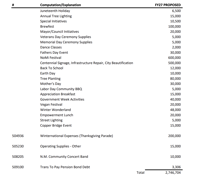
North Miami’s FY 2027 budget for events.
(North Miami)
“The events cuts are on the DEI bill. It has nothing to do with Amendment 3,” Desulme said in an interview.
The city eliminated Haitian Heritage Month programming and other activities associated with specific communities, including for Pride Month. Florida has not released rules on how local governments should adhere to the new anti-DEI rules, leaving elected leaders and administrators to speculate on how to comply.
“None of us know how this bill is going to impact us. That’s number one,” Desulme said. “We don’t even know if we are able to attend an event because they have not identified what DEI is. I’ve asked my city attorney, and I know other cities have asked.”
Under the law, an official who violates the restrictions — such as by approving funding, adopting a resolution or maintaining a prohibited program — is committing misfeasance or malfeasance in office, which could provide grounds for suspension or removal. Residents may also sue local governments to enforce the law.
“When it restricts our ability to support local programming and puts us local officials under threat, it’s just a blatantly discriminatory bill,” Desulme said.
He called it “a racist bill” that selectively affects cultural recognition.
“We are a very diverse city, one of the most diverse in the state of Florida,” he said. “When they eliminate that entire month [Haitian Heritage] — one of my colleagues does a Soup Joumou event every year on the first of the year; that’s obviously eliminated — what does that do to another person, just celebrating a culture? How is that hurting another person?”

North Miami’s Soup Joumou.
City of North Miami via Facebook
North Miami has the largest Haitian population of any city in South Florida, with roughly 22,000 to 22,730 residents, or about 36% to 38.2% of the city’s total population.
Opa-locka weighs events against infrastructure
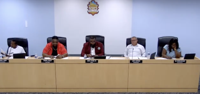
The City of Opa-Locka mayor and commissioners during a budget hearing.
(City of Opa-locka via YouTube)
Opa-locka’s debate combined uncertainty over SB 1134 with a push to redirect discretionary spending toward infrastructure.
City Manager Shamecca Lawson initially recommended cutting the events budget from $291,250 to $47,600, eliminating city-sponsored celebrations, commission-requested events and other observances while retaining nationally recognized holiday programs.
Her revised proposal would provide $64,450 — a $226,800, or 77.9%, reduction. It would retain $47,600 for nationally recognized holidays and $16,850 for commission events.
The largest reduction would come from suspending the Arabian Nights/City Birthday Celebration and school-bookbag activities, totaling $201,000. Commission-requested events — including a baby shower, chess and dominoes, and karaoke — would be reduced by $14,800.
Another $11,000 would be cut by eliminating events tied to Black History Month, Conga Locka/Hispanic Heritage Month, Haitian Heritage Month, Halloween Fun Night and National Day of Prayer.
Although SB 1134 influenced which programs commissioners believed could remain, Lawson framed the overall reduction as an infrastructure decision.
“I would like to cut all of the events so we can focus on our infrastructure,” she said. “It’s not going to be a lot, but it will be a start somewhere.”
Opa-locka ultimately adopted its $71.7 million budget without the additional cuts. Lawson is scheduled to return Oct. 14 with the proposal as a budget amendment and recommends placing the savings in a separate infrastructure line.
Mayor John H. Taylor did not respond to multiple interview requests about the potential impacts of Amendment 3 and SB 1134.