

PALM HARBOR, Fla. — As rising housing costs continue to put homeownership out of reach for many Americans, U.S. Housing and Urban Development Secretary Scott Turner visited Palm Harbor on Tuesday to discuss the Trump administration’s efforts to make buying a home more attainable, particularly for younger Americans.
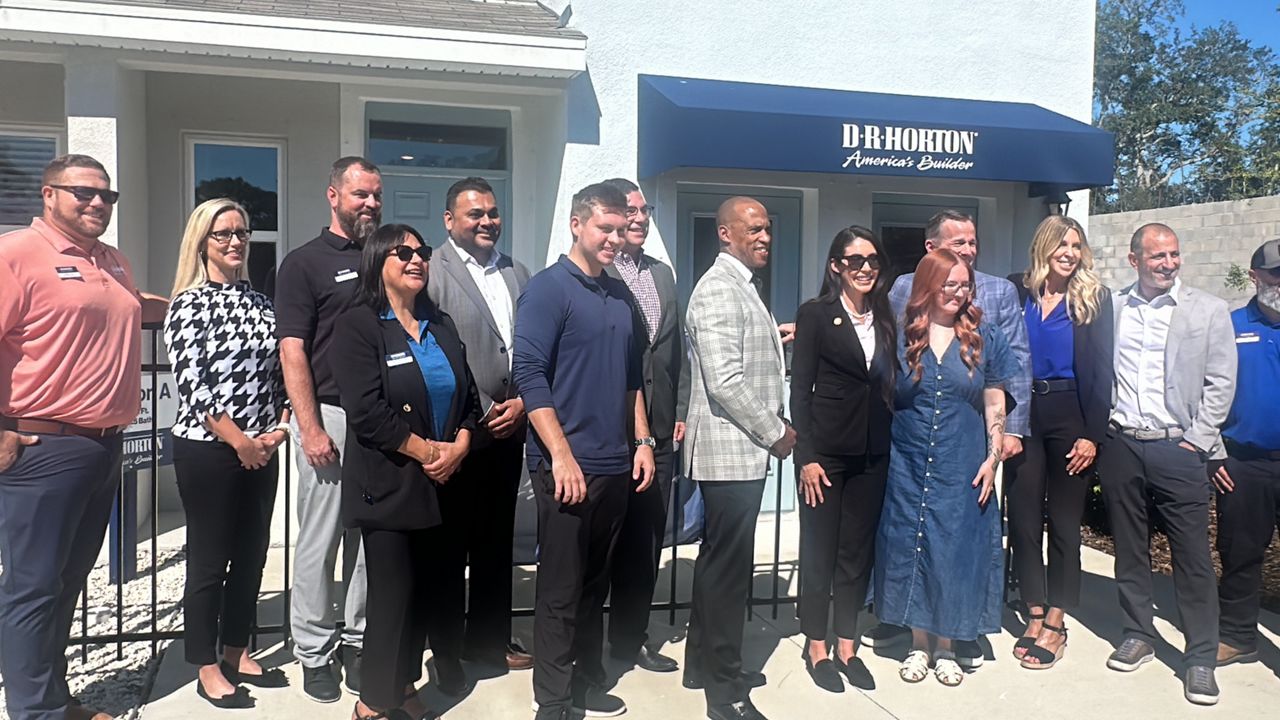
Turner joined Republican U.S. Rep. Anna Paulina Luna at a D.R. Horton development for a roundtable with real estate professionals, homebuilders, and young residents of Florida’s 13th Congressional District.
The discussion included first-time buyers who had recently purchased homes and others still struggling to enter the housing market. Representatives from D.R. Horton also discussed their approach to building more affordable homes.
The visit comes as the typical first-time homebuyer is getting older.
According to the National Association of Realtors’ 2025 Profile of Home Buyers and Sellers, the median age of first-time buyers reached a record 40, while their share of home purchases fell to a historic low of 21%.
Turner said the administration wants to reverse that trend by removing obstacles to home ownership and increasing the nation’s housing supply.
“We want to focus on the young Americans to get them into the real estate game and to build generational wealth,” Turner said during the visit.
Turner says our country has a need of between 5 million to 7 million housing units. He added that single-family homes, multifamily housing, condos, and manufactured housing all play a big role in that.
At HUD last year, he says, it helped 1.5 million people become homeowners. Of those, 80% were first-time homebuyers.
Cutting construction costs and expanding housing supply
Turner identified regulatory requirements and construction costs as barriers to producing more affordable housing.
The administration has pushed to streamline federal rules and encourage additional residential development, arguing that increasing the number of available homes would help ease prices.
Luna said the federal government should also address purchases of single-family homes by large corporations, which she argues can make it harder for individual buyers to compete.
“I think was one of the brain children behind the idea that we need to stop massive corporations from buying up single-family homes, but also to cut back on some of the red tape that was preventing home builders from actually being able to build up,” Luna said.
She also pointed to potential trade negotiations involving Russia and Ukraine, suggesting that an agreement could increase access to construction materials, including lumber.
But Democrats have raised concerns about the impact of tariffs on construction costs.
Leela Gray, a Democratic candidate for Luna’s seat (Florida’s 13th Congressional District), pointed to the United States’ reliance on Canadian lumber.
“Think about Canada. We get a huge amount of lumber from Canada. The fact we put on so many tarriffs, of course it’s going to impact the cost of housing,” Gray said.
Gray also argued that responsibility for the nation’s housing affordability problems extends beyond one political party.
“The fact that we have been watching this go unattested and allowed to go on for so long tells you that both sides of the aisle have not been doing their job,” she said.
New credit-scoring options could help first-time buyers
Beyond expanding housing construction, Turner highlighted an upcoming change to the way credit-worthiness can be evaluated for mortgages insured by the Federal Housing Administration.
Beginning Jan. 1, 2027, the FHA will accept two additional credit-scoring models — VantageScore 4.0 and FICO Score 10T — alongside traditional FICO scores.
The change could benefit prospective homebuyers who regularly pay rent and utilities on time but have limited traditional credit histories.
Unlike some older credit-scoring approaches, the newer models can incorporate certain rental payment records and other financial information when that data is available.
Turner said those payments can demonstrate financial responsibility even when they have not historically contributed to a person’s credit score.
“It’s a stewardship model. We teach our children and young people, hey, pay your bills on time, pay your rent on time and utilities on time. But hence from this point, historically, they haven’t gotten credit for that,” Turner said.
The change does not guarantee mortgage approval. Applicants must still meet FHA requirements, including applicable income, debt, and other underwriting standards.
It also does not automatically mean every rent or utility payment will be reflected in a borrower’s credit score. The relevant payment information must be available to the scoring model.
A continuing affordability challenge
Although federal officials say additional construction and expanded credit-scoring options could help more Americans become homeowners, qualifying for a mortgage is only one part of the challenge.
Buyers must also contend with home prices, down payments, borrowing costs, and ongoing expenses such as property taxes and homeowners insurance.
For younger households, these costs can delay homeownership and the opportunity to accumulate equity.
Turner said HUD’s broader goal is to expand access to homeownership and help more Americans build long-term financial stability.
Turner’s Tampa Bay itinerary also included a scheduled visit to the Tampa Police Athletic League to highlight a HUD partnership focused on youth sports.
For prospective homebuyers, the impact of the administration’s initiatives will depend on whether they translate into more available homes, lower costs, and improved access to financing.