
TAMPA, Fla. — What if utility companies could spot trouble on the power grid before it causes an outage?
That’s the goal of a $3.8 million research project involving the University of South Florida (USF) and Tampa Electric. Researchers are developing technology designed to detect potential problems on the electric grid before they escalate into larger disruptions.
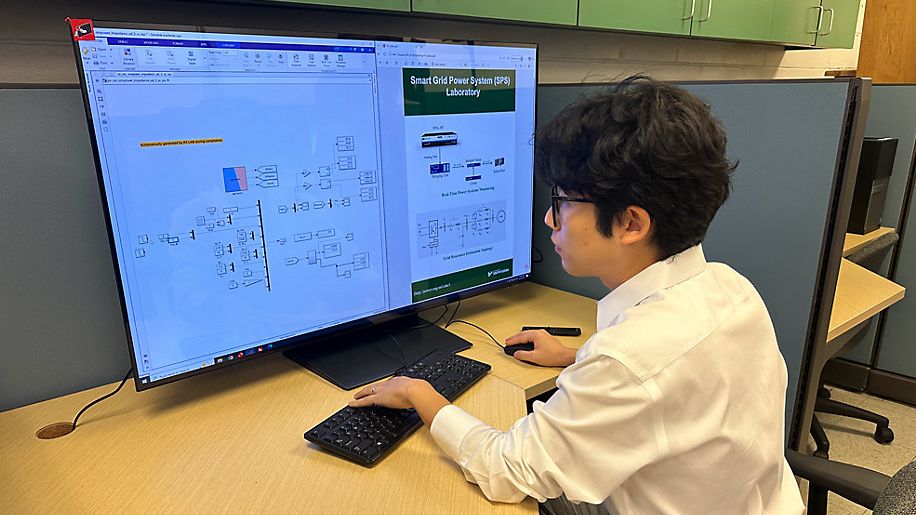
The project centers on what’s known as a “digital twin” — a virtual replica of Tampa Electric’s power grid that uses real-time data to help researchers monitor activity and test how the system responds to changes.
Patrick Shell with Tampa Electric compares the technology to a flight simulator.
“We expect our pilots to go out and practice with a flight simulator. This is a very similar concept,” Shell said, the senior director of special projects at Tampa Electric. “That digital twin is a representation, or simulation, of our electric grid. It allows us to understand what is happening with the grid, to test it and test different operations or configurations we might have.”
Dr. Lingling Fan is leading the research at USF, where she and a team of PhD students are working to develop the technology.
Using real-time data from Tampa Electric facilities, the system is designed to detect unusual activity and help pinpoint where disturbances originate. That information could eventually help utility operators respond to developing problems before they lead to equipment failures or outages.
The digital twin also allows researchers to simulate changes to the power grid without disrupting service to customers.
“We’re going to introduce new operating configurations — it might be a new battery, or a different transmission configuration, or new load,” Shell said. He explained that being able to see how the grid responds to those changes is “extremely valuable to ensure that we have reliable power.”
But developing the technology is no easy task.
USF PhD student Huazhao Ding said the project is among the most advanced work in his academic field.
“It is, like, pretty challenging because this is the most advanced technology in our academic area,” Ding said, adding that it’s exciting to work with industry professionals on the research.
The long-term goal is to bring the technology into Tampa Electric’s operations center, giving utility workers another tool to identify potential problems and improve reliability.
The project is expected to run through the end of 2028. Fan said that the research team will share its findings with the U.S. Department of Energy once the project is complete.