
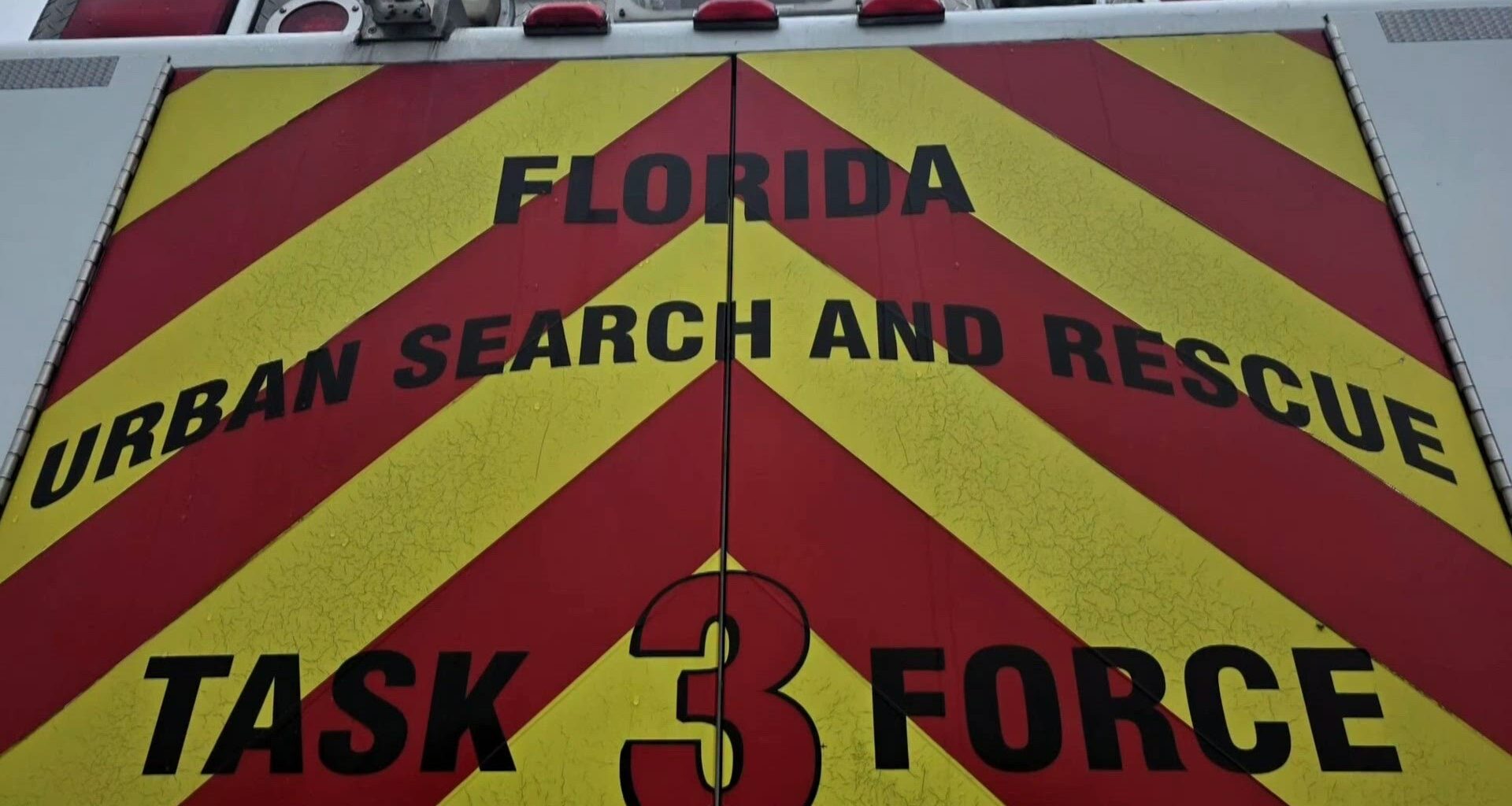
The 75-member team helped assess damage in Jefferson County, providing information to guide assistance and recovery.
TAMPA, Fla. — Tampa Bay first responders are back home after deploying to Florida’s Panhandle to help communities affected by Hurricane Isaias.
Florida Urban Search and Rescue Task Force 3 returned Monday after a mission that included documenting storm damage and checking road conditions in Jefferson County, according to Tampa Fire Rescue Capt. Brandon Buchanan.

This story continues below.
The task force brought 75 members from Tampa Fire Rescue, Hillsborough County Fire Rescue and St. Petersburg Fire Rescue, along with four canine handlers. They arrived Thursday, a day before the hurricane made landfall.
Isaias came ashore Friday near Destin as a Category 2 hurricane, damaging roofs across the Panhandle. Nearly 900,000 customers lost power in the first hours after landfall, mostly in Florida and Alabama, according to The Associated Press.
Buchanan said a smaller group moved closer to the expected landfall area to prepare for emergency operations. Most of the team staged at Tallahassee State College, ready to respond to damage farther east.
After the storm, the team received its assignment in Jefferson County.
“The bulk of what we did is capture data for the state of damage assessments, roads open,” Buchanan said.
Those findings help state officials identify needs and direct resources. When crews encounter someone needing assistance, Buchanan said, they log that information so officials can assign a team to follow up.
The work also helped Jefferson County transition into recovery, he said.
“That county was able to then turn over to get to recovery, and we were able to accomplish that for them,” Buchanan said.
About 30% of the members were on their first deployment. Buchanan said the assignment gave them an opportunity to apply their training and understand how their work fits into the broader disaster response.
Members train for structural collapse, water rescue, rope rescue and confined-space operations, allowing them to handle a range of emergencies.
“We never want to see the damage that comes with it,” Buchanan said. “But it’s a fact of life in Florida, so we’re kind of trained up to be the first ones there to kind of help get them back on their feet.”