
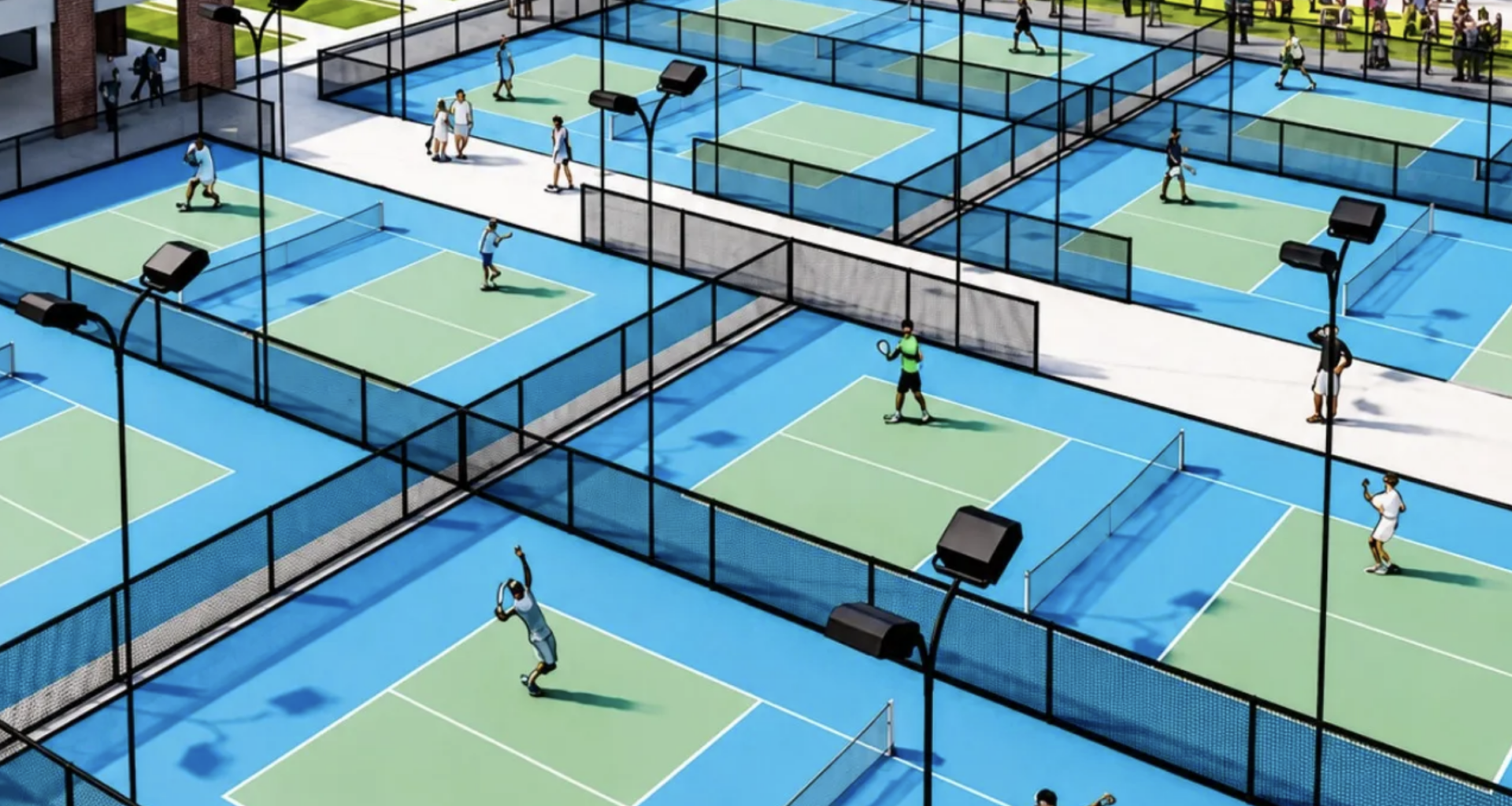
Despite pushback from residents, the Clearwater City Council voted Wednesday to advance plans for a sprawling, multi-use sports and recreation complex at the city-owned Landings Golf Course.
The council voted 4-0 to move forward with negotiations involving Sunshine Recreational and Entertainment LLC, the development group proposing to transform the property into a destination for sports tournaments, recreation and family entertainment.
The vote does not constitute final approval of the development, which still requires additional negotiations and city approvals.
The project, initially estimated at $179.6 million, is proposed as a public-private partnership between the city and the developer. An expanded version of the proposal, unveiled ahead of the council meeting, would increase the investment to approximately $300 million.
The proposal includes multi-purpose sports fields, pickleball and volleyball courts, aquatic attractions, fitness and wellness facilities, restaurants, publicly accessible walking and biking trails, and event programming geared toward traveling sports teams.
The revised proposal also calls for a 220,000-square-foot indoor fieldhouse with eight basketball courts that could accommodate volleyball, indoor soccer, flag football and other sports.
The redevelopment process began in December 2025, when Clearwater received an unsolicited proposal from Sunshine Recreational and Entertainment to redevelop the city-owned golf course at 1875 Airport Drive.
The city was not actively seeking an alternative use for the property, according to Assistant City Manager Alfred Battle.
Following a review of the proposal and supplemental materials, the council voted in August to accept the submission as a qualifying proposal under Florida’s public-private partnership statute and solicit competing bids.
Two proposals were ultimately submitted: an updated plan from Sunshine Recreational and Entertainment and an alternative from Clearwater Golf Associates, which sought to preserve the property’s use as a golf course while investing in improvements.
A city evaluation committee ranked Sunshine Recreational and Entertainment’s proposal highest, setting the stage for Wednesday’s vote.
The proposed development comes amid burgeoning interest in sports tourism across Pinellas County, where traveling athletic teams and tournaments have become increasingly important drivers of hotel stays, restaurant spending and visitor activity.
The county has experienced a surge in tournament demand, particularly in youth and collegiate sports, but available field space remains a constraint on attracting additional events.
During a March Tourist Development Council meeting, Caleb Peterson, director of the Sports Commission for Visit St. Pete-Clearwater, highlighted the economic impact of the Clearwater Fall Classic, an amateur softball tournament that attracted 82 teams, including 80 from outside Florida.
Those visiting teams generated approximately 5,000 hotel room nights, according to Peterson.
The region has also invested in additional sports infrastructure. In February, the $26.5 million Sprowls Horizon Sports Park opened in Pinellas Park, adding to the county’s inventory of athletic facilities.
For Clearwater, the proposed Landings redevelopment could expand the city’s ability to host tournaments while offering recreational amenities to residents.
However, the prospect of drawing more visiting athletes has also raised questions about whether facilities built to attract tourists will adequately serve the people living nearby.
During Wednesday’s council meeting, residents expressed concerns about the project’s potential effects on surrounding neighborhoods, including traffic, lighting, noise and changes to the character of the area.
Some worried that tall stadium-style lighting required for outdoor athletic fields could disrupt nearby homes, while others questioned the consequences of replacing an established golf course with a large-scale entertainment destination.
Residents also raised concerns about access, questioning whether out-of-town teams participating in tournaments would receive scheduling priority over local sports organizations and recreational users.
The opposition was not universal.
Local athletes and sports club representatives also attended the meeting to voice support for expanded recreational facilities. Some urged developers to incorporate indoor turf space to accommodate practices and games during inclement weather.
The competing perspectives underscored a central question facing Clearwater officials: how to capitalize on the economic potential of sports tourism without compromising neighborhood quality of life.
“You promised that you would balance tourism with our quality of life,” one Clearwater resident said during public comment. “You promised to bridge our community.”
The remarks drew thunderous applause from concerned residents, prompting a call for order in the council chambers and a gavel bang.