
Why does the City of Fort Pierce feel the need to insert another layer of bureaucracy between working people and their ability to earn a living?
For vendors who depend on their food trucks as their only source of income, these proposals reach directly into the money that pays the rent, buys groceries, and keeps their families afloat. Every additional expense and day lost waiting for approval matters.
If the three-day rule keeps forcing vendors to move from property they legitimately lease, fix the three-day rule. Requiring a site plan to remain in place risks replacing one obstacle with another. Before imposing that requirement, tell the public exactly what it involves, what it will cost, and how long approval will take.
I support safe food, fire safety, and the property owner’s permission. But the City should explain what specific problem justifies banning every unpaved location or removing separate shade canopies. What documented harm would those restrictions prevent? Could a simpler, less expensive requirement address it?
Restaurant owners deserve fair treatment. Their investment and operating expenses are real. But choosing to operate a permanent restaurant does not justify making a mobile vendor shoulder comparable development costs. If the City’s requirements are unnecessarily expensive for restaurants, reduce those burdens too. Making everyone struggle under more bureaucracy is a miserable definition of fairness.
A food truck court could be a useful option for vendors who want it and can afford it. It should remain a choice. The City should not restrict affordable locations until a designated court becomes the only practical place left to operate.
Here is a solution the City should put before the public.
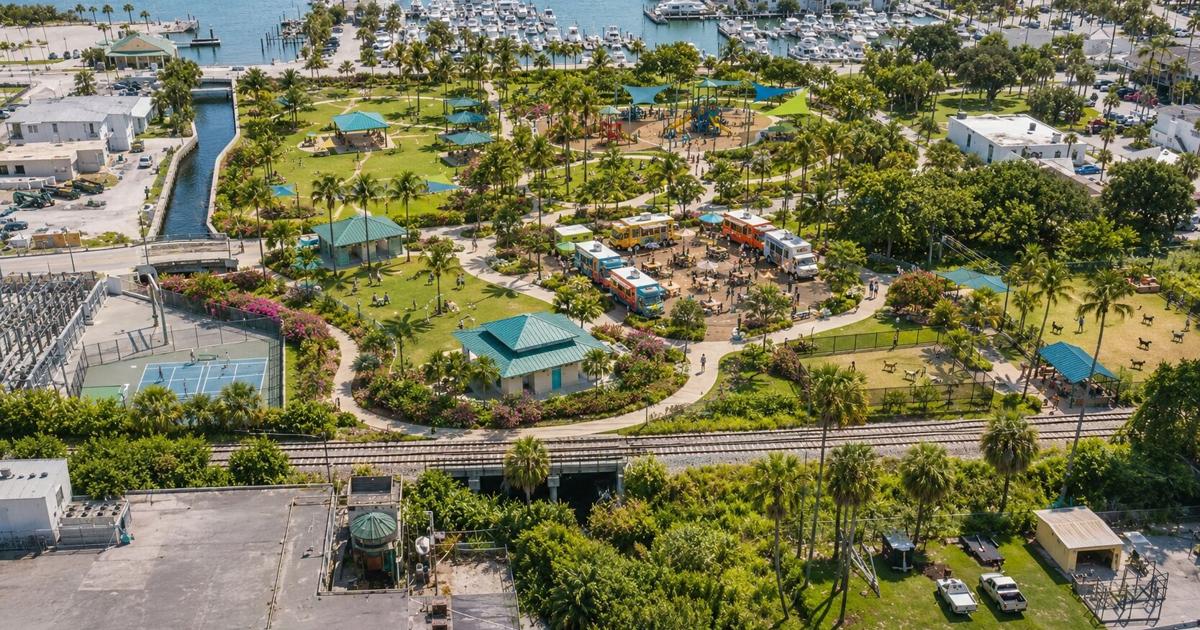
Take the abandoned King’s Landing property and turn it into a public gathering place that celebrates Fort Pierce’s different cultures and gives local vendors an affordable place to do business. Picture a waterfront park where families can spend an afternoon, enjoy different foods, and actually use the land.
• Hundreds of palm trees, generous grassy areas, and walking paths throughout the property.
• A circular food truck court with spaces for 8–10 trucks offering food from different cultures.
• Outdoor canopies with tables and seating where people can eat together in the shade.
• A dog park, cornhole setups, and pickleball courts.
• Clean public bathrooms and adequate parking.
• A study of a lazy-river-style attraction on Moore’s Creek, with inner-tube rides and small food shacks along the shoreline.
Give vendors a voice in designing it. Keep the spaces affordable, make vendor selection fair and transparent, and allow a mix of local operators to participate. Keep this an additional opportunity for food trucks while allowing them to continue operating at other suitable locations.
That is something the public can support. Put a realistic design and budget in front of residents and ask whether this is how they want to see King’s Landing used. A place to walk, eat, play, and gather would give people a direct benefit they can enjoy with their families.
The City’s priorities should not be set by whichever wealthy constituent complains the loudest about food trucks. People earning their living from a small mobile kitchen deserve just as much consideration as people with money and influence at City Hall.
And before building, planning, engineering, utilities, and code enforcement assemble their comprehensive package, perhaps someone should sit down with the people cooking the food and ask what another layer of requirements would actually do to their household income.
The promised stakeholder meeting must give vendors a real opportunity to change the proposal. Hold it when they can attend, publish the proposed requirements and costs beforehand, and listen to the people whose livelihoods are on the line.
COFP, mind your own business and leave these vendors alone! Address actual safety problems with clear, reasonable requirements. Stop treating every modest way someone earns a living as another opportunity for City Hall to impose its control.
Let these people work.
Kevin S. Keene is a fifth-generation Floridian and longtime Fort Pierce resident with more than 45 years of experience in contract management, project execution, and public accountability. He is the founder of FortPierceWatch.org, a community-based initiative dedicated to government transparency, responsible growth, and informed civic engagement. Through research, public records, and citizen involvement, he advocates for preserving Fort Pierce’s historic waterfront and ensuring that public decisions reflect the interests of the community. Readers may contact Kevin at peopleoverdevelopers@gmail.com or visit www.FortPierceWatch.org.