
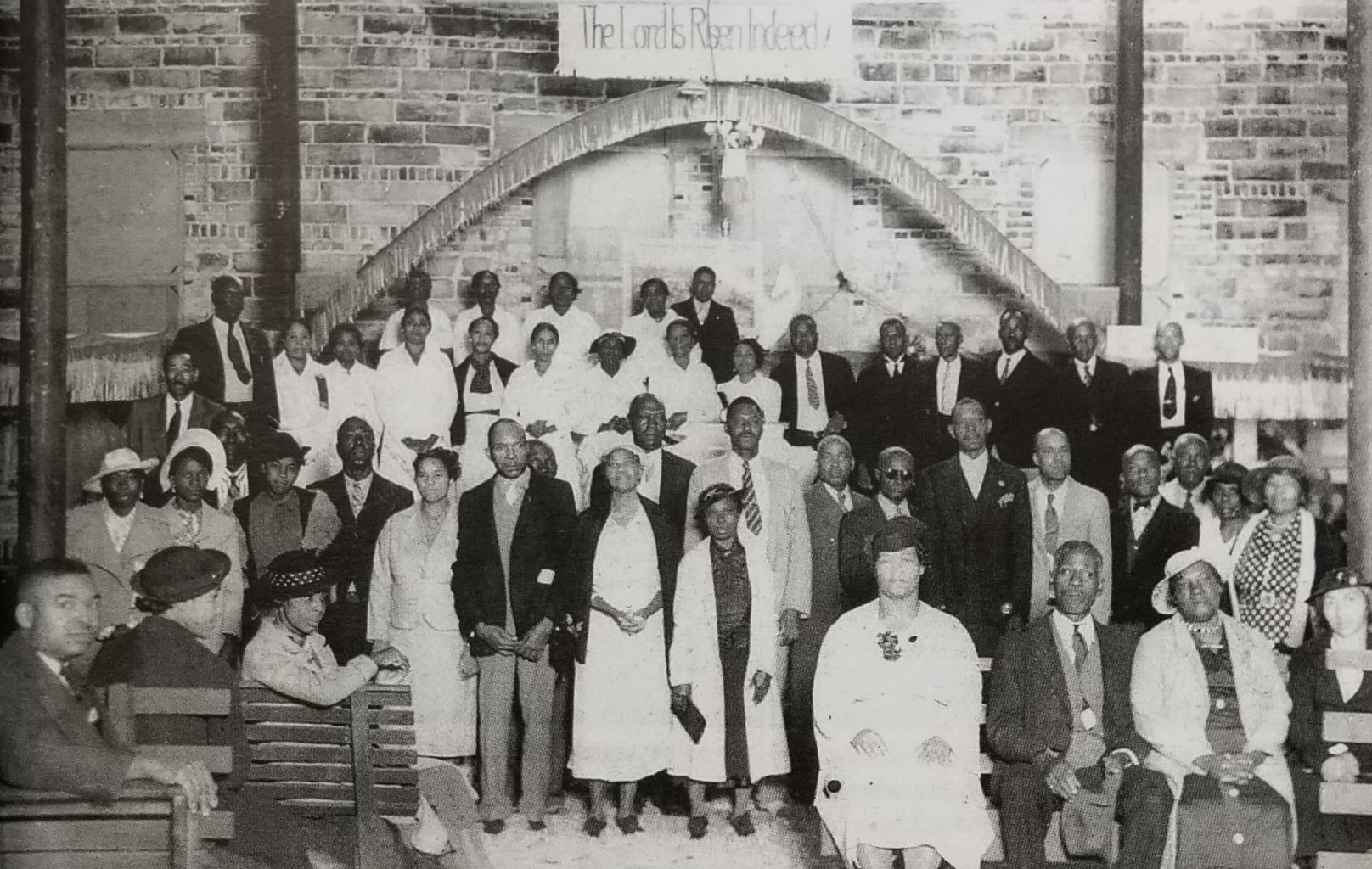
For generations, Black families in Clearwater buried their loved ones at St. Matthews Baptist Church Cemetery, a 2.5-acre burial ground established in 1909 during segregation.
By the 1960s, a department store stood on the property. Government offices and a corporate headquarters followed. The land had changed hands repeatedly with the understanding that the graves had been moved.
Archaeologists eventually discovered otherwise.
Now, Clearwater’s Community Redevelopment Agency (CRA) has agreed to pay $7.5 million to settle a lawsuit over the burial ground, where investigations have identified hundreds of graves beneath a commercial property and nearby roadway.
The money will go to Crum Properties II, LLC, which owns the FrankCrum headquarters at 100 S. Missouri Ave. The settlement resolves the company’s property dispute with the redevelopment agency but provides no compensation to descendants and establishes no plan for the graves.
St. Matthews Baptist Church purchased the property in 1909, establishing a cemetery for Black residents who faced segregation in Clearwater’s burial grounds.
In 1940, Clearwater established North Greenwood Cemetery as another burial ground for Black residents. Burials at St. Matthews largely ceased, although the property remained a cemetery.
According to allegations in the lawsuit, the city subsequently assessed the church more than $1,800 for roadway and sewer improvements. Unable to afford the assessment, the church sold the land in 1955 to three local businessmen for $15,000.
A Montgomery Ward department store was built there in the 1960s. The city later acquired the property and converted it into municipal offices.
In 1998, Clearwater transferred the land to its redevelopment agency, which entered into a development agreement containing assurances that the cemetery’s remains had been removed.
Crum Properties acquired the site in 2004.
Years before the settlement, descendants, local historians and community advocates had been working to uncover Clearwater’s forgotten Black burial grounds. Their efforts helped bring renewed attention to St. Matthews and the people buried there.
In 2020, researchers used ground-penetrating radar to search beneath pavement at the former St. Matthews site. The initial survey identified approximately 70 possible graves.
Archaeologists later conducted limited excavations that confirmed burials remained at the site. By 2022, further investigations had identified at least 328 likely grave locations, while historical records documented roughly 550 people buried there over the years, according to the St. Matthews cemetery archaeological report.
The discoveries called into question the assurances made decades earlier that the graves had been removed.
Crum Properties sued Clearwater and its redevelopment agency in September 2023, alleging that contractual guarantees about the removal of graves had proven false. The company later dropped its claims against the city, leaving the CRA as the defendant.
According to the CRA’s official litigation summary, a circuit court judge ruled in Crum’s favor on three contractual claims in March 2025. An appeals court upheld a related ruling the following January, and the dispute continued toward a possible jury trial.
Rather than continue the legal battle, the parties reached a $7.5 million settlement, approved by the CRA on Oct. 12.
In an official statement, FrankCrum said the agreement should not be mistaken for a resolution of the cemetery’s history.
“Let’s be clear, this is not a victory for the descendants of the people who were buried in the former St. Matthews Baptist Church Cemetery, and whose graves were nearly erased,” the company wrote.
FrankCrum criticized Clearwater and the CRA for their handling of the dispute, saying it agreed to settle because it expected further litigation even if it prevailed at trial.
The settlement will be paid from Downtown CRA reserves accumulated in previous years, according to information provided to the Catalyst by city spokesperson Allie Chandler Baier.
Half the money comes from city tax revenues and half from county tax revenues dedicated to downtown redevelopment. No North Greenwood CRA funds will be used.
Baier said the payment will not delay, reduce or cancel planned downtown improvements because the money had not been committed to active projects.
The $7.5 million payment is also separate from approximately $381,555 in litigation-related legal expenses, bringing the combined identified public cost to about $7.88 million.
A budget amendment is expected to go before the CRA board in January 2027.
The financial settlement leaves the cemetery’s future unsettled.
Baier said the agreement imposes no obligations on the city or CRA concerning the graves, a possible memorial or discussions with descendants.
“The city recognizes that this site holds deep meaning for descendants and the community,” she wrote.
The Clearwater Colored Cemeteries Society, which has worked to identify those buried at the city’s erased Black cemeteries and locate their descendants, did not respond to a request for comment.
FrankCrum said it plans to work with community members in the coming months on a process for addressing the cemetery’s future, although it has not outlined what that effort will involve.
“We don’t have the answers yet, but we will keep you informed,” FrankCrum wrote.