
 Central Florida —
Orlando’s Hispanic community is a key force in the city’s tourism industry, both as visitors and as contributors behind the scenes.
Hispanic travelers account for 20% of Orlando’s domestic market, a figure higher than the national average, according to Danielle Hollander, chief marketing officer for Visit Orlando.
“When we talk about our domestic market and travel to Orlando, 20% of our travelers are Hispanic, which is significant. That’s higher than the national average,” Hollander said.
Latin America is also a major source of international visitors, with nearly half a million travelers from Mexico and 360,000 from Colombia annually. Hollander noted that visitation from these countries has been steadily growing.
“Almost a half a million visitors from Mexico, and it’s been growing. Colombia, as well, has been growing. It’s 360,000 visitors from Colombia alone,” Hollander said.
Hollander explained that Orlando’s welcoming culture and diverse food offerings are key attractions for Hispanic visitors.
“They find a culture here. They feel very welcome. They find food here that they are used to and want to try. You know, food and food experiences are very big in gastronomy to this market,” Hollander said.
Chef Jerry Gonzalez, who works at Walt Disney World, said his Mexican heritage heavily influences his cuisine, including his mother’s spices.
“All the time. I cannot deny where I come from. I’m from Mexico. So part of all of my cuisine is dedicated to family,” Gonzalez said.
“She always, always used to tell me that everything that you cook, you just need a secret ingredient that is called love,” Gonzalez added.
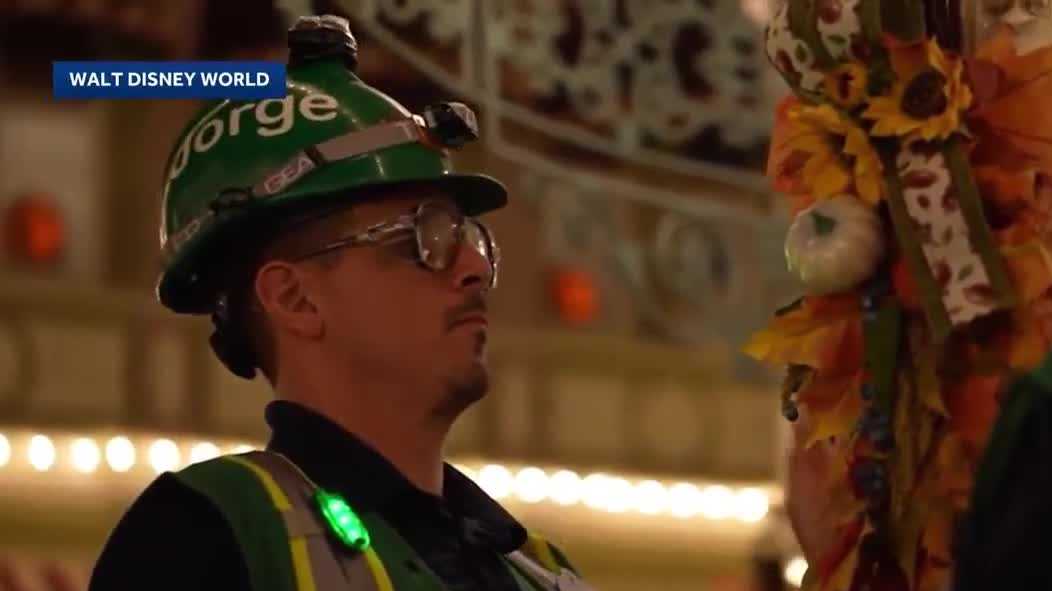
The impact of Hispanic culture is evident across Orlando’s tourism industry. Jorge Ayala, who works in Disney Holiday Services, highlighted his team’s diversity.
“We have people from Honduras, from Colombia, Venezuela, Mexico, Dominican Republic here in Holiday Services,” Ayala said.
Ayala, who has worked at Walt Disney World for 10 years, said his Puerto Rican roots inspire his passion for his work.
“In my culture, we are very passionate with what we do. Puerto Rican, we have that flavor, so I always trying to bring that positive energy to the decoration or the project that I’m being working,” Ayala said.
Miami-born Michael Anthony Rodriguez, known as Dapper Dan, said he uses his Cuban heritage to connect with Hispanic guests and bridge language barriers.
“Sometimes you see guests who you can almost assume are of any Hispanic origin,” Rodriguez said.
“As soon as you talk to them in Spanish, like after a set or even between a set, just a glow up in the eye, like ‘Oh my god, like we can communicate,’ like I don’t have to just, like, struggle,” Rodriguez said.
“I try to make them know that they are—they’re part of us. We’re part of them, you know. We’re all—we’re all one, and we’re all a family,” Rodriguez added.
Visit Orlando is committed to maintaining this partnership. In 2025, the organization spent $800,000 on paid media for the U.S. Hispanic campaign and $4 million internationally in Mexico and Colombia.
“There’s that feeling of welcome, and people want to feel- they feel good about places. They feel welcome, their experiences are richer, their passion points are richer. They’re more likely to come back,” Hollander said.
“Having that slice of home makes everybody feel more welcome,” Hollander added.
Visit Orlando also noted that visitation from Latin America has been especially noticeable since the pandemic, with Argentina emerging as another rapidly growing market.