
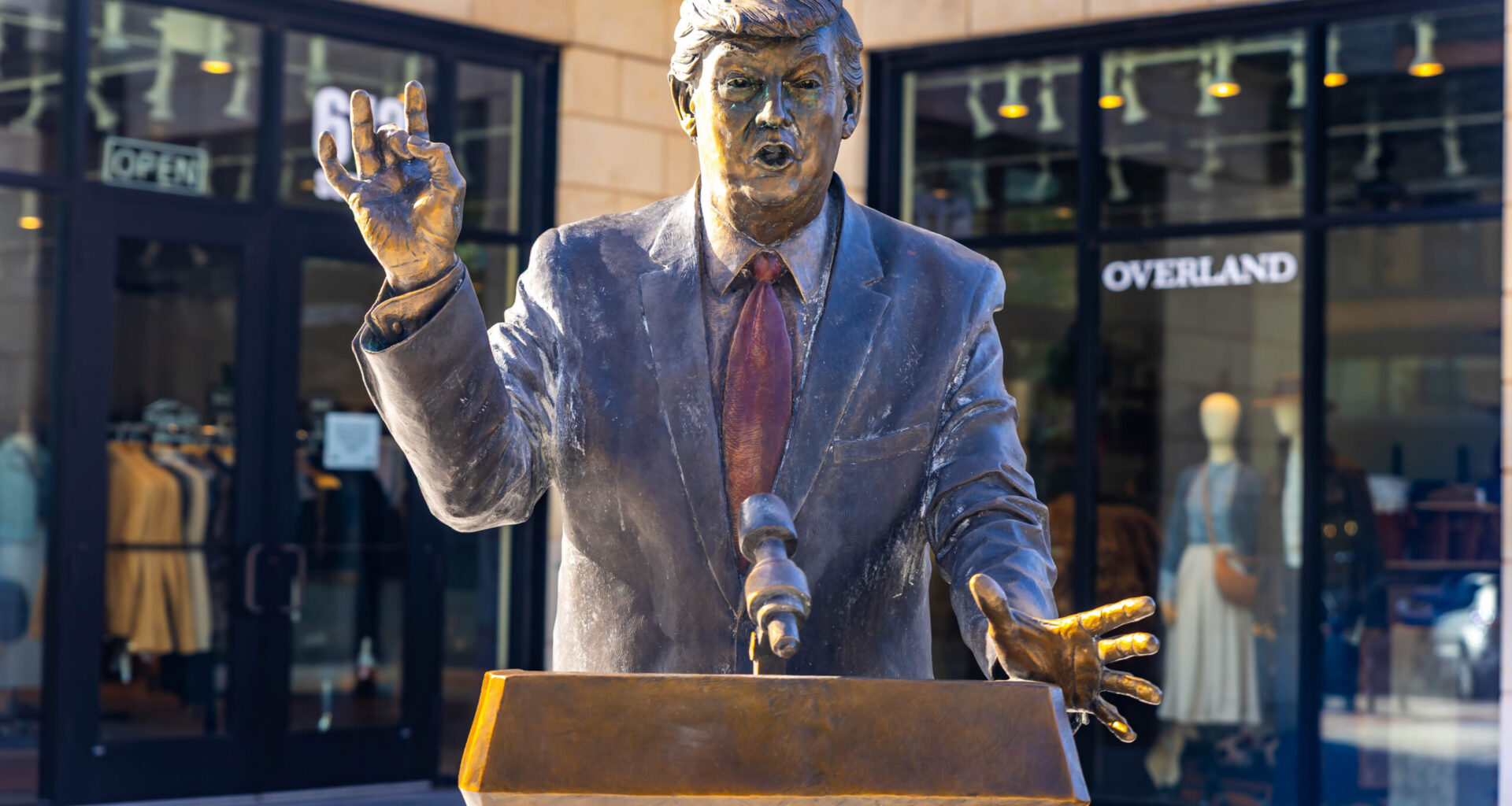
 A bronze statue of President Donald Trump in South Dakota (Adobe Stock / PhotoSpirit)
Donald Trump’s restrictions on White House press access have sparked a legal battle and raised concerns among Florida A&M University journalism faculty and students about press freedom and the future of the profession.
“It’s not really about them physically being in the building as much as it’s about allowing them to report on what’s going on,” said Leah Hunter, a FAMU journalism professor.
Trump barred CNN, MS NOW and Politico from the White House on Sept. 18, accusing the organizations of spreading misinformation and threatening national security. The media outlets filed a lawsuit alleging that the restrictions violated their constitutional rights.
U.S. District Judge Timothy Kelly ordered the administration to temporarily restore the outlets’ press credentials Sept. 24, finding that they were likely to succeed on their Fifth Amendment due process claim.
During an Oct. 8 hearing, attorneys for the organizations sought a preliminary injunction that would preserve their access while the lawsuit continues. Kelly is expected to rule by Tuesday.
The Trump administration has defended the restrictions, arguing that White House access is a privilege and that the organizations’ reporting raised national security concerns. Attorneys for the outlets contend that the restrictions amount to retaliation for coverage critical of Trump.
Hunter said journalists have a responsibility to serve as government watchdogs and provide accurate information to the public.
“The journalist’s job is to serve as the fourth estate,” Hunter said.
William Jiles, a FAMU journalism professor and director of the Division of Journalism, said restrictions targeting individual news organizations should concern the entire profession.
“Every news organization ought to be concerned because if he can do this with just a few, he can do this with whomever he wishes,” Jiles said.
He explained how the controversy could discourage journalists from asking difficult questions or reporting information that government officials may consider unfavorable.
“If we’re not careful, Trump’s actions might have a chilling effect on all journalists,” Jiles said.
Several news organizations have expressed solidarity with the three outlets, including Fox News and other media organizations that supported their legal challenge.
Jiles said cooperation among journalists is necessary to protect press freedom.
“I am heartened by it because these journalists realize that if they don’t stand in solidarity with their fellow journalists who are being targeted, then they may be targeted soon,” Jiles said.
For FAMU journalism student Erica James, who plans to pursue broadcast journalism, the dispute raises concerns about the profession she will enter after graduation.
James said restrictions on established news organizations could affect future journalists and their ability to report on government officials.
She also emphasized the importance of keeping the public informed about government decisions.
“Keeping people informed is even more crucial now than ever because there’s so much going on amongst the different branches of government,” James said.
Hunter said journalists must continue following professional ethical standards regardless of the challenges they may encounter.
Citing the Society of Professional Journalists’ Code of Ethics, Hunter said reporters have a responsibility to seek the truth and report it.
Jiles encouraged journalism students to remain committed to accurate, thorough and fair reporting while holding institutions accountable.
He said those responsibilities also apply to student journalists covering their universities, even when officials decline to provide information or interviews.
“These students are no less a journalist than they are,” Jiles said, referring to experienced professional reporters.
James said she believes the outcome of the White House dispute could have lasting implications for journalists covering the presidency.
Despite concerns about press freedom, James said the controversy has strengthened her determination to pursue journalism.
When asked whether the restrictions had changed her interest in the profession, James said, “Honestly, it’s reinforced it.”