
PORT ST. LUCIE — The City Council voted unanimously Oct. 12 to amend the City Center Planned Unit Development plan, clearing a step toward construction of a planned 6,000-seat sports stadium at the city-owned Walton & One complex near U.S. 1 and Walton Road.
The Council previously approved an operating agreement with the United Soccer League for the construction and maintenance of the stadium during a special Nov. 4 meeting last year that had support from the business community and opposition from some nearby residents.
Senior Planner Bridget Kean began her comprehensive presentation with both a description and history of the complex, initially planned as a public/private partnership in the early 2000s that never got off the ground.
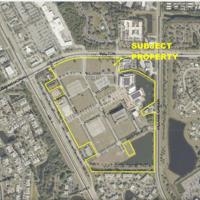
“This is the first amendment to the City Center PUD,” she said. “The applicant is the Port St. Lucie Community Redevelopment Agency, the agent is Culpepper & Terpening and the city is the property owner. It’s located east of U.S. Highway 1, west of Southeast Village Green Drive and south of Walton Road. The future land use is general commercial, high-density residential and institutional.”
Kean then provided more details of the plan.
“The PUD is approximately 69.35 acres and everything is on an urban block design,” she explained. “It has walkable streets, civic uses and open space. It is approved for 932 multifamily residential units, 208,500 square feet of retail and restaurant space, 393,000 square feet of office space, 150 hotel rooms and the 750-seat civic center. The civic center is now known as Mid-FLORIDA Event Center and was constructed by the city and the CRA, as well as a six-story parking garage, the Village Square outdoor stage and interactive fountain completed in 2008.”
The Great Recession brought the project to a halt. It resurfaced in 2022, when the city acquired two parcels through a receivership sale from its former primary private partner. The city later hired the Treasure Coast Regional Planning Council to develop a master plan for Walton & One.
Last year, U.S. Soccer League officials approached the city with their stadium proposal, bringing the project to its latest milestone: the amendment now before the council.
“This application does revise the development uses approved for the PUD by reducing office space from 393,000 square feet to 250,000 square feet,” Kean continued. “It does remove 25,000 square feet of government office space originally intended for a stand-alone police substation. With that, it adds a 6,000-seat sports stadium and identifies that it’s going to be located on Block 2 of the PUD. One of those changes is the addition of a sports stadium LED scoreboard to the PUD. This PUD amendment will set a maximum height of 90 feet for the display board.”
That display board also prompted an amendment to the master sign program of the PUD, which the Council approved later on the same afternoon.
The related changes to the concept plan including combining the two parcels of Block 2 and eliminating a roadway that divided them to create enough space for the stadium.
Vice-Mayor Jolien Caraballo – who chaired the meeting in the absence of Mayor Shannon Martin – then peppered Kean and other staff members with a variety of questions to ensure transparency in the process.
In past meetings, some community members accused the city of being secretive about the stadium because it initially came before the Council with a code name given it by the St. Lucie County Economic Development Council.
“This is obviously creating a lot of discussion,” she said. “We are currently under contract for the stadium with the team. This PUD isn’t whether or not the soccer stadium is going to move forward. That was already done in the original agreement and contract with the applicant, is that correct?
“This gets the zoning for the site plan to move forward,” Kean responded.
“Essentially, our master plan had different buildings, and we have to change that plan to adopt the buildings and where they’re located, is that correct?” Caraballo continued.
“Yes, the master plan and the PUD,” Kean answered. “It was very specific per block how it was supposed to be designed. That’s why we also amended the concept plan, added that the sports stadium would go on Block 2 and changed Block 2’s configuration.”
After Kean informed the Board that the consultant’s traffic study would be finalized and submitted to the Council on Oct. 26, the vice-mayor turned her attention to CRA Director Jennifer Davis.
“There’s been a lot of questions on traffic and concerns with traffic,” Caraballo said. “From our agreement, when will the games usually be held and how many games do you typically see happening?”
“Typically, the games are held on Saturdays,” Davis answered. “Our understanding is there are about 17 home games a year, excluding if there’s a championship or playoff situation. They’re typically about 7 p.m. in the evening and run for 90 minutes or so.”
Vice-Mayor Caraballo then asked Public Works Director Colt Schwerdt to compare his estimate of any traffic issues with that of the city’s other large events held at Walton & One.
“In consideration of events similar in size, I would say it’d be similar to what we see for the Freedom Fest, as far as the number of people actually attending,” he said. “That is if the stadium is at full max capacity. It would also be similar in max capacity for any kind of special events. We’ve been working closely with the Police Department to work up a tiered set of traffic management plans that would go into effect.”
The lone public speaker afterward, Florida Community Health Centers CEO Dr. Wilhelmina Lewis, asked the council to reconsider relocating the stadium parking lot closer to her nearby clinic. FCHC also owns two adjacent lots for future expansion that are part of the City Center PUD.
‘The concept plan shows 75 percent of the parking to the east of the stadium,” she said. “This is too far away to be practically usable for pregnant women, parents of infants and children and senior citizens. On the current concept design, there is an empty lot to the south of the westernmost garage, which would be more convenient for our patients. We request that the northwest parking garage location be shifted southward to create more practically accessible parking for our patients.”
Afterward, Caraballo asked City Manager Jesus Merejo to respond but his response proved that the city’s first choice would have been for FCHC to relocate its Port St. Lucie Women and Children’s Clinic somewhere else.
“We will be reviewing the parking concept,” he said. “We did meet with this facility. The team was very interested in purchasing that facility and we were unable to. That would have been a great possibility in being able to expand the [stadium] facility. We were not able to work out an agreement. We are planning for a future parking site. It’s not going to be as close to that facility, but that’s because of the way the site plan’s going to work out.”
The City Council then voted 4-0 for approval of the amendments.