
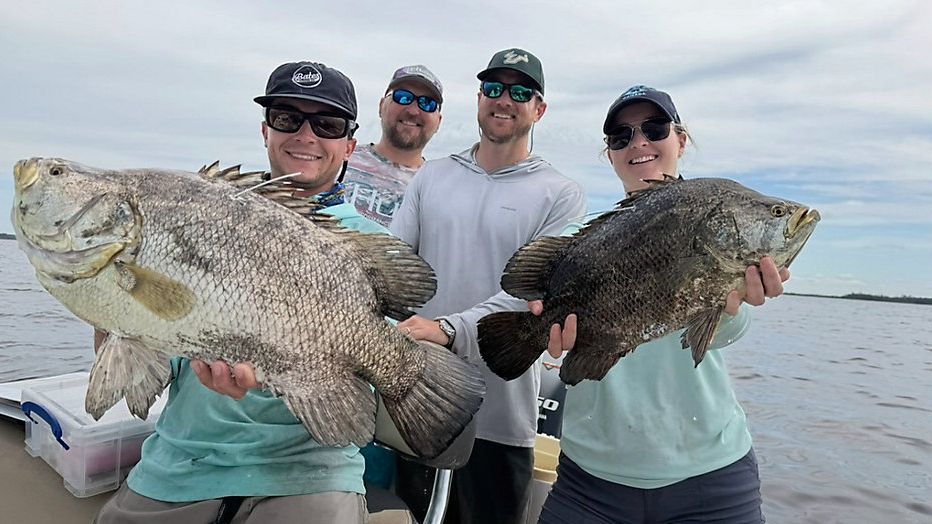
TAMPA, Fla. — Researchers are tagging cobia and tripletail as part of a Gulf-wide effort to learn more about the popular sport fish and help guide future fishery management.
The study involves the University of South Florida, the Florida Fish and Wildlife Conservation Commission (FWC) Fish and Wildlife Research Institute, and the U.S. Geological Survey.
Scientists are working across the Gulf, from Texas to Florida, to better understand how cobia and tripletail travel survive and respond to factors that may affect their populations.
Luke Griffin, a USF assistant professor in integrative biology, said the work is focused on filling data gaps for both species. “To have a healthy, sustainable fishery, you need the best and robust data,” Griffin said. “And so these two species just needed more data, more questions answered.”
An $800,000 grant from the Gulf States Marine Fisheries Commission is funding the study. The funding is part of a larger $5 million Gulf-wide research effort led by a principal investigator at the University of South Alabama in collaboration with USF, the U.S. Geological Survey, and the Florida FWC Commission.
Researchers are looking into why cobia populations have declined in northwest Florida.
Bob Ellis, an associate research scientist with FWC Fish and Wildlife Research Institute, said that the institute had already been studying cobia since 2016, trying to piece together migration patterns throughout the Gulf.
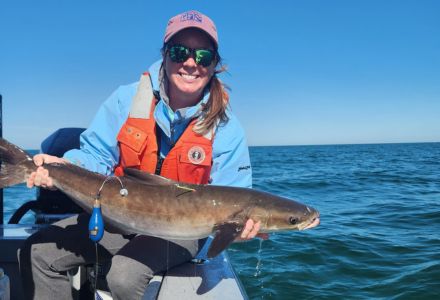
Scientists are working across the Gulf, from Texas to Florida, to better understand how cobia and tripletail travel survive and respond to factors that may affect their populations. (Photo Courtesy: USF)
Ellis called cobia an iconic sport fish in Florida, and it’s highly prized.
“They’ve been part of some pretty major tournaments throughout Florida that have gone on for decades, and those tournaments were kind of the first indicator, the canary in the coal mine, that there was a problem with cobia,” Ellis said. “The numbers were declining. The sizes of the winners were getting smaller over time.”
Ellis said that’s why they’re studying cobia movement patterns across multiple states. “Cobia is a Gulf-wide species, and the migrations could be from South Florida all the way up to Louisiana or up the East Coast all the way to Virginia,” Ellis said. “So when you’re talking about these big multi-state movement patterns, you really need a solid set of collaborators.”
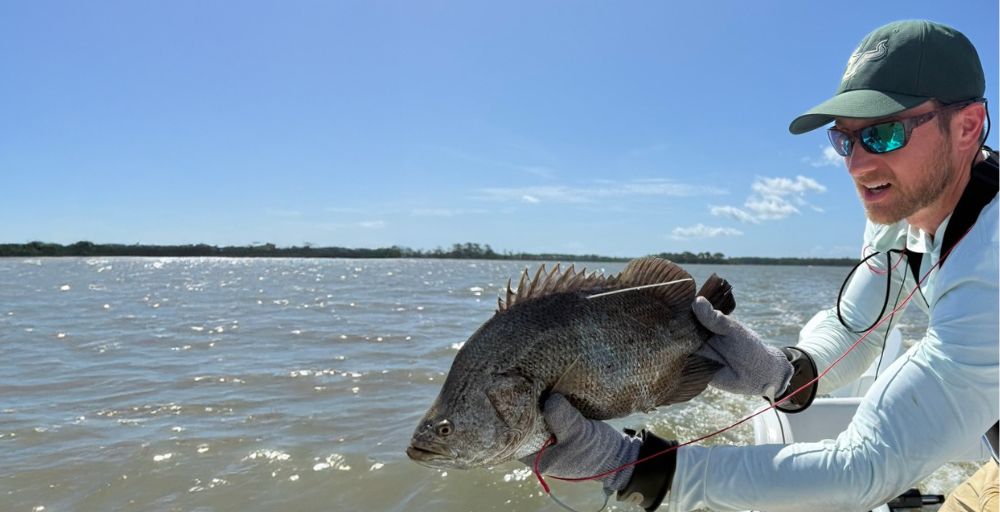
Researchers plan to continue tagging cobia and tripletail for the next two years. (Photo Courtesy: USF)
Tripletail pose a different challenge. Scientists say the species is growing in popularity among anglers, but there is limited information about its movements and behavior.
“So we do expect that they make migrations,” Ellis said. “We’re trying to piece together some of those. And then we’re also collecting a lot of biological information.” Ellis explained that researchers are studying growth rates and stomach contents to learn what tripletail eat and whether their diets change throughout the year or across the Gulf.
To do this work, researchers are using different types of tags.
One underwater tracking method follows movement north and south through tags that make a pinging sound every few minutes, which can be picked up by listening stations. “The tag that we put in the fish makes a pinging sound once every, I think these are set for every three to five minutes,” Ellis said.
“And so these listening stations, there’s a hydrophone and a battery, and it just sits there, and it listens for that particular ping.” Another method uses dart tags on fish around legal size. Anglers who catch a cobia or tripletail with a dart tag can report the tag number and collect a $250 reward. “That helps us understand how many fish are being caught in the different regions of Florida and across the Gulf,” Griffin said.
Griffin said this is the project’s first summer, and researchers have tagged about 60 tripletail and about eight cobia so far.
Researchers plan to continue tagging cobia and tripletail for the next two years. Researchers have already received information from the tagging work.
Ellis said one tagged tripletail was recently caught multiple times near the same channel marker in Tampa Bay, suggesting the fish may not move far over short periods. “It tells us that these fish, one, that they’re pretty hardy,” Ellis said. “And it also is telling us that at least over the short term, they’re not moving around a lot.”
Ellis said the collected data will go directly to fisheries management and will also be shared with charter guides and recreational anglers.
“Everything that we’re learning is going to go directly to the management side to help improve the management of both species,” Ellis said.