
Supercharging applied research: FAMU-FSU College of Engineering
At FSU, fundamental questions and real-world challenges intersect. As the research enterprise continued to grow, university leadership sought to expand its impact on practical applications. In 1982, FSU and Florida A&M University joined forces to establish the FAMU-FSU College of Engineering, the only shared college of engineering in the nation.
Research at the college has developed into a multidisciplinary enterprise spanning advanced materials, power and energy systems, aerospace, robotics, infrastructure and manufacturing. The college’s research environment includes nationally recognized centers and laboratories such as the Center for Advanced Power Systems, which conducts basic and applied research in areas including power-system modeling, power electronics, electrical machines and superconductivity. Its High-Performance Materials Institute focuses on advanced materials with applications in industries including aerospace, defense and energy.
Aerospace research also has become a major strength. Through the Florida Center for Advanced Aero-Propulsion and related facilities, researchers study aerodynamics, propulsion, materials and next-generation flight technologies. The college also supports research in intelligent systems and robotics, sustainable energy, quantum engineering and artificial intelligence.
“Engineering research is where discovery meets possibility,” said Suvranu De, dean of the college. “The research achievements at the FAMU-FSU College of Engineering help turn scientific discovery into practical solutions, from improving human health and creating new technologies to building safer, stronger and more resilient communities. With every advancement, we are changing lives.”
Taxol 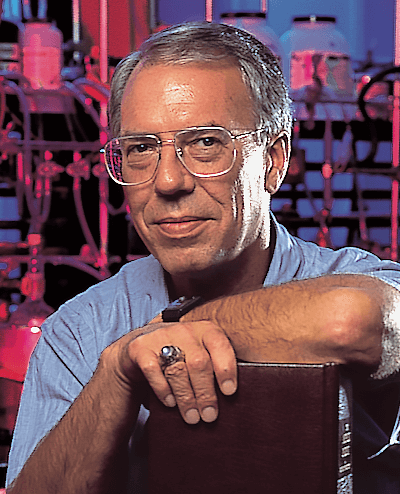 Robert Holton, the FSU chemist who led development of the synthesis of the cancer-fighting drug Taxol. (Courtesy of the Florida Inventors Hall of Fame)
Few examples illustrate the life-changing power of Florida State research better than Taxol. In 1989, FSU chemist Robert Holton and his team achieved a breakthrough in synthesizing the cancer-fighting drug, helping pave the way for its widespread use in treating breast cancer and other cancers. Their work has benefited more than a million patients worldwide and demonstrated how discoveries made in a university laboratory can have a profound impact on human health.
More than three decades later, the Taxol story remains one of the clearest examples of the connection between fundamental research and tangible human impact at Florida State. What began as an extraordinarily difficult problem in synthetic chemistry became a breakthrough that helped make a major cancer treatment widely available. For FSU, it also demonstrated how discoveries made on a university campus could move beyond the laboratory, reach patients around the world and generate resources that could be reinvested in future generations of scholarship and discovery.
An international research attraction: National High Magnetic Field Laboratory
Florida State entered a new era in 1994 when it became home to the National High Magnetic Field Laboratory, or MagLab, the world’s largest and most powerful magnet laboratory. A successful National Science Foundation proposal brought the facility to Tallahassee, where it has become a national center for high-magnetic field research, interdisciplinary discovery and technological innovation.
Each year, hundreds of scientists from around the world come to the FSU-led facility to use its one-of-a-kind instruments and explore questions in advanced materials, energy technologies, human health, the fundamental properties of matter and more. Over more than three decades, the MagLab has become a vital part of the nation’s scientific infrastructure and a defining example of Florida State’s leadership in advancing discovery and innovation. MagLab researchers and engineers have repeatedly pushed the limits of magnet technology, setting world records while developing powerful instruments that allow for scientific breakthroughs.
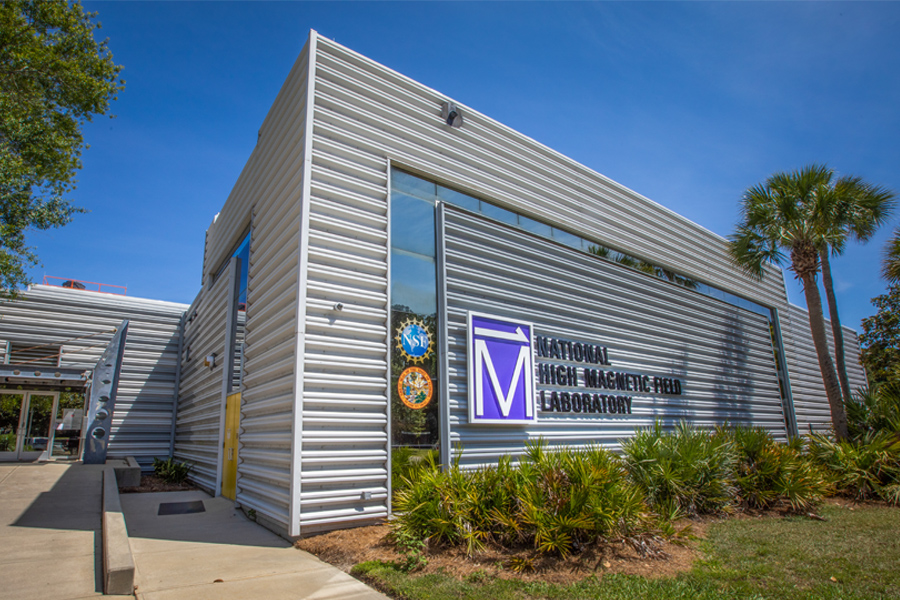 The National High Magnetic Field Laboratory (Courtesy of the National High Magnetic Field Laboratory)
Today, the MagLab is the world’s largest and highest-powered magnet laboratory and the only facility of its kind in the United States. More than a thousand scientists from dozens of countries use its facilities each year, contributing to more than 400 peer-reviewed publications annually.
“Transformative research begins by giving talented people the tools and opportunities to pursue big questions,” said MagLab Director Kathleen Amm. “The research taking place here helps expand the boundaries of what we know and what we can achieve. That spirit of exploration has been central to Florida State University’s research legacy, and it will continue to drive breakthroughs for generations to come.”