
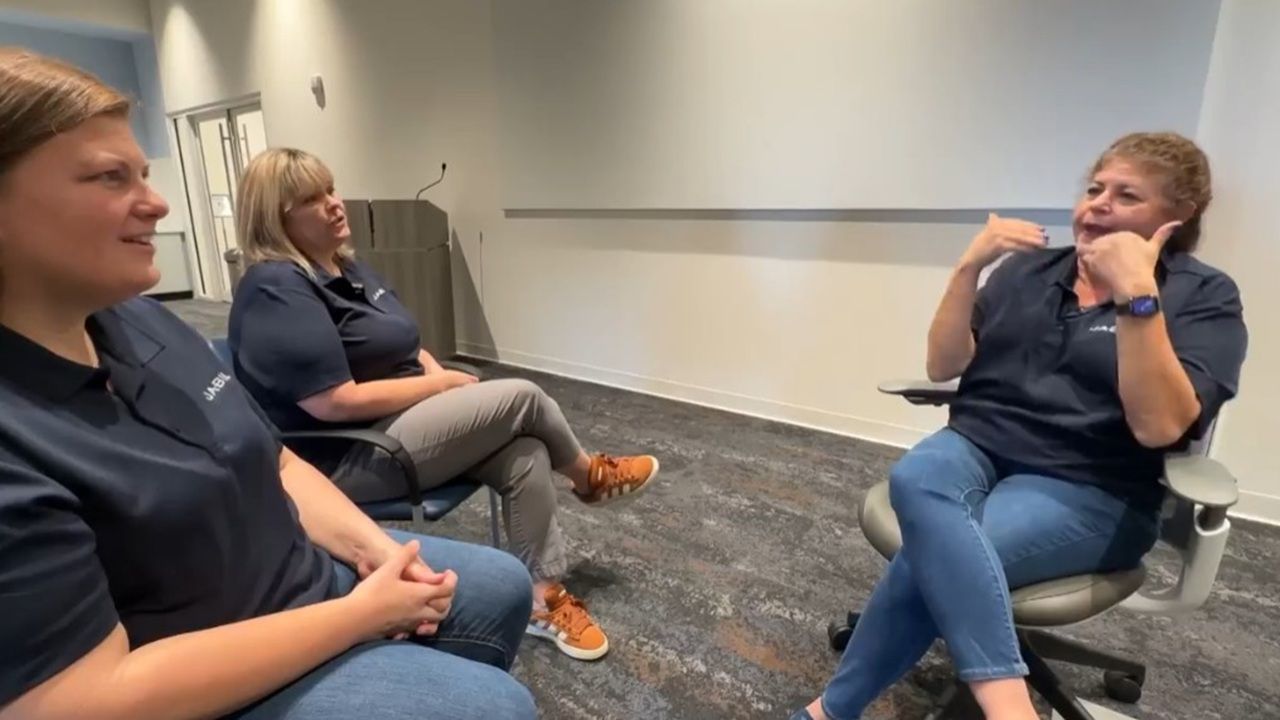
Sheri Cain is a quality inspector at Jabil, a global manufacturing, engineering and supply chain solutions company based in St. Petersburg. She inspects circuit boards for defects and has been with the company for three years.
For Cain, the job is an opportunity she never thought she would get.
“Accessibility is so vital, so important in my life. It just makes it easier to have opportunity for growth,” Cain said.
Cain is one of 13 deaf employees at Jabil. The company provides American Sign Language support and employs staff interpreters to help bridge communication gaps.
Cain said she was shocked to learn the company had two interpreters on site throughout the day to assist with meetings, interviews, and training.
Nicole Tronaovitch and Jessica Bass are interpreters at Jabil. They say many companies are hesitant to hire deaf employees.
“We are just the piece in the middle that’s needed, and we wish other companies would invest and do this for their deaf employees,” Tronaovitch said.
Bass said a lack of communication access can limit deaf employees’ opportunities for advancement.
“Just knowing if they hire a deaf employee, they get kind of pigeonholed into their position, their kind of starting position, and just not having that communication access doesn’t allow for opportunity for growth,” Bass said.
Cain said she struggled with discrimination and communication barriers in previous jobs.
“I was literally discriminated against because I couldn’t hear. And they would say, ‘Here, the paper is good enough.’ You see what was said at the meeting, but I couldn’t give any feedback. I wasn’t equal, and that caused a lot of emotional distress to me,” Cain said. “I would cry at home every night because I felt so frustrated.”
Now, Cain says those frustrations are gone. With a clear line of communication with the employees around her, she has been able to take advantage of her opportunity at Jabil.
She hopes more companies will embrace deaf employees and recognize their skills.
“We are normal. There’s one thing that we can’t do, and it’s here, but we’re skilled workers. We just need the opportunity,” Cain said. “And I’m sure they know they’ve seen movies now with that of actors, and it’s definitely becoming more public.”
Cain is proving that deaf employees can do the work as well as anyone else when given the opportunity and communication support they need.
Data from the National Deaf Center shows the national employment rate for deaf people has climbed to a historic 57.1%.
However, that rate remains more than 15% points below the employment rate of hearing adults.