
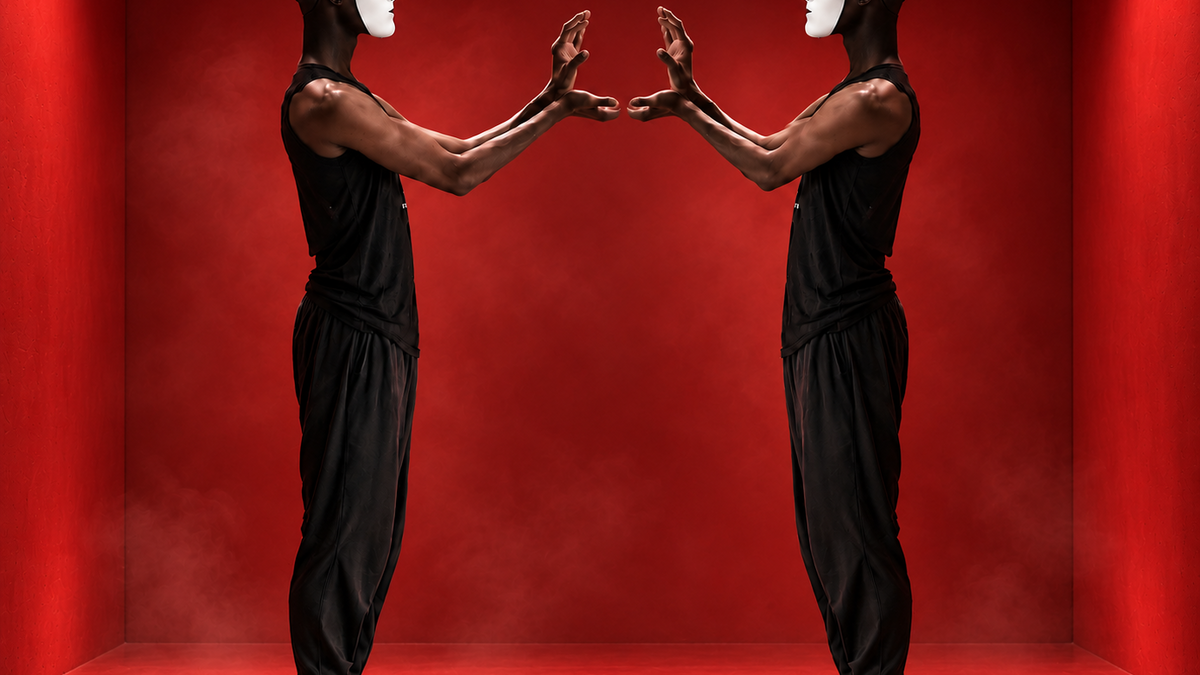
In his solo show, South Florida dancer/choreographer Randolph Ward is ready to bare it all—his art, his many selves, and, at one point, his body as testimony. “The Gray” will flash layers of his personal experience and then strip them away at Sandrell Rivers Theater on Saturday.
Ward, an African American artist in his mid-40s, has reached a new point in his creative life. It’s not that his steps along the way haven’t already demanded truthful recognition and gutsy action. But his current work reveals Ward at a crucial point. After a long career with major ballet companies and years of international travel, the Miami native has returned home, not to rest, but to continue to push his work in new directions.
“The idea behind ‘The Gray’ comes from my journey as a ballet dancer of color,” says Ward. “In this world, I’m always perceived as ‘the other’ or as a representation for an entire race.”
.jpg "Photography by Varvara Kandaurova Dancer_ Randolph Ward (1).jpg") With “The Gray,” Randolph Ward hopes to create empathy by encouraging audiences to recognize their own pain and see it in others. (Photo by Varvara Kandaurova)
In response to that taxing reductiveness and onerous expectation, he wants to facilitate better understanding by opening his embrace, blending black-or-white demarcations into a more authentic shading. “I’m trying to create empathy among humans through my art. We live in a society where we often don’t want to express our pain or recognize it in others.”
Ward identifies as an empath, with a level of sensitivity to detect risk or safety even in the most mundane situations. In the artistic sphere he has fine-tuned that spiritual radar.
“Since I was a child, though intuitive then, this has been a constant in my life,” he says. “I navigate towards what gives off a good vibe and flee from what doesn’t.”
Ward began dance training at the age of 10 at Liberty City’s Charles R. Drew K-8 Center. It was a rare opportunity, he emphasizes, and progressed as a teen into conservatory classes at South Miami’s Thomas Armour Youth Ballet (now Armour Dance Theatre), a precious cocoon for him that nurtured not just dance fundamentals but also self-worth.
“The feeling of otherness was simply not there,” Ward recalls, singling out academy director Ruth Wiesen as his mentor. “She is an anomaly, opening the door to so many students of African descent and making us feel at home.”
That sense of welcome was unusual in the ballet world, says Weisen.
“Randolph’s story illustrates exactly why we started our scholarship program at a time when the ballet world and most classes did not reflect the diverse city we live in. He had ability, drive, and a family that believed in him. We could provide the opportunity to develop his potential.”
Ward’s awareness expanded at a Dance Theater of Harlem summer program. “There I gained a larger experience of Black lives, of how we have to be so much better to succeed. I also recognized the privilege of having ancestors in the art form like Arthur Mitchell (the company director and once a New York City Ballet star), who helped set us up.”
At 16, before his senior year at New World School of the Arts, he entered San Francisco Ballet’s year-round school program. One of only three career-aspirants of color there, he sharpened his skills and feasted on world-caliber performances. “For two years I attended every company show,” he remembers.
Ward went on to join Ohio’s BalletMet and North Carolina Dance Theatre, mastering classical and neoclassical styles until his heart demanded a move beyond those orthodoxies. Dancing in Germany at Saarländisches Staatstheater, Ward says, “I went contemporary all the way. I’d gotten bored with the idea of expressing masculinity, its bravery and strength, and claimed a feminine aspect for my dancing.”
The artist stood up as a gay man—so tall and thin, he notes—balking at losing opportunities due to being perceived as a type.
“Deeper ideas started coming to me,” he says. “Generally, American dance is outward whereas European dance is self-contained, changing the atmosphere from within.” Repertory from innovators such as Israeli-American Ohad Naharin and Sweden’s Mats Ek left a lasting impact.
“I got to see how a Black dancer in Germany could be a superstar,” adds Ward. “Outside the United States I discovered that African-American culture is American culture.”
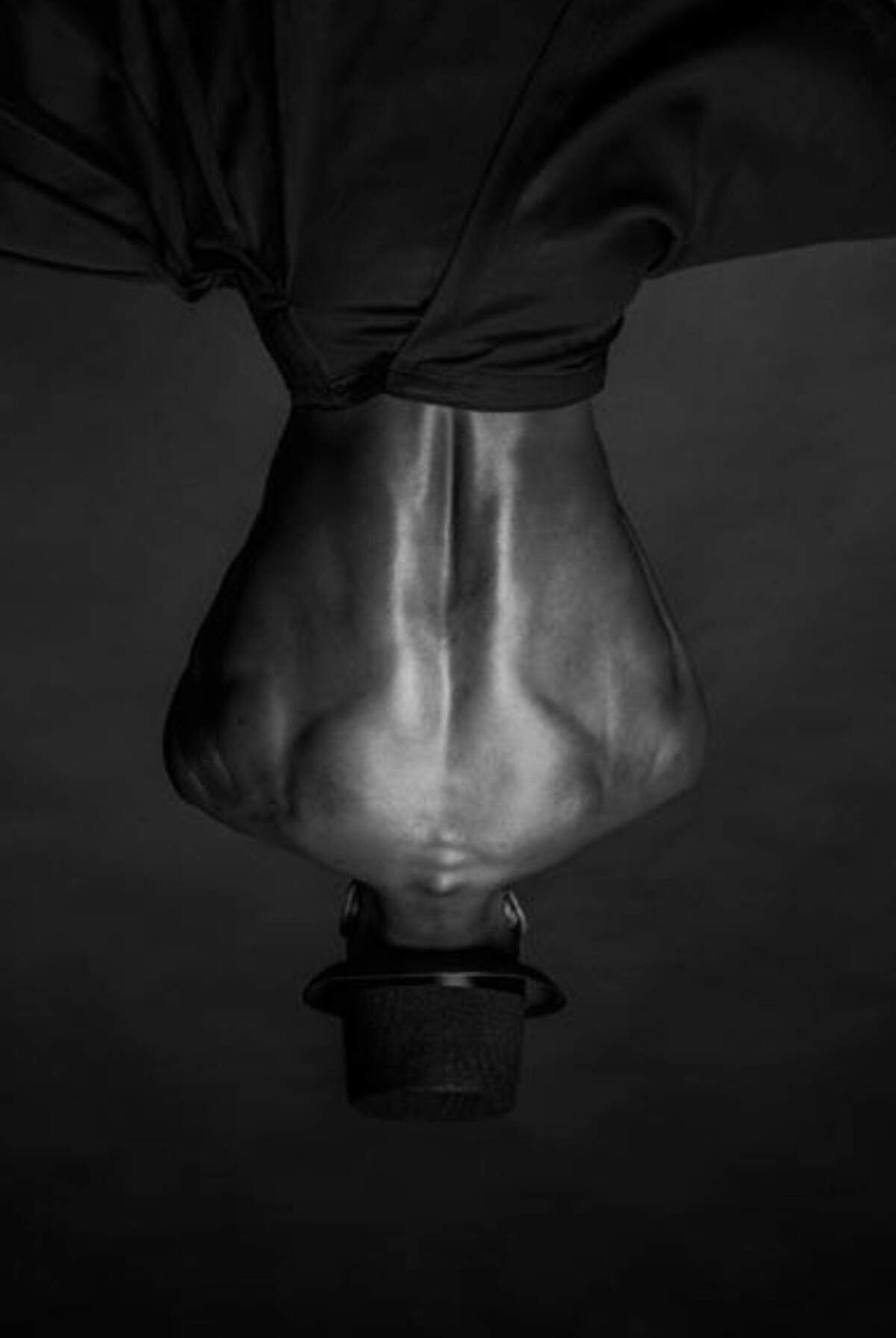 Randolph Ward’s solo work brings together dance, theater and personal reflection in an exploration of vulnerability. (Photo by Varvara Kandaurova)
Ward’s interest in making his own dances came as a practical necessity. “I started choreographing to become a better interpreter,” he says. “My first opportunity was back with BalletMet for a competition I won.”
Then the call to create became inescapable. In 2017 he premiered “A Vogue Extravaganza” in Germany as a tribute to the ballroom scene that flourished among African-American and Latin gay youth in New York. Two years later Ward reset this in Miami, which marked him locally as someone to take note of.
And Dimensions Dance Theatre of Miami did. Company co-artistic director Jennifer Kronenberg calls Ward’s 2019 premiere “What Makes a Man?”—a male duet dealing with gendered constraints—a perfect fit for their exploratory Lab Series.
“The work challenged our dancers and audiences, pushing physical and social boundaries,” she says—and, aligning herself and co-director Carlos Guerra to those who found beauty in its confrontation, adds, “Through Randolph’s courage and emotional intelligence, our dance ecosystem received a gift.”
With his own RTWDANCE, Ward has brought daring dance-theater works to South Florida stages. In that vein, “The Gray,” gathers some former material, puts it in new context, and expands his elaboration of long-held concerns and the craft of dance-theater.
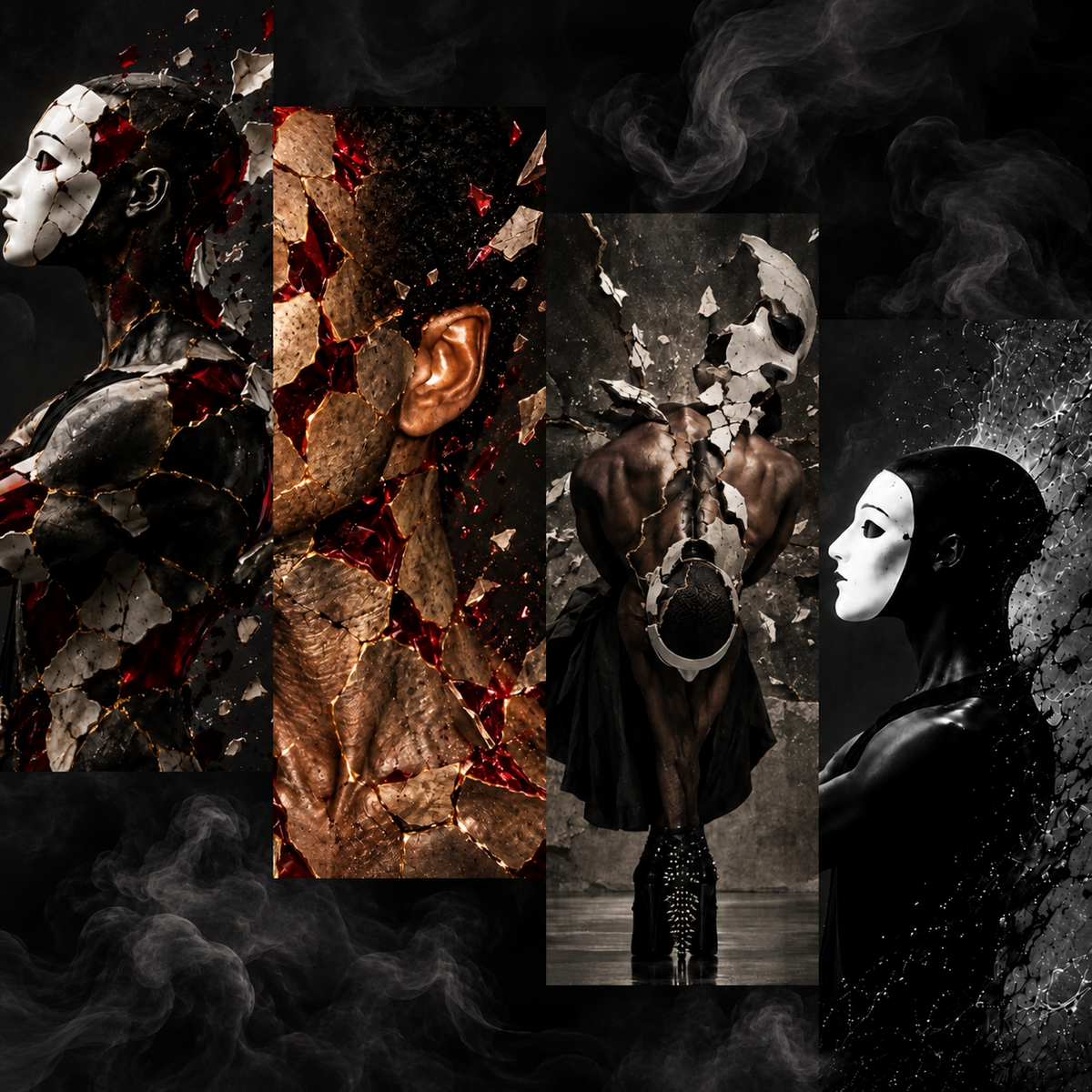
“The show is centered around masks,” explains Ward, whose costumes—including a studded face covering, latex and high heels—draw inspiration from the late performance artist and designer Leigh Bowery, known for his extravagant costumes and elaborate transformations of the body. “Through this I examine what shapes, challenges, and constantly rebuilds the self.”
The show opens with a recording of Leontyne Price singing “Pace, pace, mio Dio” from Verdi’s “La forza del destino.” Other sections include “The Big Dig,” accompanied by a short film about Ward’s coping with angst, and “The Dance of the Ego,” which references 1970s Black cinema, “when everything was loud and brash,” he says.
.PNG "Photography by Vavara Kandaurova Dancer_ Randolph Ward (1).PNG") In “The Gray,” Randolph Ward examines how identity is shaped, challenged and continually rebuilt. (Photo by Varvara Kandaurova)
“Steeped in contradictions, this gets into my mastering the ego not to let it consume me.”
In “The Cement Block of Stagnation,” Ward considers unrealized potential. The section becomes “very dark, with hard guitar chords, twisting and turning, and strongman poses,” he says.
But “The Monster I Keep,” in which he performs nude while wearing a veil, has made him most nervous because of the vulnerability it demands. “It confronts the contradiction of being seen but not seeing ourselves,” he says.
A poetry recitation brings the focus back to accepting his many selves. For Ward, the dream is no longer about chasing achievement but “in reckoning with the many selves within me—impatient and contradictory… gorgeous and intense … longing to be held.”
“However people label me, I hope they can find a connecting factor in all this.”
If you go:
WHAT: “The Gray: A Celebration of Human Complexity”
WHEN: 3 and 7 p.m. Saturday, Oct. 24
WHERE: Sandrell Rivers Theater, 6103 NW 7 Ave., Miami
COST: $35 general admission; $20 students, seniors and veterans. Only ages 18 and older admitted.
INFORMATION: (305) 284-8872; https://www.rtwdance.net/
ArtburstMiami.com is a nonprofit media source for the arts featuring fresh and original stories by writers dedicated to theater, dance, visual arts, film, music and more. Don’t miss a story at www.artburstmiami.com