
Spoiler alert: Luke Cage may have unbreakable skin, but New York Times bestselling author S.A. Cosby knows where even a superhero can hurt — in his family, through guilt and over the people he cannot save.
At Overtown’s Historic Lyric Theater last week, Cosby brought that focus on human vulnerability to a conversation spanning Marvel comics, Black Southern identity and the persistence it takes to write your own story.
“The historical significance of a place like this can’t be overstated,” he told The Miami Times of The Lyric Theater. “For me, it’s an honor to just be on these grounds in this building in the presence of this incredible sort of history and sort of work that’s been done to not only create this history but reestablish this building as a community center.”


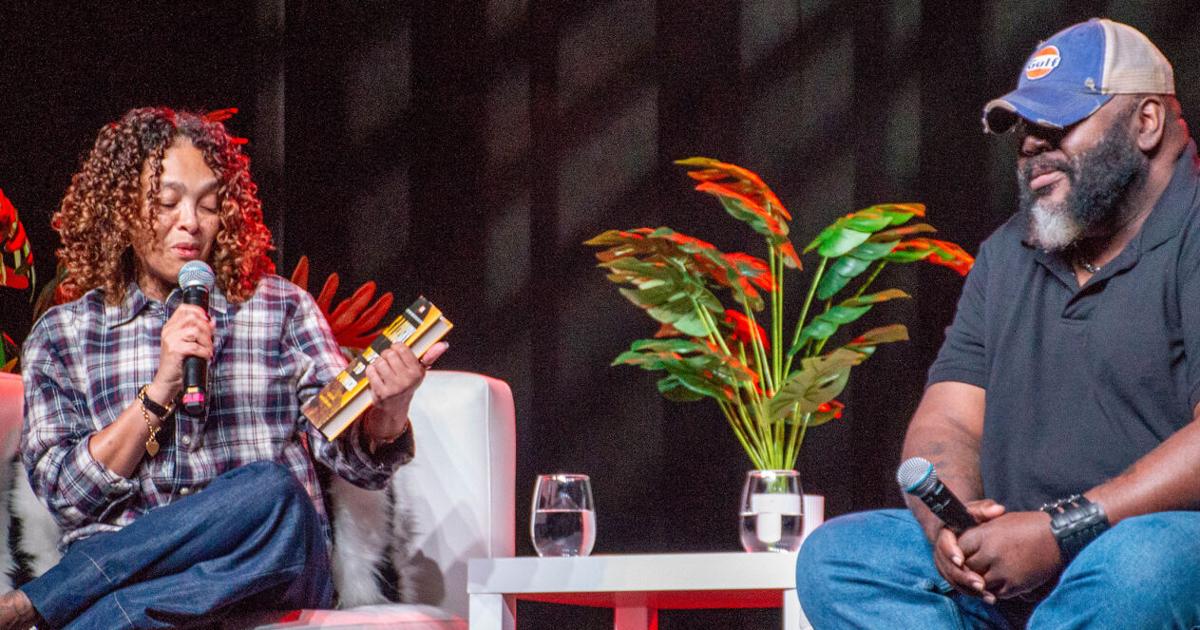
City of Miami Commissioner Christine King and New York Times bestselling author S.A. Cosby during a conversation at the Historic Lyric Theater.
(Courtesy of City of Miami District Five)
Held in partnership with the Southeast Overtown/Park West Community Redevelopment Agency (SEOPW CRA), Books & Books and Roots Bookstore and Market, the event brought residents, aspiring authors and readers together for Miami Commissioner Christine King’s “The Kingdom” podcast on Oct. 15.
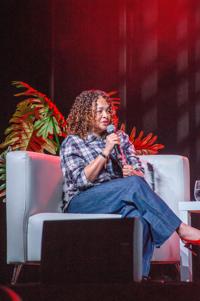
City of Miami District 5 Commissioner Christine King.
(Amelia Orjuela Da Silva for The Miami Times)
“I love his work. I’m an avid reader,” King told The Miami Times ahead of the event. “His work is more than just Black families. It talks about love and struggle, and I think everyone can relate to his work. Having him here at the Lyric Theatre with its storied history is just perfect.”
More than scars
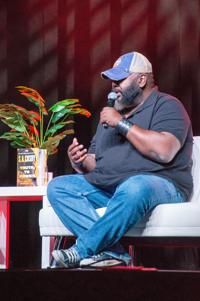
New York Times bestselling author S.A. Cosby.
(Amelia Orjuela Da Silva for The Miami Times)
Cosby, a southeastern Virginia native, is known for titles like Razorblade Tears, Blacktop Wasteland and All the Sinners Bleed. Through his work, he challenges portrayals that reduce Black Southern life to suffering.
“I think people mistakenly think the South is just the sole province of Confederate apologists and far-right extremists,” he told The Miami Times. “Nothing could be further from the truth. The South has such a rich history — and it’s not just slavery. It’s Caribbean culture, African-American culture and African culture and religion that was brought over and maintained.”
He added that Florida also belongs to the South, pointing to its history of civil rights, rebellion and freedom seekers escaping into swamp lands.

Community members inside the Lyric Theater listen to S.A. Cosby.
(Amelia Orjuela Da Silva for The Miami Times)
Reading Black authors, he said, offers a fuller view of the community.
“For me, being Black in the South is not just a sort of endless barrage of traumatic events,” Cosby said. “It’s a beautiful, lovely experience that I’m so grateful to be a part of.”

People line up for a book signing.
(Amelia Orjuela Da Silva for The Miami Times)
But that love leaves room for scrutiny, he says:
“To paraphrase James Baldwin, I love the South. But because I love it, I do reserve the right to criticize it because I know it can be better than what it is.”
A superhero heads south
Cosby’s latest book, Truth to Power: A Luke Cage Marvel Crime Novel, brings Harlem’s superhero to the author’s home state.
Published Oct. 13 by Hyperion Avenue, the thriller sends Cage to rural Virginia to investigate a medical-device factory. When a cousin who helped investigate the plant turns up dead, the case becomes personal, drawing Cage into a conspiracy and confrontations with local prejudice.
The book follows Lisa Jewell’s Breaking the Dark and Alex Segura’s Enemy of My Enemy in the Marvel Crime series but can be read independently.
During his conversation with King, Cosby explained how family grounds a character with extraordinary abilities.
“Luke Cage is such a New York icon as a character, so bringing him down to Virginia and getting him to drink moonshine was fun,” Cosby said with a laugh. “A big part of the story is the love of his family — his cousin and this family that accepts him for who he is. Even though he’s got superpowers, they’re still seeing their little cousin.”
The hero’s guilt connects the Marvel adventure to the emotional stakes of Cosby’s other crime novels.
“I always write in the way where violence has meaning, violence has consequences,” Cosby said.
Cage’s strength cannot spare him grief. Cosby explained that his vulnerabilities trace back to the origins of his powers — imprisonment for a crime he did not commit and experiments conducted behind bars that gave him super-dense skin and accelerated healing — but his physical defenses offer no protection against loss.
“No matter how strong you are, no matter how, you know, impenetrable your skin is, you still got to breathe,” Cosby said. “It would be real easy for Luke to go around and just beat everybody’s ass all the time, but he tries not to. And I think that’s the thing I love about him. He tries to hold back until he can’t.”
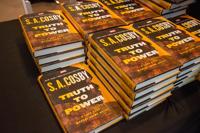
“Truth to Power: A Luke Cage Marvel Crime Novel,” by S. A. Cosby.
(Amelia Orjuela Da Silva for The Miami Times)
A reader before a bestseller
Onstage, Cosby traced his storytelling to a family in which books circulated across genres: historical fiction, romance, detective stories and horror.
As a child, he challenged bedtime stories until his mother encouraged him to write his own. He created a tale about magical gnomes living in the backyard magnolia tree. His mother’s pride became something he kept chasing.
“I think I’ve been chasing that look the rest of my life,” he said.
The road to bestseller lists included writing during lunch breaks while working at Lowe’s and enduring rejection. He told the audience his first book was rejected 70 times.
King also shared a writing confession: She has been working on a book for 10 years, repeatedly returning to the beginning to edit.
“Don’t let perfect be the enemy of good,” Cosby advised writers and aspiring writers. “You can always go back and fix it.”

S.A. Cosby signs “Truth to Power” for attendees.
(Christine King via Facebook)
For Isaiah “Zaybo” Thomas, co-owner of Roots Bookstore & Market, the gathering also created space for local literary talent.
“Events like this allow local authors to connect with established writers, exchange ideas and inspire the next generation,” Thomas said.
For Thomas, the event highlighted the intellectual life rooted in neighborhoods like Overtown.

The Historic Lyric Theater was packed with residents, readers and aspiring writers.
(Amelia Orjuela Da Silva for The Miami Times)
“At a time when conversations about a literacy crisis and ‘brain drain’ often dominate the narrative, it is critical to highlight the talent, creativity and intellectual capital that already exist within our communities,” he said. “By bringing authors directly into our neighborhoods, we reinforce the message that knowledge, achievement and opportunity are present here.”
His comments echoed Cosby’s emphasis on making Black authors visible and accessible to future writers.
Cosby’s career offered an example of those possibilities. All his novels have been optioned for the screen, with All the Sinners Bleed headed to television from Higher Ground, Barack Obama’s production company, and King of Ashes in development at FX.
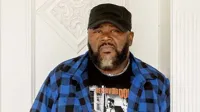
“For me, being Black in the South is not just a sort of endless barrage of traumatic events. It’s a beautiful, lovely experience that I’m so grateful to be a part of.” -S.A. Cosby, Author
(thebookseller.com)
Cosby recalled a student who once questioned whether he was really a writer, saying he did not know any Black writers. Years later, outside a movie theater, the student recognized him and said he had started writing, too.
“Representation matters so much,” Cosby said. “For kids to see somebody who looks like us, who’s doing it, who is being successful at it… it’s so important.”
For the author, that connection remains a source of gratitude.
“I’ve been able to travel all over the world just because of books I wrote. It’s such a blessing; it’s such a wonderful honor. I don’t take that for granted at all.”