
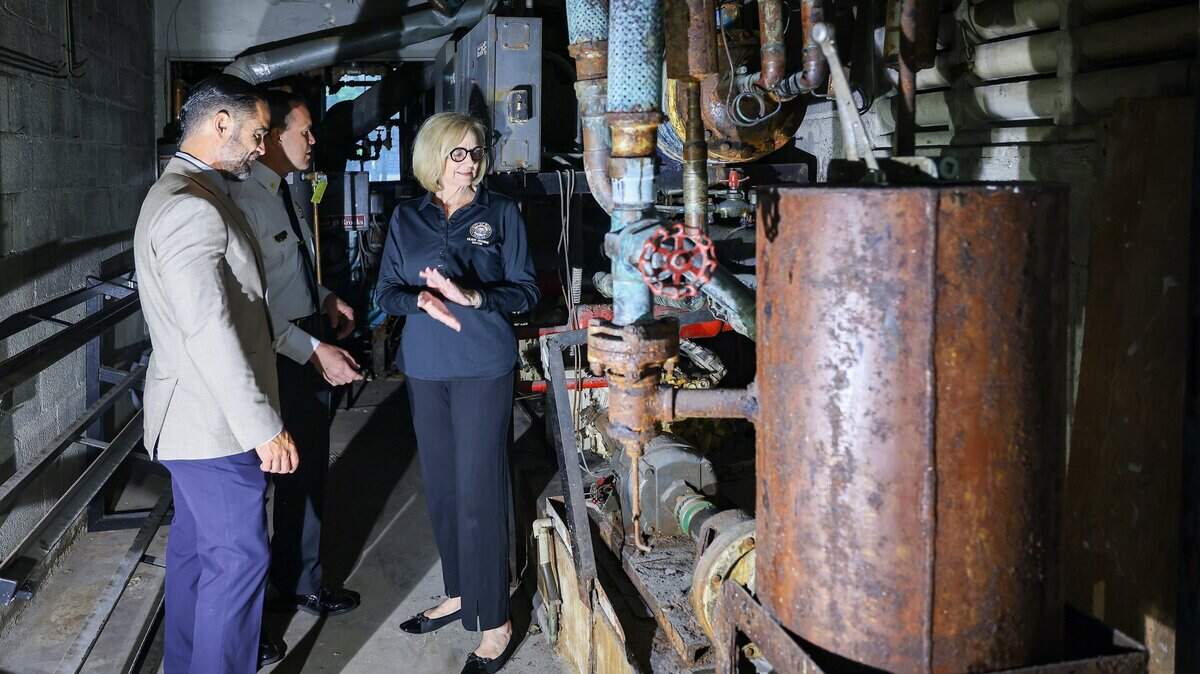
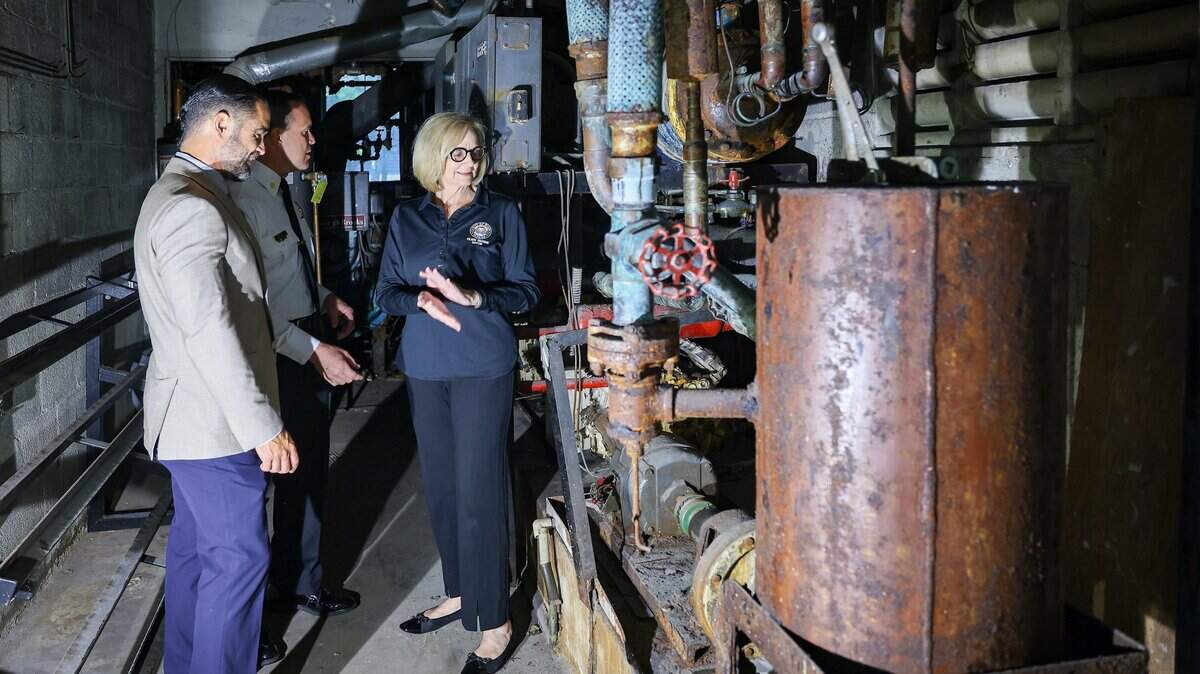
Miami Mayor Eileen Higgins, right, toured the city’s police and fire facilities in Miami on April 20. Higgins is proposing a general obligation bond to fund critical repairs and upgrades to aging public safety buildings.
Carl Juste
cjuste@miamiherald.com
READ MORE
Miami Herald November Endorsements
See the Herald Editorial Board’s endorsements in the Nov. 3 elections:
Expand All
In the Nov. 3 election, voters in the city of Miami will be asked to decide three referendums. Here are the Herald Editorial Board’s recommendations on Referendums 1 and 2:
You can read our recommendation on Referendum 3 here.
Referendum 1: It allows the city to borrow money by issuing $450 million in general obligation bonds, paid off with ad valorem property taxes, to improve or replace “critically deteriorating facilities” for police and fire rescue, including the construction of a new public-safety building near Miami Freedom Park, the soccer stadium and commercial complex. This measure would not increase the capital projects debt millage rate of 0.5935 but would still raise taxes.
Our recommendation: Vote NO
Why? There’s little debate about the aging conditions of some of Miami’s public safety facilities. There are leaky roofs, showers that don’t work, mold, rust, sinkholes, air conditioning that goes out and even health hazards at some fire stations caused by fire trucks parked too close to living quarters, Mayor Eileen Higgins, who’s proposing the bonds, told the Editorial Board.
The question is whether borrowing $450 million — for a total debt estimated to exceed $700 million — is the right answer for a city that already has a lot of debt.
A report by a government finance watchdog group called Truth in Accounting gave the city a “D” grade on financial health in 2023 — calling it a “sinkhole city” — because the city’s bills exceeded its assets, largely because of unfunded pension benefits. Miami’s financial situation hasn’t really improved since the report, Truth in Accounting founder and CEO Sheila Weinberg told the Editorial Board based on public city data.
We don’t believe Miami has exhausted all other options before asking voters to swipe the proverbial credit card. It’s an especially tough to ask residents already hurting from high costs to take on a bigger tax burden.
The city says the bonds would cost homeowners an estimated average of $9.20 per month in additional property taxes — actual values could be higher or lower as bonds are sold on the market and interest rates fluctuate. The estimate is based on the city’s average assessed property value of $423,000.
The majority of the money — about $305 million — would pay for the new public safety building to house police and fire headquarters, 911 and emergency operations. The rest — $145 million — would go toward fire rescue. That includes repairs at existing fire stations and building four new ones in East Shenandoah, Allapattah, Liberty City and on Watson Island, serving areas where Higgins said emergency response times surpass the six-minute national standard.
“So we have entire neighborhoods that have completely inadequate response times,” Higgins said.
Higgins makes a passionate and compelling plea, and she deserves credit for trying to address a problem that many previous administrations avoided confronting. But before asking taxpayers to borrow this much money, we would have expected Miami to have held extensive public discussions and lots of town halls, with alternatives clearly spelled out. For example, could the city come back to voters with a smaller bond amount for new construction and pay for repairs and maintenance at fire stations through its annual budget, as governments are generally supposed to do?
Instead, Higgins’ proposal came as a surprise earlier this year, and in July she barely got it through the city commission by a 3-2 vote.
The “Safe and Ready Miami” referendum is being sold as a once-in-a-lifetime opportunity to modernize Miami’s emergency infrastructure, and the city has welcomed the media to document deteriorating conditions especially at the downtown Police Department building, which is over 50 years old. (The city has discussed plans to sell the property.) Half of Miami’s 16 fire stations are over 50 years, two are older than 60 and need to be replaced, and 13 need repairs, Higgins said.
None of this is new information to city leaders. The problem is that cities across the nation tend to defer maintenance to balance their budgets, and once things get too bad, “they go to the voters and ask them if they can borrow money to fix it,” Weinberg said. She added that if the city borrows the full $450 million, its reported bonds, loans and liabilities could rise from over $1 billion to $1.5 billion, representing an increase of roughly 42% in this debt category — a large increase, Weinberg said.
The city is still paying off the Miami Forever bonds, approved by voters in 2017 for affordable housing projects and other purposes.
Commissioners Damian Pardo and Christine King voted against putting Referendum 1 on the ballot. They told the Editorial Board the process felt rushed. They argue the city can fund at least some of the projects without a tax increase and that the well-funded campaign behind the referendum is based on “fear” about inadequate response times (Higgins did tell Channel 10 that “lives are at stake.”) Pardo said he hasn’t heard reports of “people being in worse state” because an ambulance didn’t arrive in time.
“I don’t think that the administration is providing all of the facts,” King said.
Pardo and King, however, haven’t provided a thought-out alternative to fund projects they recognize the city needs. If the referendum fails, the responsibility will fall on the commission to figure out what’s next. Voters should hold them accountable if they don’t.
The two commissioners said they want to look at the possibility of public-private partnerships to build some stations, along with other forms of financing. If, after doing that homework, the city still believes it needs to ask voters to borrow some money, they said they would support a future referendum.
These steps should have happened before voters were asked to choose between more debt or more deferred maintenance. That’s an unfair choice. Higgins is trying to address an important problem, but there are too many questions on whether her solution is fully baked. Voters need to send a message to city leaders to do better.
Referendum 2: This measure is somewhat related to Referendum 1. It asks voters if they want to create a permanent advisory committee to oversee capital projects funded with general obligation bonds. The committee would have the authority to monitor and publicly report on the status, cost and timeline of projects and how much money is left.
Our recommendation: Vote YES
Why? This creates oversight on bonds Miami issues to finance things such as roads, parks, housing, flood protection as well as police and fire facilities if Referendum 1 is approved. Currently, resident oversight of city bonds can be eliminated by a simple city commission vote and this referendum would enshrine the advisory committee into Miami’s charter, Commissioner Ralph Rosado said in a social media video.
BEHIND THE STORY MORE Who decides the political endorsements?
In advance of local and state elections, Miami Herald Editorial Board members interview political candidates, as well as advocates and opponents of ballot measures. The Editorial Board is composed of experienced opinion journalists and is independent of the Herald’s newsroom. Members of the Miami Herald Editorial Board are: Amy Driscoll, opinion editor, and Isadora Rangel. Read more by clicking the arrow in the upper right.
What does the endorsement process look like?
The Miami Herald Editorial Board interviews political candidates to better understand their views on public policy and how their policies will affect their constituents. Board members do additional reporting and research to learn as much as possible about the candidates before making an endorsement. The Editorial Board then convenes to discuss the candidates in each race. Board members seek to reach a consensus on the endorsements, but not every decision is unanimous. Candidates who decline to be interviewed will not receive an endorsement.
Is the Editorial Board partisan?
No. In making endorsements, members of the Editorial Board consider which candidates are better prepared to represent their constituents — not whether they agree with our editorial stances or belong to a particular political party. We evaluate candidates’ relevant experience, readiness for office, depth of knowledge of key issues and understanding of public policy. We’re seeking candidates who are thoughtful and who offer more than just party-line talking points.
This story was originally published October 21, 2026 at 5:02 PM.