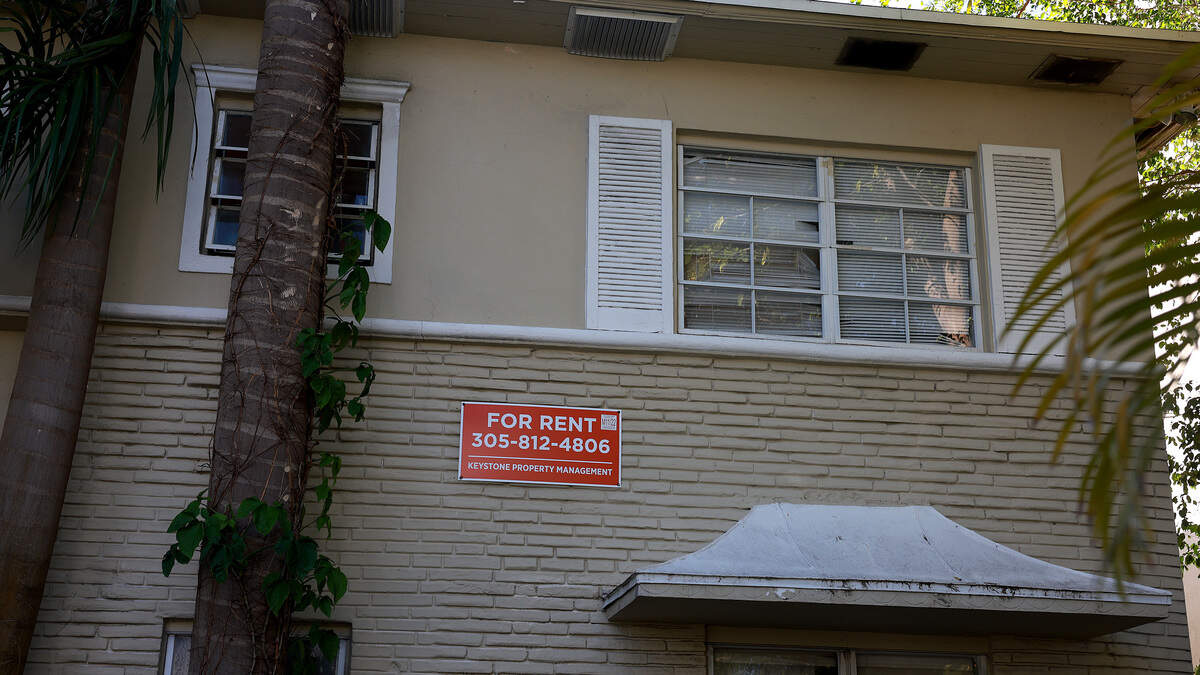
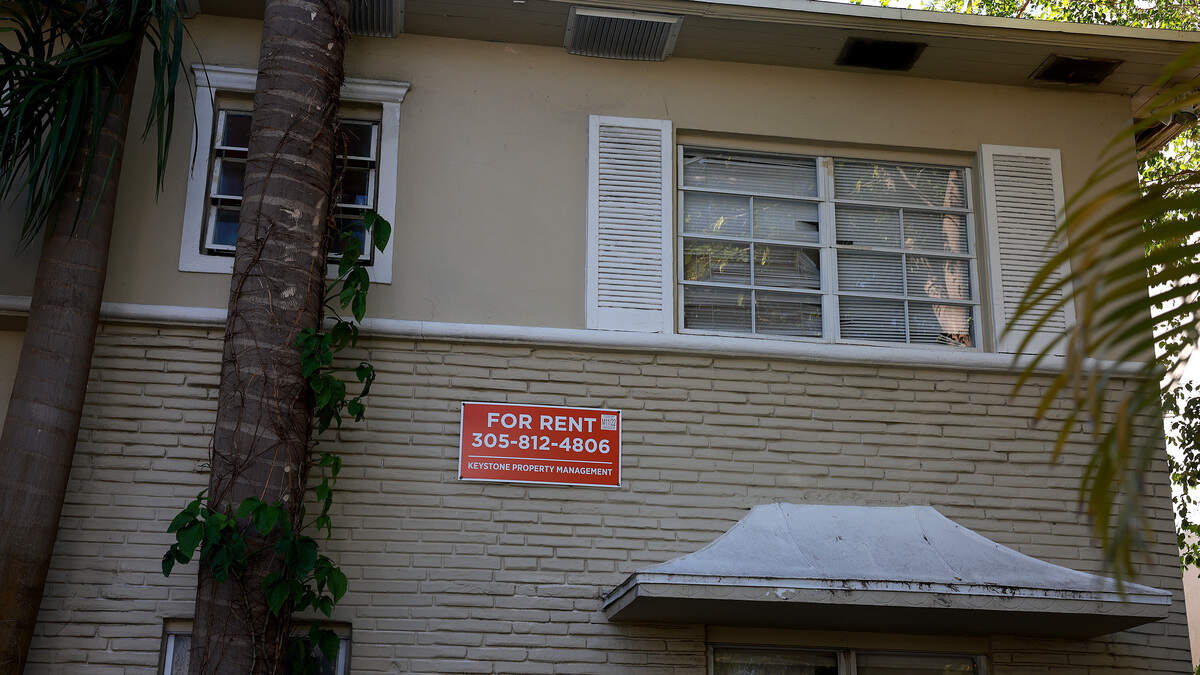
A ‘For Rent’ sign in front of a building on Dec. 06, 2022, in Miami Beach, Florida.
Joe Raedle
Getty Images
Much has been made about Amendment 3, the statewide ballot initiative that proposes tripling the homestead exemption for primary residences in the first year. Supporters argue it’ll make homeownership more affordable. Detractors say it’ll drive up home prices and disadvantage new buyers, all while wrecking local government coffers.
But what about the almost 470,000 Miami-Dade households that rent? Amendment 3 doesn’t mention them, but they might be impacted, probably for the worse, says Jared Walczak, a senior fellow at the Washington-based Tax Foundation and president of Walczak Policy Consulting.
Landlords who rent out properties – which are not homesteaded because they’re not owner-occupied – could see their property taxes hiked to fill budget holes. If that happens, landlords are likely to pass on their inflated tax bills to tenants in the form of higher rent, said Walczak, who last month prepared a study about Amendment 3’s impact on Florida renters.
“What is to keep rental property owners from saying, ‘You know what, I’m not going to pay for this increase myself. I’m just going to raise the rent?’” said Camilo Mejía, director of policy and advocacy at Catalyst Miami, which advocates for low-wealth communities. “There’s nothing in terms of renter protections” in Amendment 3’s language, he added.
What happens if Amendment 3 passes?
If Amendment 3 passes, the first $150,000 of a homesteaded property’s assessed value would be exempt from non-school taxes next year, up from just over $50,000 today. That number would jump to $250,000 in 2028.
As a result, local governments across Florida would lose a combined $8.7 billion in revenue by 2028, state estimates show. That could spell cuts to emergency services, public hospitals, libraries, parks and public transit.
To pass, Amendment 3 needs to win 60% of the vote. Roughly half of likely voters polled in a recent University of North Florida survey said they supported the ballot initiative, 35% opposed it and a critical 14% said they were unsure.
If it passes, local governments would have three options, said Walczak: dramatically reduce spending, raise non-property taxes – like sales taxes – or raise taxes on non-homesteaded properties. Many are likely to do some combination of all three, he noted.
That means commercial properties, rental units and second homes could see tax spikes to make up for the lost homesteaded property tax revenue.
Statewide, rental apartments could see an almost 15% increase in property tax liability – or $406 per unit – while single-family rental homeowners might find themselves paying more than $1,000 extra in property taxes per year, Walczak estimated.
Walczak’s estimates assume local governments raise tax rates enough to fully replace the lost revenue, based on state property records for every parcel in Florida. Somewhere between 60% and 100% of those tax hikes could be passed onto renters, he added.
In Miami-Dade, apartment renters could find themselves on the hook for an extra $291 per year to pay off their landlords’ higher property tax bills. For single-family renters, that number’s closer to $1,200, Walczak’s calculations show.
Those are roughly 9% increases. But in Broward, the potential rent hikes are even greater, partly because the county’s tax base depends more on homesteaded properties.
Broward landlords might find themselves paying 15% more in property taxes if Amendment 3 passes, again based on the assumption that local governments will raise taxes to fully replace the lost revenue. That, Walczak stressed, would likely show up in higher rent payments.
“Even though renters do not pay property taxes directly, there is strong economic evidence that they ultimately bear much of the burden of any property tax increase through higher rent,” Walczak concluded.
This story was produced with financial support from supporters including The Green Family Foundation Trust and Ken O’Keefe, in partnership with Journalism Funding Partners. The Miami Herald maintains full editorial control of this work.