
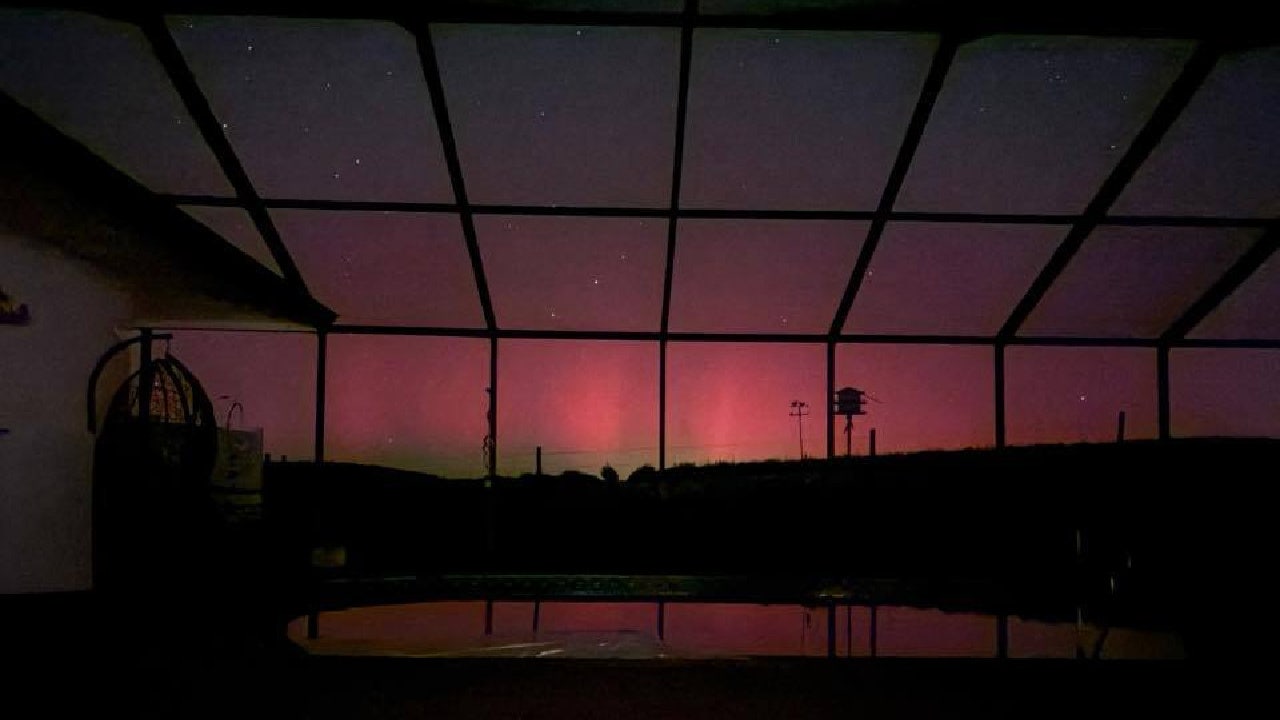
ORLANDO, Fla. – The Aurora Borealis, also known as the northern lights, could be seen in parts of Central Florida on Tuesday night.
A powerful solar storm made the Northern Lights visible this far south.
Many people across the area snapped pictures of the night sky that glowed with flashes of red, pink and blue.
Some FOX 35 viewers captured some spectacular photos of the northern lights and shared them with us. Take a look at the photos in the gallery below.
How northern lights happen
The northern lights are also called an aurora. They happen because our planet’s magnetic field acts like a protective shield, blocking most of the dangerous radiation from the sun but in the process, the collision of that solar energy excites gas particles in our highest upper atmosphere, creating glowing displays of color across the night sky.
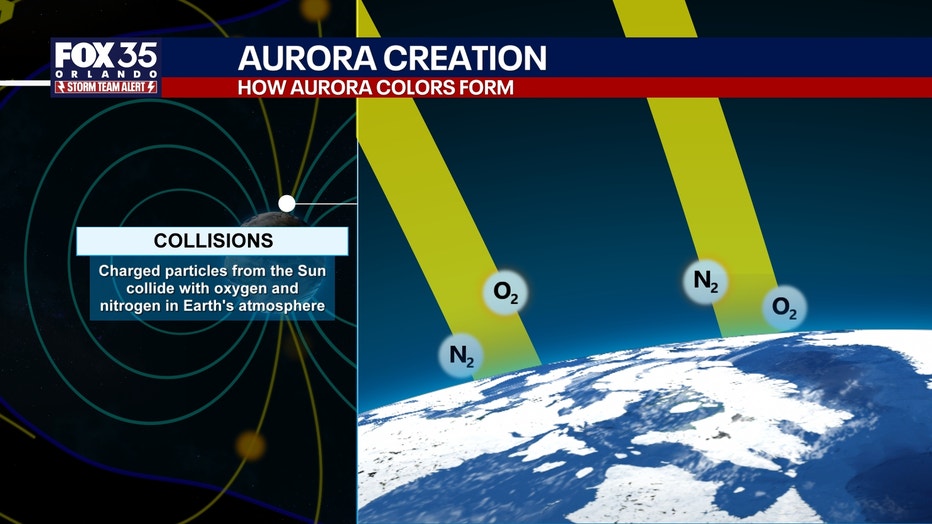
These bursts of solar activity are known as “coronal mass ejections” and “solar flares”. As they crash into Earth’s magnetic field, they are guided toward the poles by our magnetic field. The energy from those collisions is released as light, creating curtains of green, red, and purple that shimmer and dance. It is space and atmosphere meeting in one of the most beautiful conversations nature has to offer.
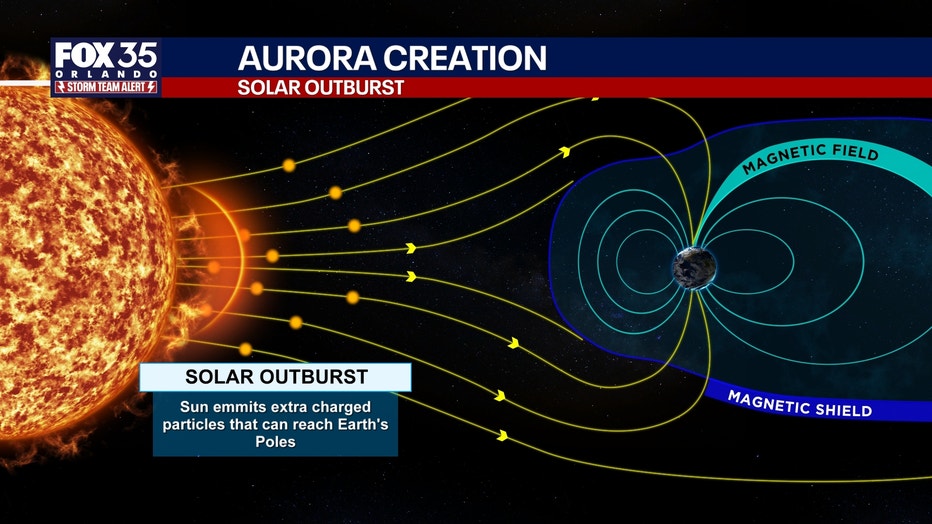
Normally, you have to be pretty far north or south to see it because that is where Earth’s magnetic field directs the energy. But when the sun sends a big blast of particles toward us, the “geomagnetic storm” can be so strong that it shakes the magnetic field across much lower latitudes.
Do solar storms affect Earth?
A G4 storm is a serious one, powerful enough to push that glowing auroral oval deep into the United States. A G4 storm does more than make pretty lights. It can shake up technology too. When the magnetic field is that disturbed, it can cause extra electrical currents in power lines and pipelines, sometimes tripping transformers or disrupting voltage control. High frequency radio communication can fade or drop out, especially near the poles, and navigation systems can lose accuracy. Satellites feel it too, as the extra charged particles can heat their outer layers and cause friction where there wasn’t anything significant before, make their orbits drift slightly and sometimes lower. Air traffic controllers may even reroute some polar flights to avoid communication blackouts.
Although solar storms can wreck havoc on the tech side, this allows magic to happen for people as far south as Florida. The sky can glow faintly red or green, sometimes looking like distant city light or thin clouds until your eyes adjust. It is not that the aurora traveled south, it is that the whole magnetic field got stretched so far that Florida ended up under the edge of the light show.
For a few hours, space weather reaches right into the subtropics. In extreme “G5” level storms (the worst level) auroras have been spotted in the Caribbean.
How to view northern lights
When trying to view the northern lights, here are a few tips to follow:
Try to find a dark location. Get away from city lights so you can clearly see the night sky.Take a picture with a smartphone camera to see parts of the aurora that are not visible to the naked eye Can you see the northern lights in Central Florida on Wednesday?
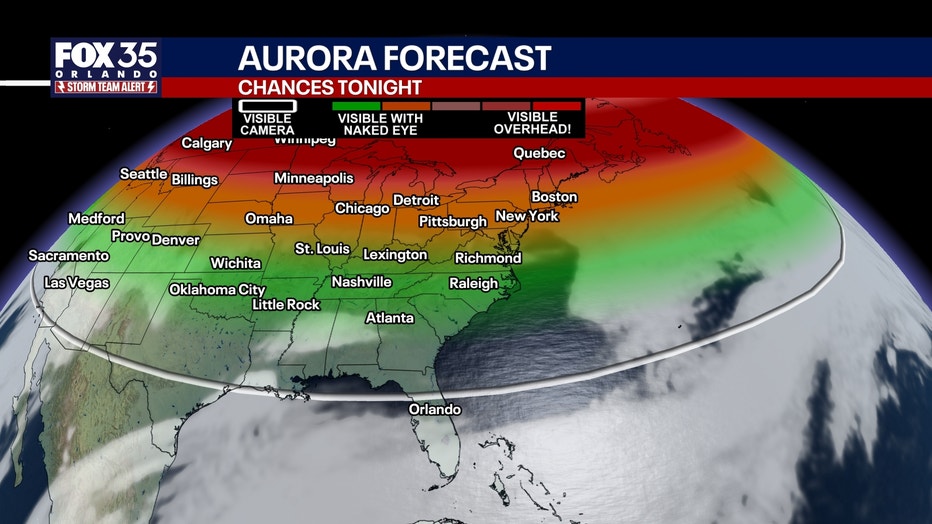
Parts of Georgia is the farthest south the aurora will likely be visible on Wednesday. However, in Florida, the best chance to view it will be with a long exposure camera. If the solar storm reaches the G5 level, then the aurora could be visible in this area.
 Photos: Northern lights around Central Florida
A photo of the aurora seen in the skies of St. Cloud. Credit: Alexandra Opal.
The Source: Information in this article was taken from NOAA, FOX 35 Storm Team and previous FOX 35 reporting.