
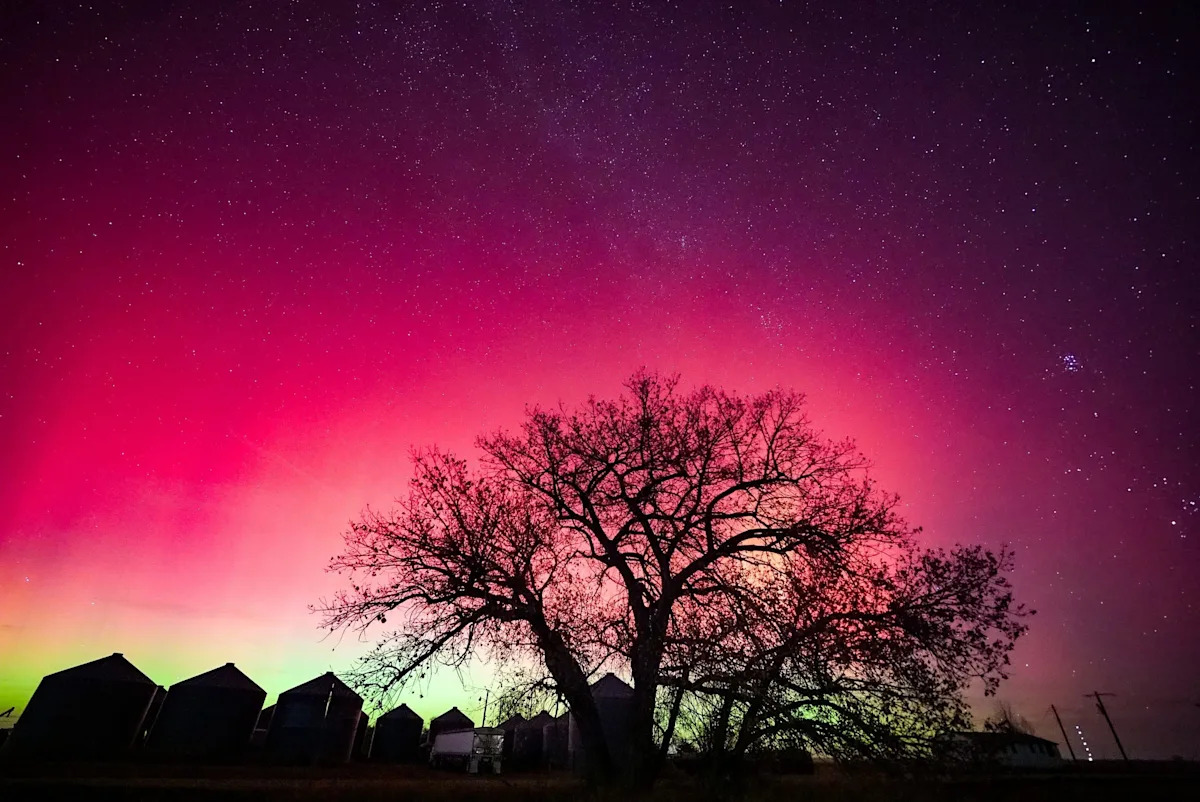
The northern lights put on a rare and stunning display Tuesday night, visible from Jacksonville and across much of North America on Nov. 11, caused by a powerful geomagnetic storm.
Geomagnetic storms occur when a burst of solar material, known as a coronal mass ejection, from the sun’s surface interacts with Earth’s atmosphere. According to the Space Weather Prediction Center in Boulder, Colorado, the eruption that fueled Tuesday night’s dazzling display left the sun earlier in the week.
However, the real surprise came Tuesday night when states not originally forecast by NOAA — including Texas, Colorado, and Florida — also caught a glimpse of the colorful spectacle.
“The aurora does not need to be directly overhead but can be observed from as much as 1000 km away when the aurora is bright and if conditions are right,” NOAA’s website says.
The NOAA Space Weather Prediction Center has issued a Severe (G4) Geomagnetic Storm Watch for Wednesday, Nov. 12, following several large solar eruptions over the past few days. With those conditions in mind, the possibility — and the question — remains: could Jacksonville get to see the aurora borealis lights again? Here’s what we know.
More on the aurora borealis: Northern lights spotted in Florida. Here’s where, the scenes. Will they be visible tonight?
What are northern lights and what causes them to appear?
The northern lights, a natural phenomenon formally known as the aurora borealis, can project colorful lights in the night sky because of an interaction between the sun’s plasma and Earth’s magnetic field, according to the National Weather Service.
See last night’s aurora lights in Florida Space Coast, Nov. 12, 2025
First Coast News also shared images of the Jacksonville sky during the aurora borealis event last night.
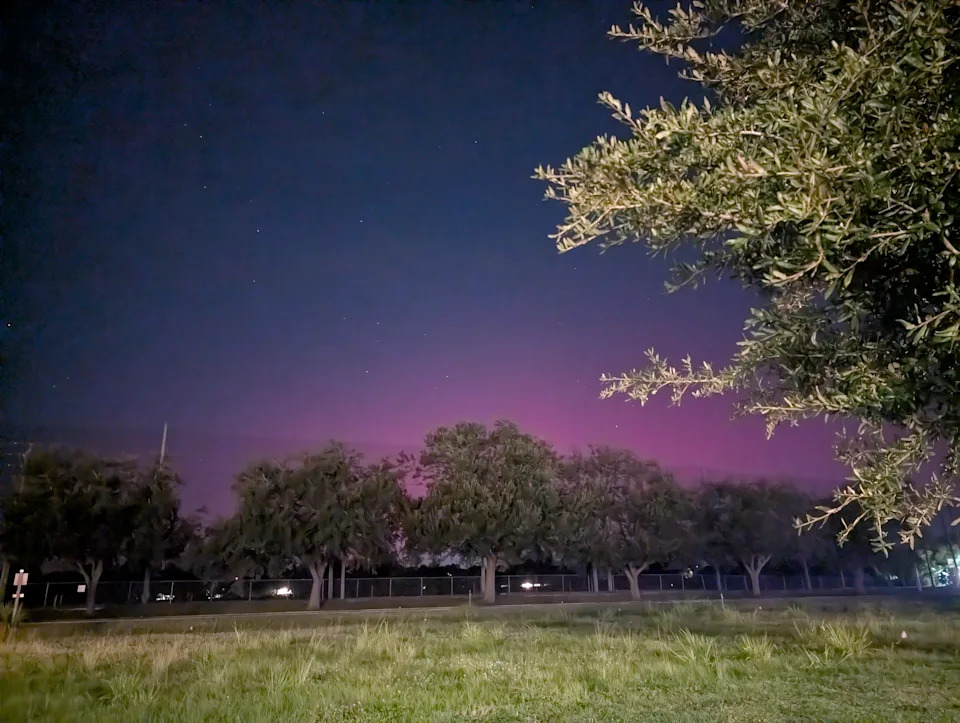
Light pollution did not stop the northern lights from visiting Florida’s Space Coast on Nov. 11.
Northern lights surprised states not included in NOAA’s initial forecast, Florida included
While NOAA’s website anticipates views in only some northern U.S. states, the forecast is only a prediction. On Nov. 11, sky gazers reported seeing the auroras in Texas, Florida, Colorado, Missouri and more areas beyond the forecasted view line for that night. Here are some images captured across the nation.
Will aurora borealis lights be visible in Jacksonville tonight?
Forecasting auroras is tricky — the latest burst from the sun is mostly aimed north and just ahead of Earth’s orbit, and a few earlier eruptions are still influencing how and when this one might arrive.
Experts at the Space Weather Prediction Center (SWPC) say they’re confident that part of this newest eruption will reach Earth, though the exact timing is still uncertain.
As always with these events, the intensity of the CME will not be known with better certainty until it arrives 1 million miles from Earth and is observed by the solar wind observatories at that location. It is at that point that any needed Warning decisions can be made by SWPC forecasters.
For now, SWPC says there’s a solid chance we could see G4-level geomagnetic storm activity once the CME arrives or as it moves past Earth. In other words, the lights might make another appearance — so keep an eye on the skies and check spaceweather.gov for the latest updates and forecasts.
Severe Geomagnetic Storm Watch NOAA: Nov. 12, 2025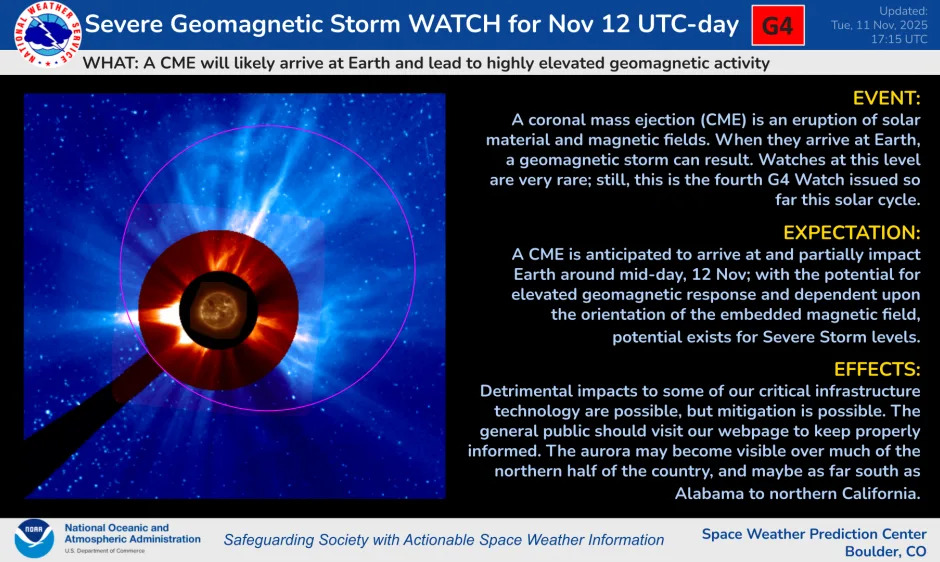
Severe Geomagnetic Storm Watch NOAA
How to track the geomagnetic storm on Nov. 12, 2025, to see aurora lights
The “Probability of Aurora” forecasts are updated daily by the SWC and are available here: Aurora – 30 Minute Forecast | NOAA / NWS Space Weather Prediction Center
Contributing Gabe Hauari, USA TODAY
This article originally appeared on Florida Times-Union: Northern lights tonight: Will Jacksonville see aurora borealis again?