

Fantasy TV has never been bigger. Every year, streaming platforms announce new “epic worlds,” huge budgets, and multi-season strategies to build entire worlds. But a few rare shows, like Prime Video’s Carnival Row, manage to create contained stories that are intriguing and powerful from start to finish.
In an era when fantasy shows are built to last forever, Carnival Row feels almost revolutionary. It shows that scale and spectacle don’t have to mean endless expansion, and that sometimes the best ending closes a story rather than opening a universe and marking the end of an era for the genre.
Carnival Row Is a Fantasy Built to Conclude, Not Expand

Vignette and Philo look scared in Carnival Row.Image via Amazon Studios
When the highly detailed Carnival Row premiered in 2019, it had all the makings of a massive franchise. The story combined politics, forbidden love, murder mystery, and dark fantasy into one massive story. Carnival Row takes place in The Burgue, a conflict-ridden Victorian-era city. Humans live alongside the magical Fae: fairies, fauns, and other refugees who fled war in their homeland.
The refugees live in a region known as Carnival Row, where poverty and fear grow. Carnival Row focuses on Rycroft “Philo” Philostrate (Orlando Bloom) and Vignette Stonemoss (Cara Delevingne). Philo is a detective with a dark secret. Vignette is a fairy refugee who has lived through war and has no intention of living in secret under human rule.
Their romance is fraught with pain, anger, and unresolved conflict. Where the first season builds tension, the second season does what very few modern fantasy shows have managed: it finishes the job. The Row’s revolution spilled over into a full-blown rebellion. By the end of the series, the story had been told.
There was no huge tease about the larger world. No lead-up to five more seasons. The world remained, but the story was finished. Today, as franchises like Game of Thrones keep expanding, Carnival Row represents the idea that a great series with potential doesn’t have to grow justbecause it can. Instead, it simply exists as its own entity and stands out as a result.
Carnival Row’s Well-Crafted Story Stands Above the Rest
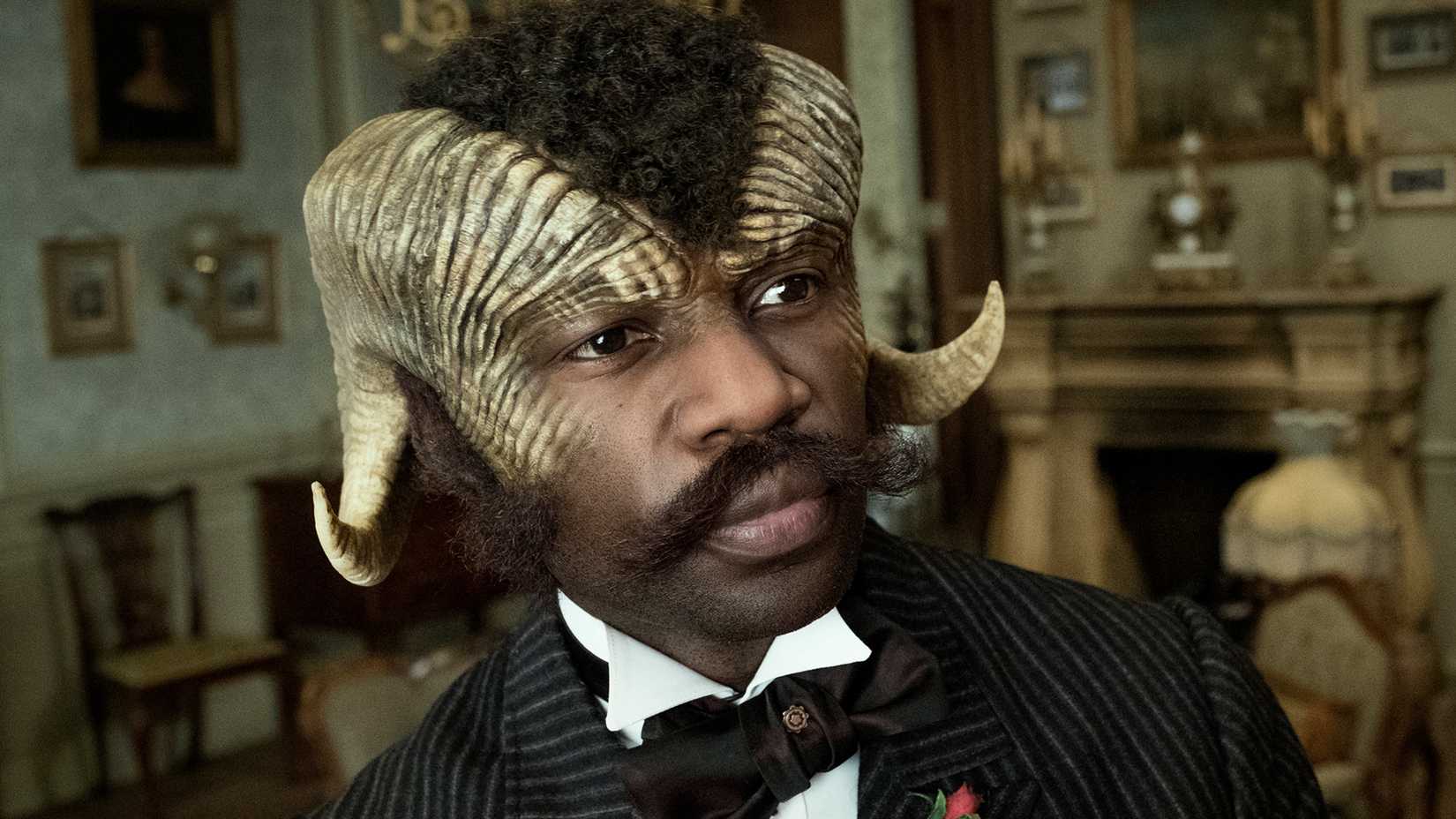
Image via Prime Video
Carnival Row premiered at the peak of the streaming wars, when every platform fought to secure the next big fantasy show. But it ended in 2023, just as the conversation about streaming budgets and sustainability began to shift. Big worlds suddenly felt risky.
As a result, the show now bridges eras. It has the scale of a franchise-era fantasy: big sets, big costumes, big lore. But it also has the shape of a previous television era: tell the story, then finish it. This is not a common combination. Most big-budget fantasy shows either go on forever or just end without finishing the story. Carnival Row avoided both of these pitfalls.
The series explores immigration, class struggle, and identity in a dark fantasy world. It involves revolutions, coups, and otherworldly threats. The scope is broad. Carnival Row demonstrates that a world can be broad without offering an infinite number of stories. Also, knowing a world has an end can make it all the more enjoyable.
Modern fantasy television shows care more about scope than closure. Carnival Row shows that scope and closure aren’t the same, and that the former can be more powerful than we have given it credit for. Carnival Row shows that epic fantasy doesn’t need endless chapters to be taken seriously.
Fantasies can explore a deep world and deep themes and still reach a conclusion. In this respect, it offers something increasingly rare: closure for a fantasy experience. It should not be a setup for what is to come, but a story that knows when to stop.