
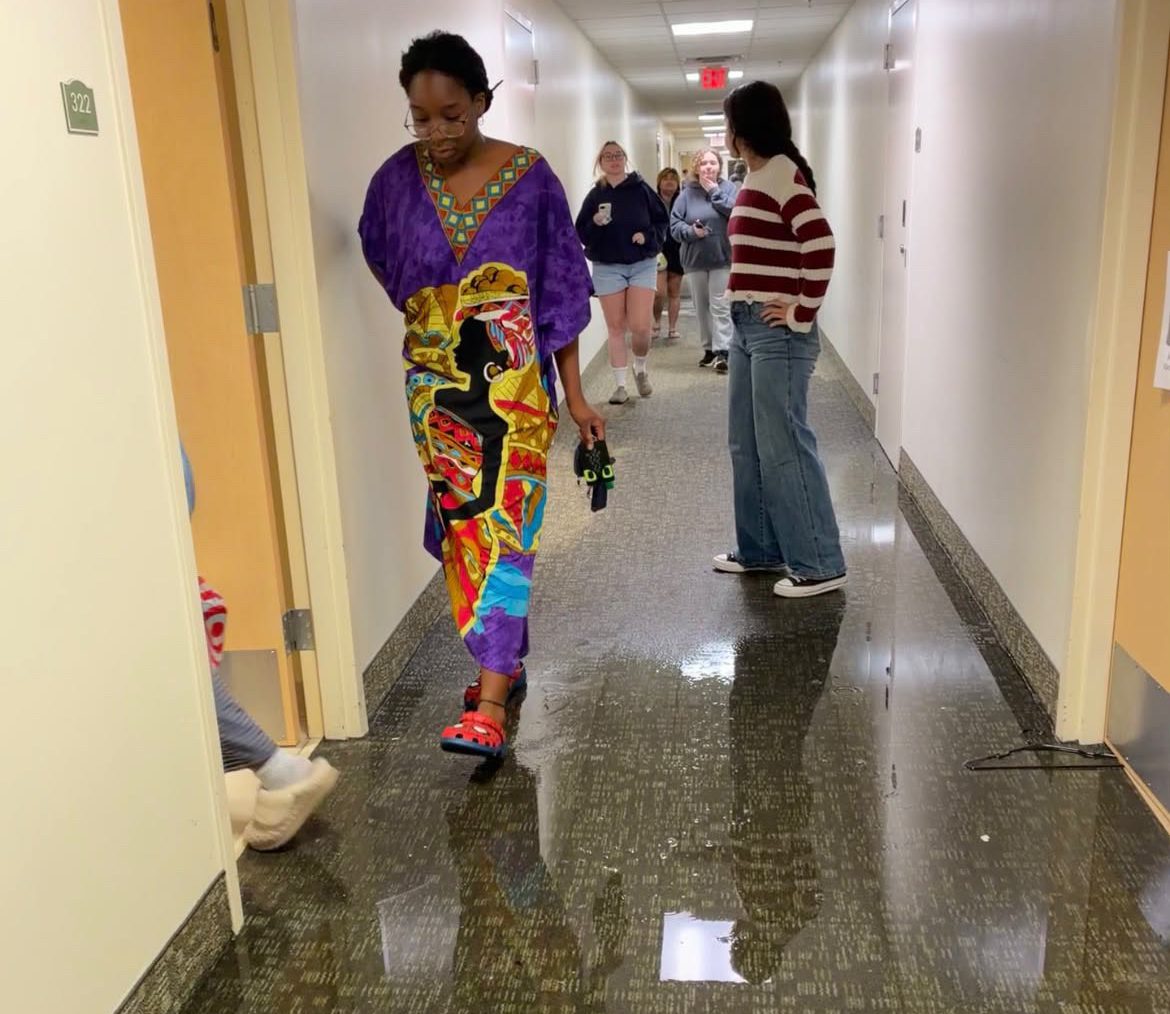
Twelve suites were damaged at the University of North Florida’s Osprey Fountains residence hall after a fire alarm activated sprinklers in the south tower Friday, Oct. 23, according to Robert Boyle, assistant vice president of Housing and Resident Life.
Flooding portions of the first three floors, the sprinklers started and the fire alarm sounded at approximately 11:50 p.m., Boyle said, as students evacuated the building and police and fire personnel responded to the scene.
Boyle said there was no evidence of a fire and that the sprinkler system had not malfunctioned but that sprinkler heads can activate when rising temperatures break an internal glass component or when physical force is applied, Boyle said.
A sprinkler activated inside a third-floor room, releasing water for 22 to 26 minutes before emergency personnel shut down the system and replaced the sprinkler head, according to Boyle.
The specific cause of the activation has not been determined, and the university expects to receive additional details from its life safety team, Boyle said. Boyle said approximately 60 student beds were impacted.
Students describe damage and concerns
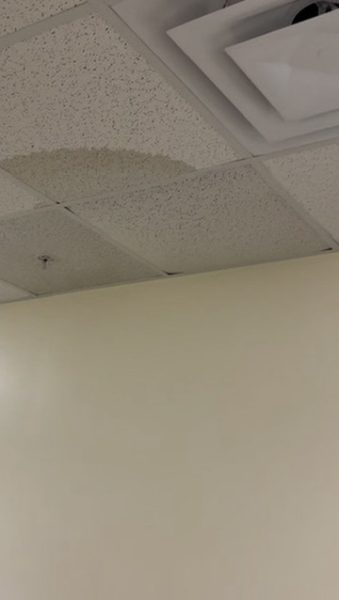 A section of the second-floor ceiling at Osprey Fountains shows water damage following the sprinkler activation. (Photo courtesy of a UNF Student)
One resident, who spoke on condition of anonymity to protect their living arrangements, returned from evacuations to find their room at Osprey Fountains flooded.
“We opened our door and stepped inside, and my foot stepped in about 1 to 2 inches of water,” the resident said.
The resident immediately notified housing staff, who instructed them to check whether their beds were wet. Staff said residents with affected beds would receive temporary housing, according to the resident.
Although the resident’s bed was not damaged by the water, they received temporary housing later in the week.
By Oct. 25, workers began removing baseboards from the resident’s suite. On Oct. 28, staff told the resident that the suite’s drywall would need replacement.
Housing and Residence Life did not immediately accommodate all affected residents, but began offering temporary housing throughout the week as requested and as the damage assessment progressed, Boyle said.
“We have a number of safe spaces here and there. So far, we’ve been able to accommodate students who have asked for a temporary space,” Boyle said.
Housing staff began extracting water from affected floors Oct. 24 using wet vacuums and also set up commercial fans and dehumidifiers to remove moisture, according to Boyle.
University staff began assessing damage late Friday night and a restoration contractor arrived Saturday morning to assist with water removal and structural drying, Boyle said.
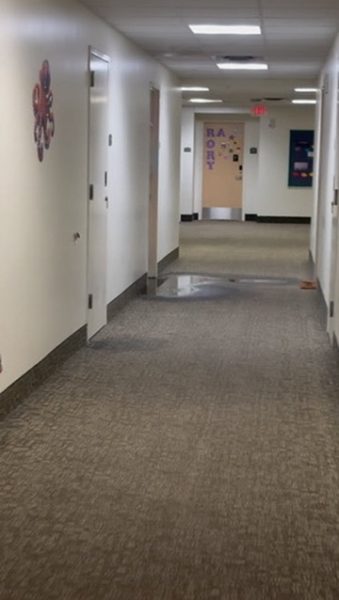 UNF staff is working to ensure dryness in baseboards and portions of drywall after a sprinkler incident, Boyle said.
Staff removed baseboards and portions of drywall to measure internal moisture levels and prevent microbial growth, Boyle said.
“The priority right now is making sure every area is as dry as possible,” Boyle said.
Boyle acknowledged that the repair process has been frustrating for some students but said the university was working to communicate with residents about the damage in their individual rooms.
The university plans to begin restoring drywall and baseboards the following week, but Boyle said it has not established a timeline for completing repairs and returning affected rooms to their original condition.
The university insures structural facilities and university-owned furniture, but does not cover students’ personal belongings. Students are encouraged to explore renters insurance options to protect personal property, Boyle said.
Residents with accommodation requests or concerns regarding room repairs should contact UNF Housing and Residence Life.
For more information or news tips, or if you see an error in this story or have any compliments or concerns, contact [email protected]