
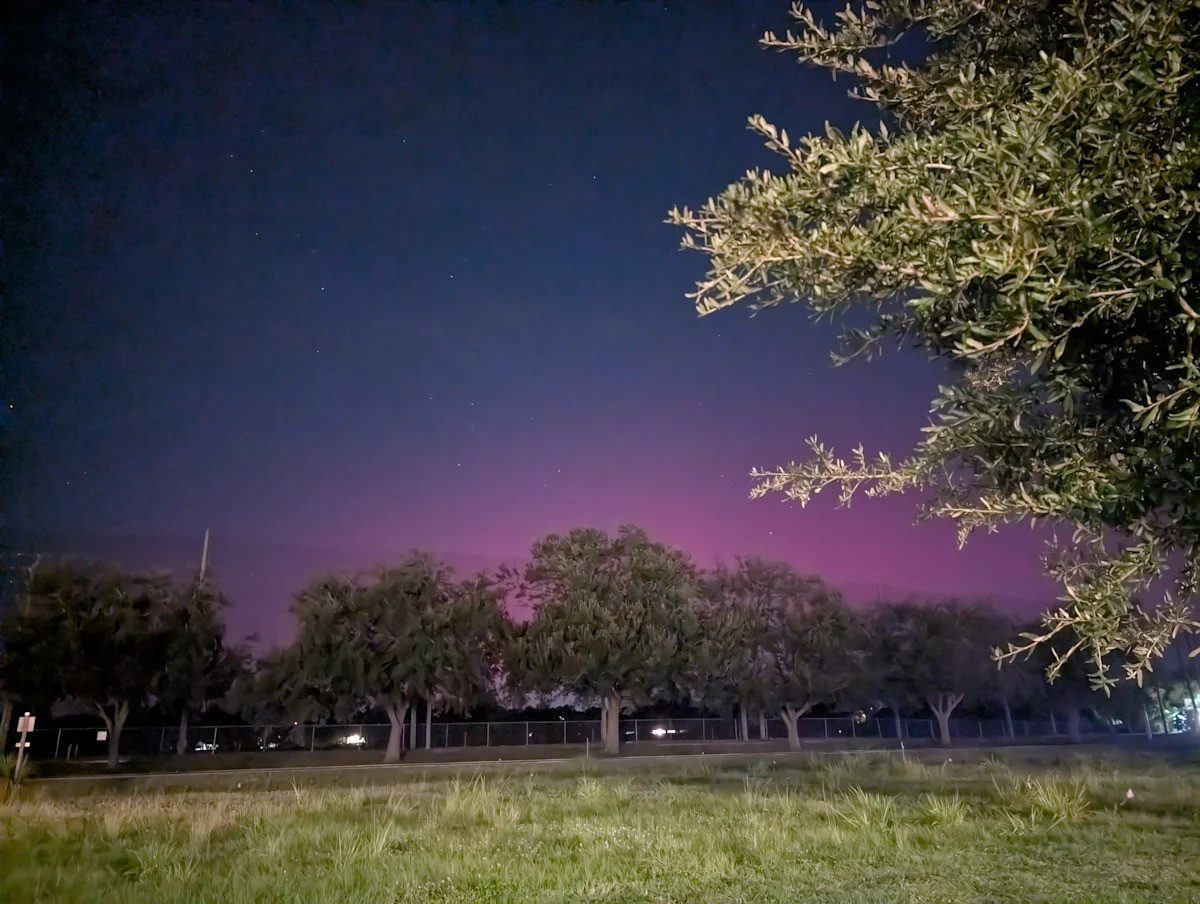
Some Floridians were treated to a dazzling display of color Tuesday night, Nov. 11, when a powerful solar storm was expected to bring northern lights to nearly two dozen states across the U.S., visible as far south as Pennsylvania.
Instead, it overperformed. Bright red, pink and green colors of the natural phenomenon formally known Aurora Borealis were visible in a much wider radius, including parts of North and Central Florida. And there’s a possibility, if not a strong one, it could happen again Wednesday night.
Reports of the stellar light show came in from the Emerald Coast to the Nature Coast with photos showing pink skylines in Marianna, Tallahassee, Crawfordville, Bryceville, Titusville and as far south as Orlando and Merritt Island.
Peak time for the storm is expected to reach earth from the sun around noon today, likely causing increased geomagnetic activity, according to the National Oceanic and Atmospheric Administration’s Space Weather Prediction Center, and the event continues into the evening of Nov. 12.
However, the forecast map this time only predicts possible visibility as far south as northern Michigan and Wisconsin.
“Uh did not expect to see the aurora from northern Tallahassee this evening,” National Weather Service forecaster Wright Dobbs wrote on X. “Faintly visible to the naked eye as an extremely dim red glow. Long 25s exposure here and edit to bring out the color captured by the camera.”
Readers sent in their own dazzling photos.
Dim colors were seen as far south as the Space Coast and residents from Merritt Island and Titusville posted pictures of the dancing aurora. It began as a dim red hue detectable only by camera but deepened until by 11:30 p.m. it could be seen by the naked eye.
What are northern lights? What causes the Aurora Borealis?
The sun emits electrically-charged particles called ions, according to the National Weather Service. Sometimes when a stream of ionized gas, called plasma, comes in contact with the Earth’s atmosphere, ions get trapped in the ionosphere (about 60-80 miles above the surface) and start to glow, the same way neon lights do.
The Aurora Borealis displays as constantly changing streams or curtains of brightly colored light. It’s harmless to life, but it can cause power disruptions in satellite communications and in radio and TV broadcasts.
Normally, northern lights are just that, visible only in the northern latitudes. But at times, especially the winter months when nights are longer and the sky tends to be less hazy, they’re visible farther south.
Tuesday night’s sighting was the Sunshine State’s third look at the lights since 2024.
The aurora is not always visible without the help of a camera and some editing, even in northern states.
What causes the northern lights? Here’s why auroras became widely visible in US
Will Florida see northern lights Wednesday night?
Florida is not one of the 18 or so northern U.S. states within NOAA’s forecasted “view line” for the northern lights on Nov. 12.
But then again, we weren’t on the list of states that would see it last night, either. Neither was Texas or Colorado, and residents from both states were also witness to the dazzling light show.
Let’s say it’s not very likely, but possibly worth a look anyway.
“The aurora does not need to be directly overhead but can be observed from as much as 1000 km away when the aurora is bright and if conditions are right,” NOAA’s website says.
According to NOAA, the northern lights are usually most visible from 7 p.m.-7 a.m. ET.
Which states will see the northern lights Wednesday night?
The following states could catch a glimpse of the aurora, according to NOAA’s forecasted view line:
Tips for catching a glimpse of the northern lights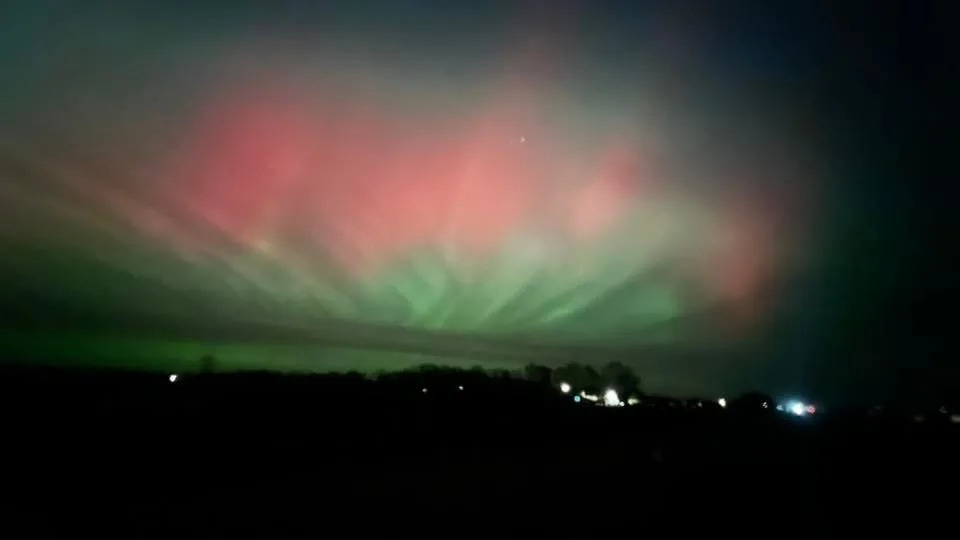
The northern lights over Quincy, Florida on Nov. 11, 2025.
Find dark skies: Get far away from city lights. Rural roads, state parks, or wide-open farmland work best.
Look low on the northern horizon: The aurora won’t be overhead. It’ll appear low in the sky, if visible at all.
Stay up late: Peak viewing could be anytime, from 10 p.m. to 2 a.m., but earlier or later bursts are possible. Remember, these are just the best predictions.
You might not spot the aurora with the naked eye, but that doesn’t mean it’s not there. Cameras can capture more light than your eyes can, especially with long exposures.
How to take a picture of the northern lights — even with a phone
Want your own Aurora Borealis memory?
If you have a DSLR or mirrorless camera:
Use a tripod to keep your camera steady
Set your camera to manual mode
Start with a 10–15 second exposure, a wide aperture (like f/2.8), and a higher ISO (around 1600–3200)
Focus manually, ideally on a distant light or star
If possible, use a remote trigger to avoid shaking the camera. Some cameras also can connect to phone apps to be operated remotely
If you’re using a smartphone:
Use Night Mode or a dedicated low-light app
If your iPhone or Android allows you to manually set longer exposures, do that
Hold your phone as still as humanly possible, use a tripod or rest it on a solid surface. If you’re using the iPhone camera app and you have an Apple Watch, you can snap the pic with your watch’s Camera Remote app to avoid shaking the phone
Contributing: Melina Khan, USA TODAY
This article originally appeared on Tallahassee Democrat: Florida northern lights show a rare treat. Will it happen Wednesday?