
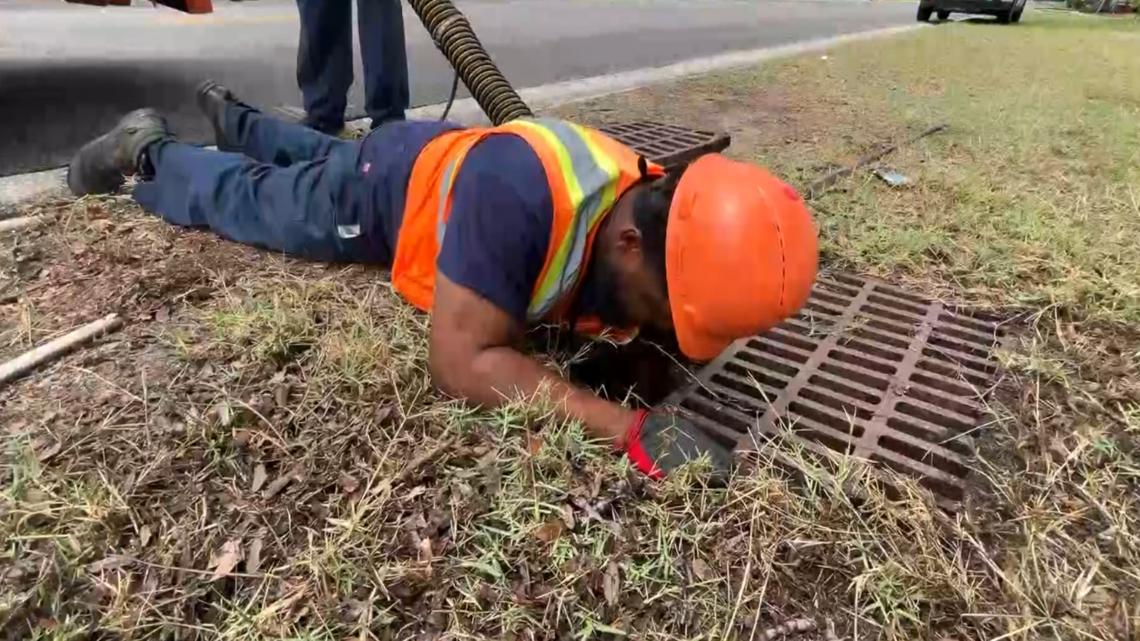
“We have drains in all four corners of the street — but they get clogged,” Nick Bell, a longtime resident of the neighborhood, said.
ST. PETERSBURG, Fla. — After a heavy downpour Wednesday evening, residents along 1st Street North in St. Petersburg are once again facing the familiar sight of standing water pooling in their streets. Many say the flooding is due to clogged or absent storm drains.
“We have drains in all four corners of the street — but they get clogged,” Nick Bell, a longtime resident of the neighborhood, said.
He explained that while the water usually stays below the curb, it flows quickly down 14th Avenue toward the bay, resembling a river.
According to Bell, the situation worsens further down the block, where some intersections lack storm drains altogether.
“When we get a heavy rain — or like when we had Helene — those areas flooded badly,” he said.
The city of St. Petersburg maintains that storm drains are cleaned on a regular schedule. However, Bell says he hasn’t seen maintenance crews in his area for quite some time. He hopes city workers can prioritize neighborhoods like his.
“As you can imagine, in a city this size, there are a lot of drains to maintain,” he said. “But we also asked them to inspect areas that don’t have drains. If water is standing too long, put in a drain so those residents don’t have to worry about flooding risks during big storms and hurricanes.”
Meanwhile, in Tampa, the city has been ramping up its stormwater maintenance efforts. Since May, Tampa officials say they’ve cleaned 4,378 ditches and 25,756 pipes. Stormwater crews are reportedly working up to six days a week and have partnered with contractors to boost efficiency.
Residents in both cities are encouraged to report any stormwater or drainage concerns directly to their local governments. St. Petersburg residents can use the SeeClickFix portal, while those in Tampa can submit issues via Tampa Connect.
Officials also urge homeowners to do their part by keeping storm drains near their property clear of debris, trash and leaves — especially during Florida’s stormy season.