
A new push for condominium association reform is rising around Brickell Key in Miami.
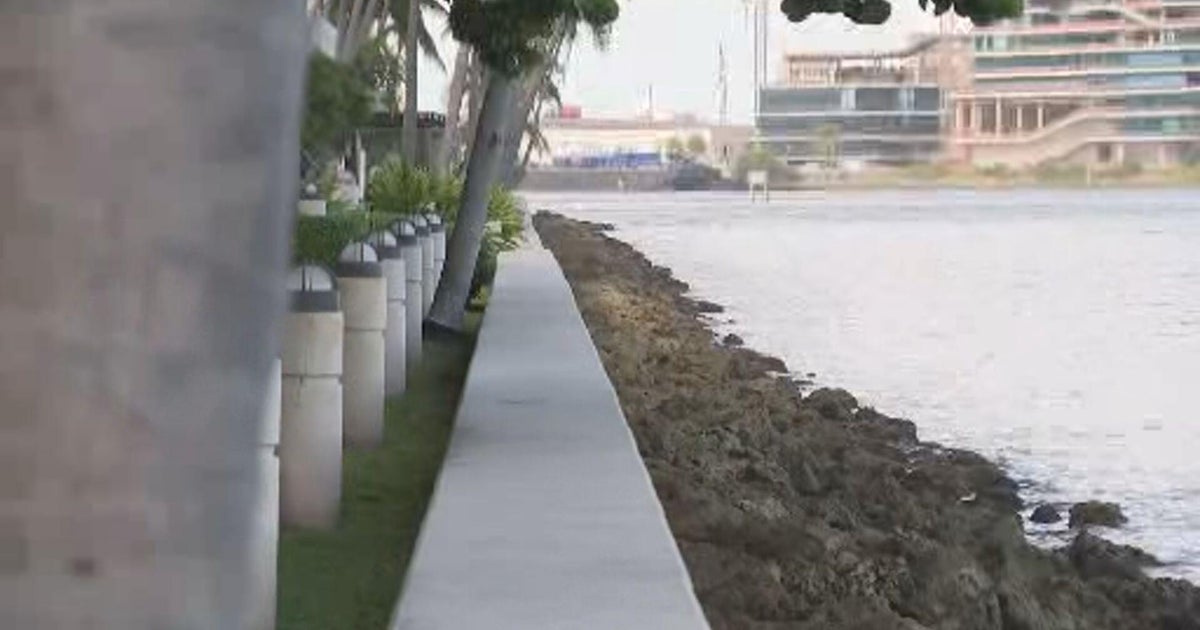
The island is a triangular-shaped community of private streets surrounded by a public, City of Miami-maintained walking trail on top of a seawall.
Plans to replace the seawall, its cost and the developer’s control over the master association board leave some residents worried about being priced out in the future.
Ed Claughton, whose grandfather sold the island to Swire Properties in the 1970s, shares those concerns. He does not live on the island. However, he wrote lawmakers and the master association board members a letter asking the board to reconsider a $32 million assessment on all residents to replace the seawall around the island.
While all 13 buildings have association boards to manage problems in their buildings, a master association board controls island-wide upkeep.
Developers from Swire Properties are behind a luxury Mandarin Residences high-rise with multi-million dollar homes on the island. Swire also has a controlling vote on the master association board.
Members of that board said the decision to assess residents to replace the aging seawall is based on expert engineers’ recommendations. Claughton believes the is tied to the new development.
So, he also asked lawmakers for homeowner association reform to help residents on Brickell Key and across South Florida.
“There’s been too many cases of overzealous board decisions and fines and assessments, especially ones where the board is really still in the hands of the developer still,” Claughton said. “They have the controlling vote.”
A state lawmaker seeks to reform homeowner associations
Florida House of Representatives member Juan Carlos Porras (R) of District 119 sees no reason to doubt recommendations to replace the seawall around Brickell Key. He does, though, see problems with association board leadership.
“I personally don’t agree, by the way, that there even is a master association,” he said. “I don’t agree with multiple condominium buildings forming together to create a homeowner association when there are two different sets of laws and nobody knows whose really in charge.”
He is pushing HOA reform in the state legislature. Porras wants to provide home and condo owners more power in disputes with master associations or developer-run association boards, he said. He will propose that home and condo owners receive the ability to take concerns to court for a judge to decide if association boards are doing right by residents, Porras said.
Frank Lago lives on Brickell Key. He is also a member of the master association board.
Lago showed CBS News Miami the bylaws that said Swire Properties’ controlling interest ends once it sells its last available unit on the island. That should happen within five years, Lago said.
Brickell Key’s master association board is responsible, Lago said. However, he supports potential reform because he believes others abuse the master board’s powers.
“In this case, the majority of the island voted for the wall,” Lago said. “So in this case, no [there is no abuse]. But in other cases, I think Juan Carlos Porras is correct. The representative has a point.”
A spokesperson for Swire Properties sent CBS News Miami a statement:
“Every Brickell Key owner purchased their unit subject to the terms of the Master Covenants, including Swire Properties’ voting shares, which will remain in effect until Brickell Key is fully developed. Until control of the BKMA is turned over to the unit owners, the BKMA Board will continue to take the necessary actions to ensure that Brickell Key’s critical infrastructure, like the surrounding seawall, will not fall into disrepair. As it has done for the last 45 years on Brickell Key, Swire Properties will continue to advocate for this type of responsible maintenance.”
Brickell Key condo owners upset with the seawall assessment are discussing options and plan to fight as long as possible.
Porras expects to introduce HOA reform proposals during the next legislative session.
“There’s been too many cases of overzealous board decisions and fines and assessments, especially ones where the board is really still in the hands,” Claughton said.