
The Florida State Board of Education has unanimously adopted the Heritage Foundation’s “Phoenix Declaration,” and newly released emails show that Jeffrey Epstein still had a complex network of wealthy and influential friends, even after he was convicted of soliciting prostitution from an underage girl in 2008.

Florida is now the first state in the nation to adopt the “Phoenix Declaration” — a set of education philosophies put forth by the Heritage Foundation, a high-profile conservative think tank.
The State Board of Education approved the declaration unanimously, setting it up to be the driving force for how public schools will instruct students.
“Every child should have access to a high-quality, content-rich education that fosters the pursuit of the good, the true, and the beautiful, so that they may achieve their full, God-given potential,” reads the declaration.
The declaration emphasizes seven principles — parental choice and responsibility; transparency and accountability; truth and goodness; cultural transmission; character formation; academic excellence; and citizenship.
“I don’t know how anyone could disagree with parental choice and responsibility, curriculum transparency, academic excellence, and instruction on objective truth,” said Education Commissioner Anastasios Kamoutsas. “These principles are principles that everyone across the board on both sides of the aisles can agree with.”
The declaration says that students “should learn that there is objective truth and that it is knowable.”
“Science courses must be grounded in reality, not ideological fads,” it continues. “Students should learn that good and evil exist, and that human beings have the capacity and duty to choose good.”
The declaration goes on to decry “fads or experimental teaching methods” in favor of “core knowledge and tried-and-true pedagogy.”
As for educational policies governing how students learn about the history of the United States, the declaration insists that schools should “foster a healthy sense of patriotism and cultivate gratitude for and attachment to our country and all who serve its central institutions.”
“Students should develop a deep understanding of and respect for our nation’s founding documents and the ideas they contain about ordered liberty, justice, the rule of law, limited government, natural rights, and the equal dignity of all human beings,” the declaration says. “Students should learn the whole truth about America — its merits and failings — without obscuring that America is a great source of good in the world and that we have a tradition that is worth passing on.”
Critics, including the Florida Education Association, rebuked the declaration as a politicized document authored by a conservative organization, which, among other things, championed the controversial Project 2025.
“The Phoenix Declaration is the latest thinly veiled attempt by billionaire-backed special interests to dismantle and politicize Florida’s public education system,” the union said in a statement.
Supporters, however, say they believe the declaration’s philosophies will help improve teaching, learning and civic outcomes in Florida’s public schools.
“Many students are just being taught what to think,” said Orlando school board member Alicia Farrant. “And parents want their kids to learn how to think, how to think critically, and that gets us back to those foundations that made our nation great.”
Other states are considering adoption of the Phoenix Declaration — state leaders in South Carolina and Oklahoma have endorsed it.
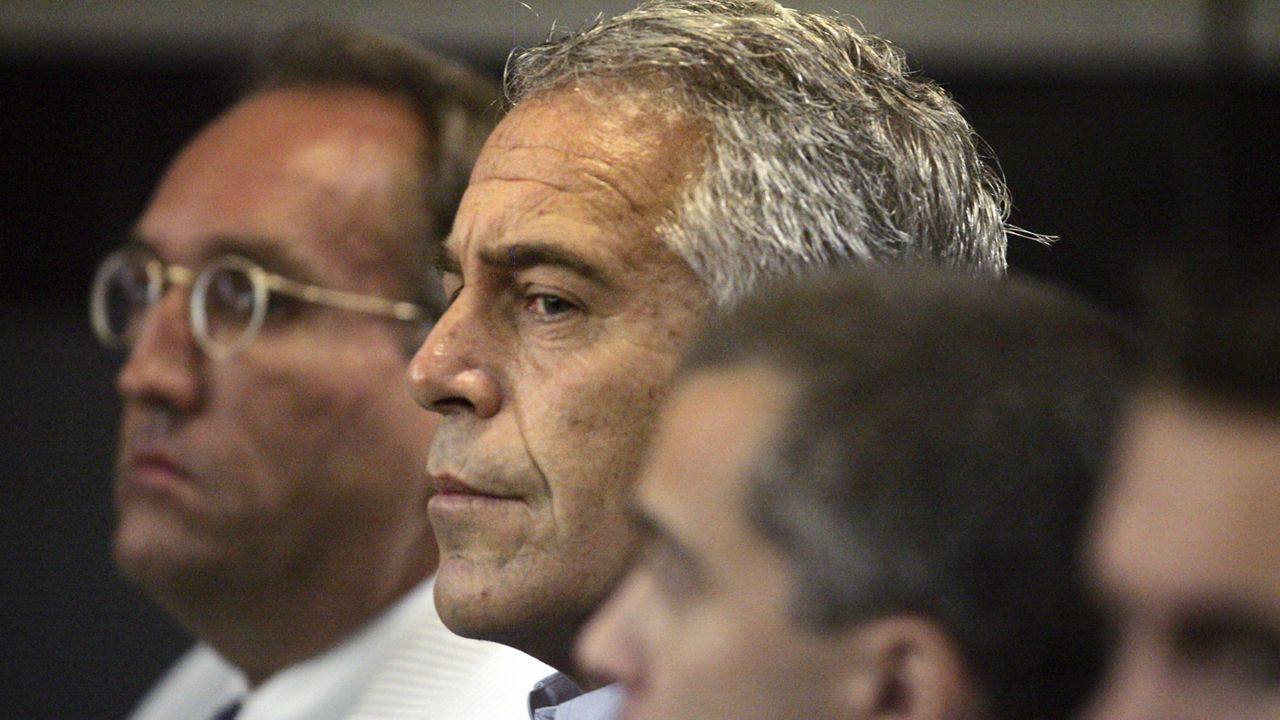
By the time Jeffrey Epstein pleaded guilty in 2008 to soliciting prostitution from an underage girl, he had established an enormous network of wealthy and influential friends. Emails made public this week show the crime did little to diminish the desire of that network to stay connected to the billionaire financier.
Thousands of documents released by the House Oversight Committee on Wednesday offer a new glimpse into what Epstein’s relationships with business executives, reporters, academics and political players looked like over a decade.
They start with messages he sent and received around the time he finished serving his Florida sentence in 2009 and continue until the months before his arrest on federal sex trafficking charges in 2019.
During that time, Epstein’s network was eclectic, spanning the globe and political affiliations: from the liberal academic Noam Chomsky to Steve Bannon, the longtime ally of President Donald Trump.
Some reached out to support Epstein amid lawsuits and prosecutions, others sought introductions or advice on everything from dating to oil prices. One consulted him on how to respond to accusations of sexual harassment.
Epstein was charged with sex trafficking in 2019, and killed himself in jail a month later. Epstein’s crimes, high-profile connections and jailhouse suicide have made the case a magnet for conspiracy theorists and online sleuths seeking proof of a cover-up.
The emails do not implicate his contacts in those alleged crimes. They instead paint a picture of Epstein’s influence and connections over the years he was a registered sex offender.