
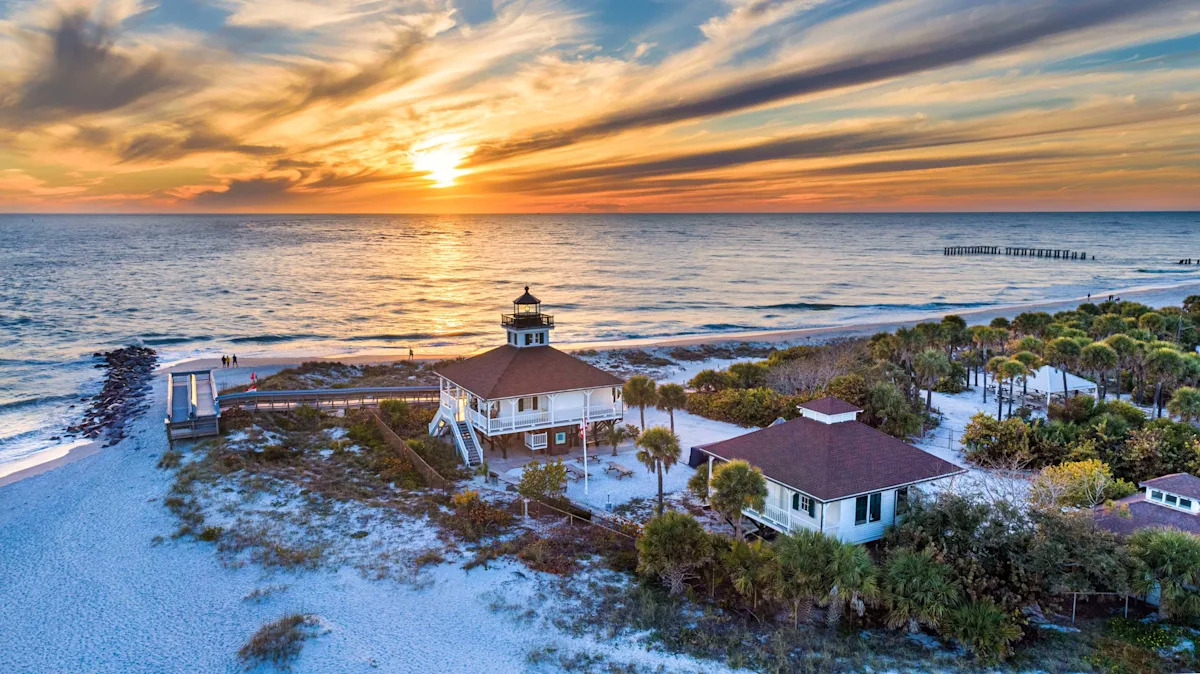
Seven-mile Gasparilla Island may be small, but it looms large in the world of fishing. This quiet Gulf Coast barrier island has one main town: Boca Grande, a glorified Floridian fishing village regarded as the Tarpon Capital of the World thanks to both geography and tradition.
Long before tourism and seaside development defined Florida’s west coast, anglers were drawn to Boca Grande for one main reason: tarpon. Today, that maritime heritage holds strong, but there are many reasons to pay this pocket of Old Florida a visit.
“Boca Grande is filled with wonderful people,” says Susan Eddy, a second-generation resident who’s been around the island since the 1980s (and also happens to be my cousin!). “Our little island is very family-oriented. Generally, the island attracts people who enjoy the water and sports—fishing, golf, boating, tennis, and croquet are very popular.”
Fishing, of course, reigns supreme.
A Salty Southern Tradition
The town of Boca Grande earned Tarpon Fishing Capital of the World status well over a century ago, when visitors arrived by steamer and rail (you can still spot remnants of the Charlotte Harbor and Northern Railway all around!) to try their luck at what has become one of the South’s oldest and most celebrated sport-fishing traditions.
The story officially begins in 1885, when fisherman W.H. Wood was documented catching a tarpon on rod and reel (although the Calusa tribe fished these waters long before with nets, traps, and spears). His fierce fight and shimmering prize made headlines, and the Boca Grande tarpon-fishing craze took off, inspiring a sport that still defines the character of the town today.
By 1911, visitors were flocking to the newly opened Gasparilla Inn (then called Hotel Boca Grande), where well-heeled guests gathered amidst the charming Queen Anne–style architecture to exchange tales of hooking (or not) the rolling, rollicking “Silver King.”
More than a century later, the tradition endures; the particularly deep waters of Boca Grande Pass—the channel between Gasparilla Island and Cayo Costa—naturally funnel in the massive migratory fish until the channel teems with tarpon, and anglers come from all over to participate.
On top of tradition, the adrenaline rush is a big draw: hooking a tarpon is a feat of strength and skill since the fish can top 100 pounds and put up a notoriously mean, screaming, sometimes hours-long fight on their way in.
While the thrill remains unchanged, long-running tournaments like the World’s Richest Tarpon Tournament (which began all the way back in 1983!) now emphasize stewardship as much as sport—with a few exceptions, tarpon are a catch-and-release-only sport fish protected by strict regulations. For example, anglers can only target one tarpon at a time, and your catch cannot even be removed from the water if it’s more than 40 inches.
Peak tarpon season in Boca Grande runs from late April through July, when migration is at its heaviest. Hiring a guide is common here; fascinatingly, many can trace their ancestry to the pioneering fishing families of the area and have generations of passed-down fishing lore to share as you await that exhilarating strike.
Related: This Historic Barrier Island Hotel Was Just Named The Best Resort In Florida
Off the Water in Boca Grande
Even onshore, Boca Grande’s appeal is undeniable. With sandy, banyan-shaded streets and a quaint downtown—there’s no fast food, chains, or gas stations, and your main form of transport here should be a golf cart or bicycle—it’s a sweet place to spend a few unhurried days enjoying Florida at its finest.
“The shopping is pretty limited to just a few terrific stores, and it’s the same with the restaurants,” says Eddy. “Of course, the beautiful Gasparilla Inn is also a huge draw and brings hundreds of visitors every year.”
Poke around Gasparilla Road, East Railroad Avenue, and Park Avenue before exploring Gasparilla Island State Park, where the 1890 Port Boca Grande Lighthouse doubles as a maritime museum chronicling island history from phosphate to fishing. Whatever you do, the stunning beach sunsets are worth orienting your day around.
A stay at the storied, always-elegant Gasparilla Inn is a must for the full Boca Grande experience, but a morning coffee run to The Inn Bakery and cozying up for a nightcap at BZ’s will give you a taste. Just note the inn’s faithfully observed dress requirements.
Other Boca Grande musts? Ice cream from The Pink Pony, a family-owned island icon since 1988; at least one meal at The Temp; and Eagle Grille & Miller’s Dockside (one upstairs, one down) for a waterfront meal. As the only grocery store on the island, Hudson’s is the heart of Boca Grande and worth a stop for provisions and an unfiltered look at local life. And if you don’t hit The Pink during your visit, you didn’t really go to Boca Grande. The key lime pie could very well change your life.
Though there are quality options for dining and lodging, Boca Grande’s magic lives in what’s not here: crowds, chaos, and decision fatigue. The island places no big demands on your time and attention, so set your clock to island time and enjoy one of Florida’s most laid-back stretches.
Know Before You Go
Gasparilla Island sits about 100 miles south of Tampa, and there’s just one road in: the Boca Grande Causeway. Keep in mind that Boca Grande is a seasonal destination; tarpon season lasts from April to July, and the Gasparilla Inn closes annually for a summer break from mid-July to early October. If you do come to fish, secure lodging and guides well in advance.
Read the original article on Southern Living