
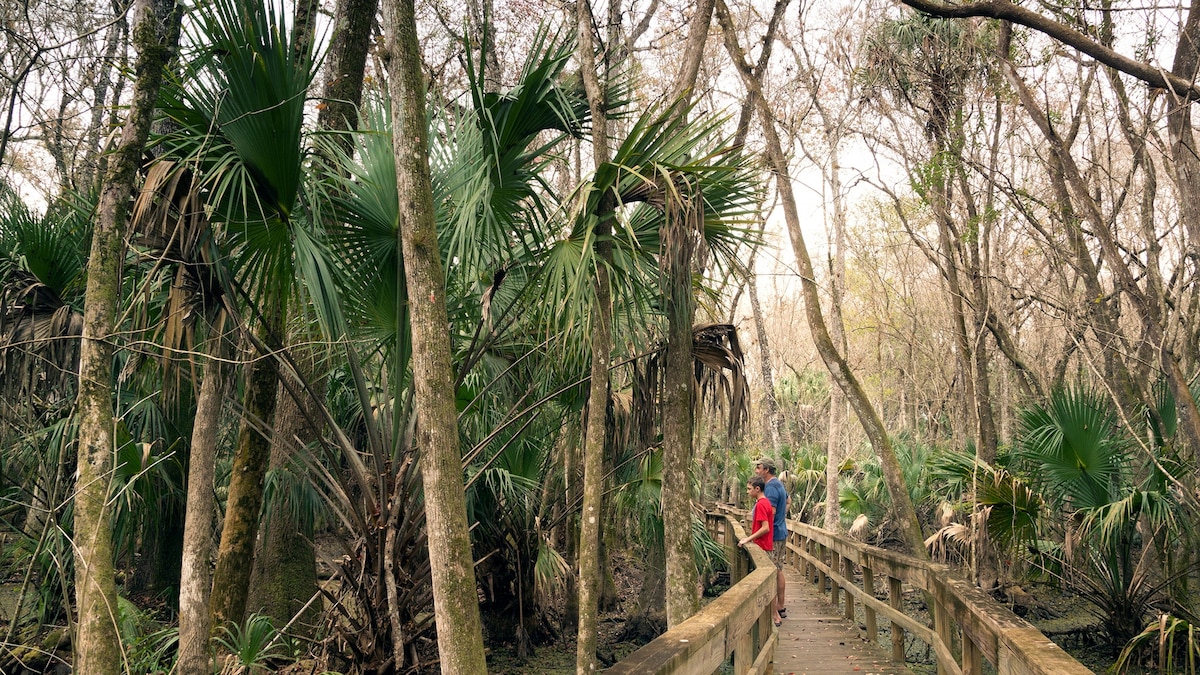
White egrets tiptoe through brown cypress swamps, and gopher tortoises meander across the roadway towards pine flatwoods, all undisturbed by early-bird visitors. Hikers tread across marsh boardwalks and into an ancient hydric hammock where rare Florida panthers, scrub-jays, and pine snakes hide amongst a canopy of air plants and sabal palms.
With the mystique of the Everglades, the tranquility of Biscayne Bay, and the ambient isolation of Dry Tortugas, Highlands Hammock State Park was a strong but ultimately unsuccessful contender for national park designation.
“Being on the Lake Wales Ridge, it’s an endemically rich part of Florida with extremely rare species,” says Dr. Hilary Swain, emerita executive director of nearby Archbold Biological Station. “Highlands Hammock epitomizes how ecosystems work; it’s a place where you can see a constellation of habitats.”
Millennia-old leaf prints and an Ice Age-era giant tortoise shell mark the early archaeological records of the Florida Park Service’s first state park, a home to more rare, threatened, and endangered species than its contemporaries. The history of Highlands Hammock State Park is more than the origin of the Florida Park Service; it’s a century-old love letter to Florida’s often overlooked inland ecology.
(The history of the Florida panther, a symbol of reverence and revulsion.)
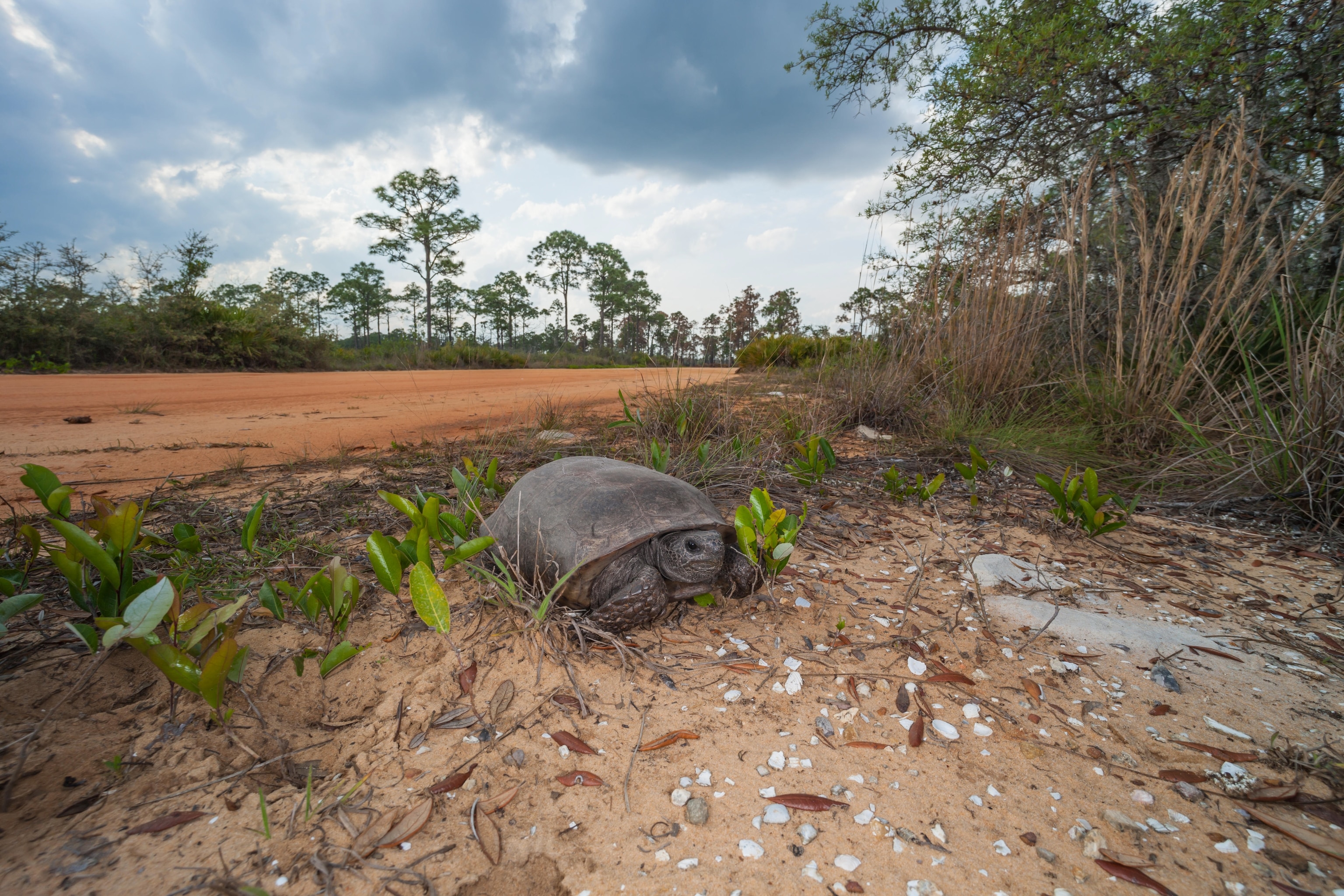
A Gopher Tortoise, a threatened species due to habitat destruction, crosses a dirt road in Highlands Hammock State Park in Sebring, Florida.
Clarence Holmes Wildlife, Alamy
History of Florida Park Service’s first state park
“A confluence of extraordinary things led to Highlands Hammock,” says Swain. “A tremendous ecological history, the serendipity of an extremely wealthy and very perceptive botanist, and immediate eligibility of Civilian Conservation Corps money.”
Located in Sebring, the historic core of Highlands Hammock State Park was privately owned in the mid-1800s. Two large parcels, referred to as Hooker’s Hammock and Eiland’s Hammock, were popular recreational spaces. Locals petitioned for national park nomination during the Great Depression, but the bid for federal designation failed due to the hammocks’ small size.
Swain explains that Margaret Shippen Roebling flew over the hammocks in 1930 and fell in love with their natural beauty. The wealthy Roeblings purchased the land, funding and fundraising for its development and preservation, before opening it as a public park in 1931 called Highlands Hammock.
“Even though Highlands Hammock was privately built, I don’t know that it would have survived more than a few years,” says Dr. David J. Nelson, professor of history at the Abraham Baldwin Agricultural College Bainbridge Campus. “The fact that this incredible hammock is preserved into the 21st century—and that the Florida Park Service even exists—is thanks to the Civilian Conservation Corps (CCC).”
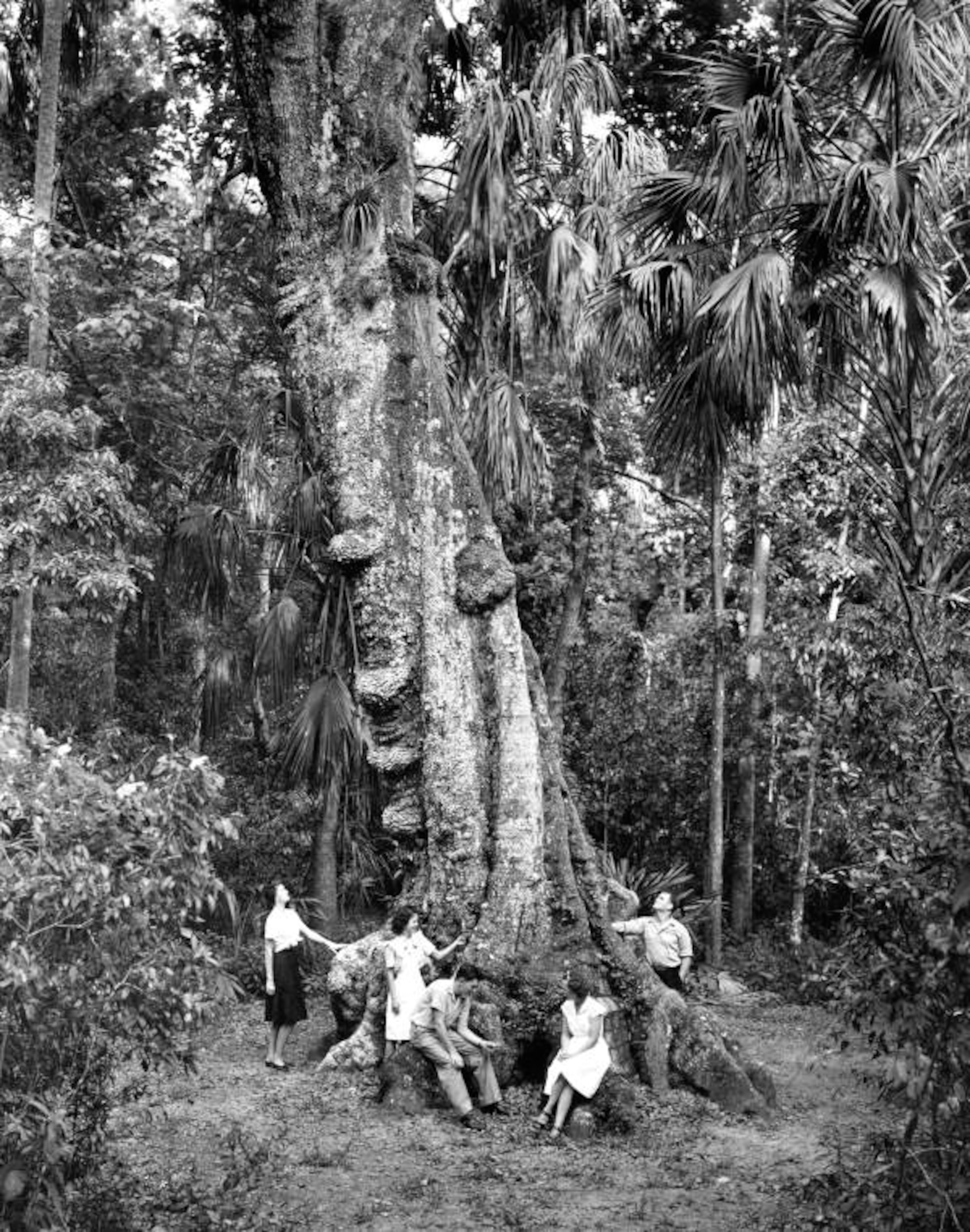
Visitors gathered around the base of a giant laurel oak in Highlands Hammock State Park.
State Archives of Florida
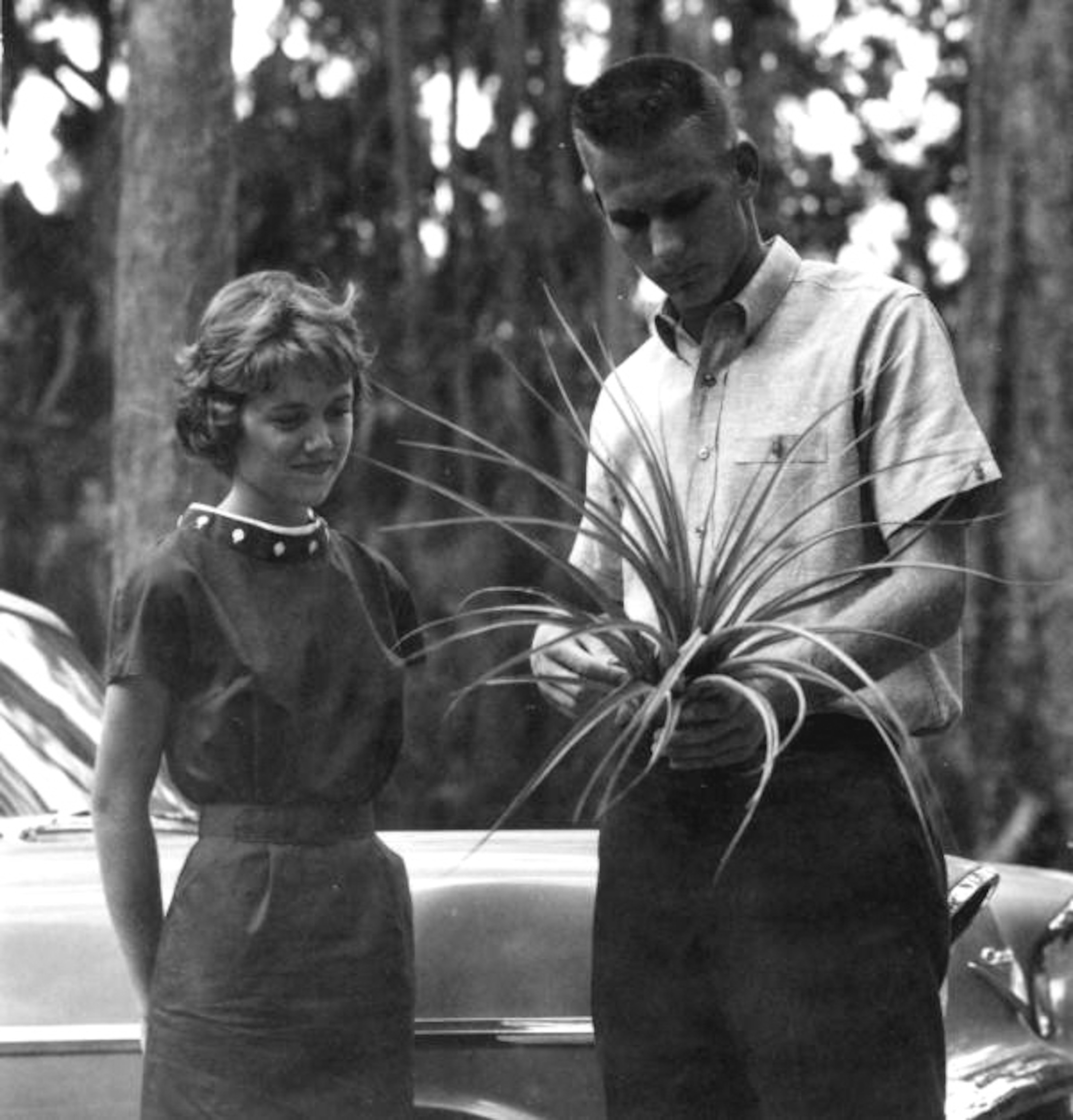
Helen Crosson and Stanley Wallace examine a giant air plant, prevalent in the park’s hydric hammocks.
Jim Stokes, State Archives of Florida
Author of How the New Deal Built Florida Tourism, Nelson explains that President Roosevelt established the group in 1933 to preserve America’s public lands. The Roeblings donated Highland Hammock to the state, which allowed the CCC to complete and expand existing park infrastructure while simultaneously developing the adjacent Florida Botanical Garden and Arboretum.
Nelson says the historic hammock itself was largely preserved, but the CCC performed ‘nature improvement’ which consisted of removing dangerous wildlife like snakes and bobcats and replacing native flora like palmetto trees with nonnative species including Australian pine trees.
“The moment the Florida Park Service was created in 1935, there was only one state park ready to open: Highlands Hammock,” Nelson says. “But when World War II hit, the garden was shut down before completion and denuded of all plant life by the time the war was over.”
With Nelson admitting that state park preservation perspectives have evolved since the CCC era, Swain believes Highlands Hammock State Park also owes its longevity to ongoing support from the public, philanthropists, and lawmakers.
“In the 1980s and 1990s, there was recognition in Florida that extraordinary biodiversity and wonderful ecosystems were losing habitat at an alarming rate,” says Swain. She explains that land acquisitions have since expanded the park to include portions of the Lake Wales Ridge, such as the Florida scrub habitat, which houses some of the state’s rarest endemic species, including the Highlands tiger beetle, the medusahead airplant, and the Florida sand skink.
(Florida enacts sweeping law to protect its wildlife corridors.)

Florida Park Service staff execute a prescribed burn in the pine flatlands of Highlands Hammock State Park to keep invasive species, such as Cogon Grass, in check.
Clarence Holmes Photography, Alamy
Endemic ecology unlike any other Florida state park
“Only when you get into the big, deep hydric forests are you fully immersed in the system, a feeling of being in another world,” says Swain. “A cathedral-like habitat.”
Eight of nine trails, some interconnecting and none exceeding a half-mile, begin on the 3-mile one-way Hammock Road that loops through the park’s historic core. Though short in length, adjacent trails showcase the park’s four distinctly different environments. Visitors may see a Sherman’s fox squirrel scurry up a live oak tree on the primitive Ancient Hammock Trail only minutes after watching alligators float through the submerged forest beneath the Cypress Swamp Trail’s boardwalk.
Beyond wildlife viewing, Swain believes the best way to appreciate the endemic ecology is to notice how the environment changes from scrub habitat to pine flatwoods to wet hammock systems, especially after periods of prescribed burns and seasonal flooding.
“It’s impressively accessible for the public, too,” says Swain. “They can still feel the magic of coming to Florida that someone from the 1920s would have experienced.
Well-maintained trails, flat paved roadways, wide boardwalks, and guided tram tours allow visitors of most mobility levels to explore some of the park’s 15 distinct natural communities. A five-year-old can reasonably navigate most trails, including the Hickory Trail catwalk, while wheelchair users can access Cypress Swamp and Fern Garden Trails’ boardwalks.
(Why Florida’s greatest family attractions are in the wild.)
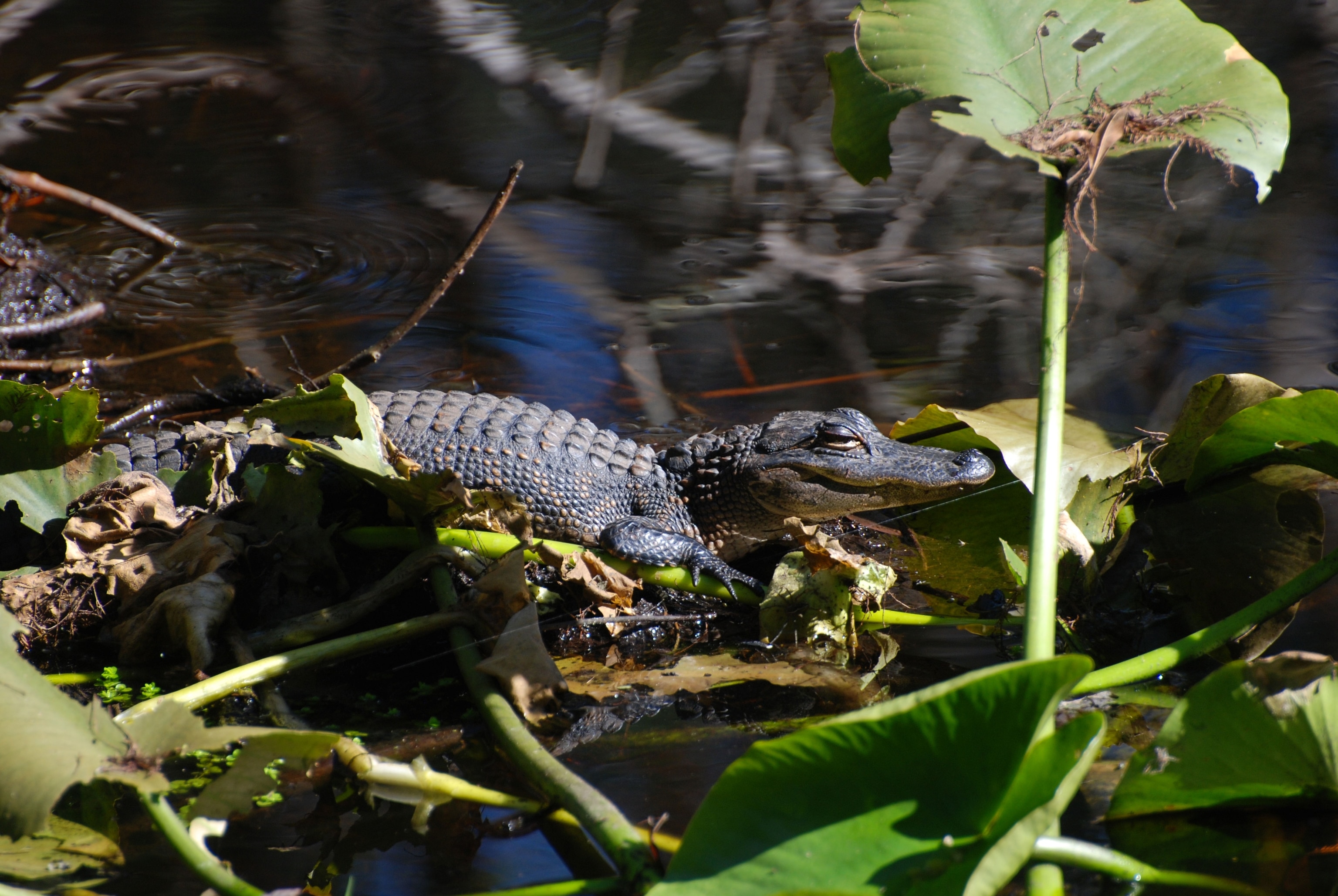
Highlands Hammock State Park is home to a variety of wildlife, including the American alligator.
Ian Watt, Alamy
How to experience Highlands Hammock
“The CCC made 800 state parks,” said Dora Rogers, a volunteer at the park’s Civilian Conservation Corps Museum. “This program should be important to anyone who’s ever been to a state park.”
Daughter of Pennsylvania CCC member Lawrence Rogers Sr., Rogers welcomes visitors inside this original CCC structure to learn about Highlands Hammock’s history before joining the park’s popular tram tour.
“You can see a gator on the trail, but you’ll see 50 gators when you take a tram tour,” says Rogers. Available from late autumn through spring, guided tram tours take visitors closer to wildlife and CCC structures that are inaccessible from the hiking trails.
Along with year-round pedestrian, cyclist, and vehicle access to Hammock Road, the park also features additional equestrian, unpaved cycling, and scenic driving trails. Bicycle rentals are available at the Hammock Inn store. Kids can participate in the free Junior Ranger Program at the ranger station.
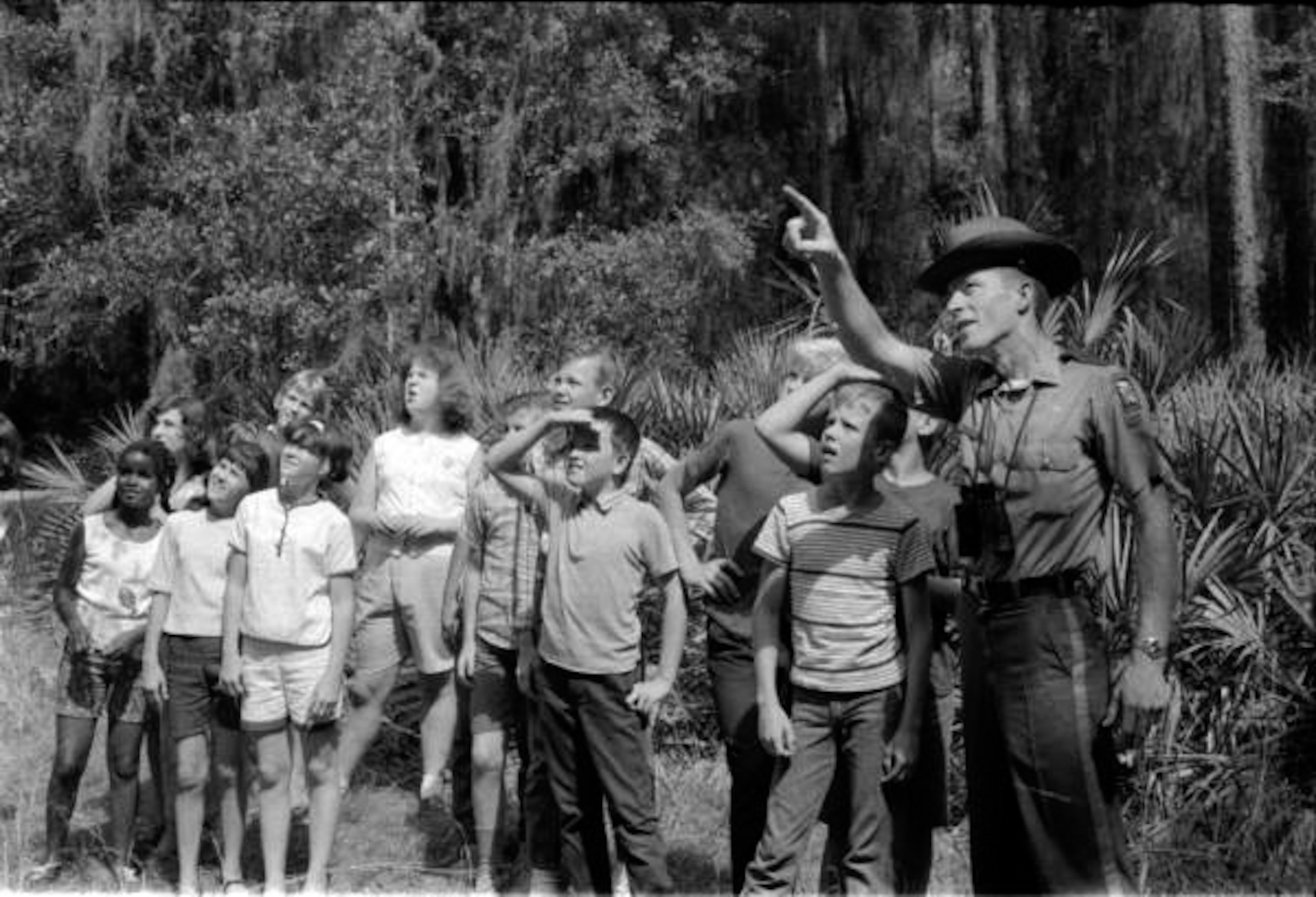
Park ranger Jim Stevenson guides children on a nature walk at Highlands Hammock State Park in Sebring, Florida.
State Archives of Florida
How to do itHighlands Hammock State Park has primitive tent and RV campgrounds that include ADA accessible sites with restrooms. Neibert’s Fishing Resort offers guests a remote stay on Sebring’s Arbuckle Creek, providing visitors with campground amenities not offered in the state park, such as Wi-Fi, airboat tours, waterfront campsites, fishing tackle, and boat storage/launches. Located in the city center, only seven miles east of Highland Hammock’s main entrance, the century-old Roanoke Hotel houses 10 fully-furnished rooms with private bathrooms, some of which feature a private balcony, a restored fireplace, or views of downtown Sebring.
The Sebring International Raceway, North America’s oldest permanent road racing track, stands atop the podium as the city’s most popular attraction. Sebring is also home to the free Military Sea Services Museum, the country’s only museum dedicated to the maritime armed forces, and the kid-focused Children’s Museum of the Highlands.
Start the day off with a humble or hearty breakfast at Dimitri’s and end the evening with gator tail and Lake Jackson views at Sunset Bar and Grill. Highlands Hammock’s rations are limited to camping snacks sold at the Hammock Inn. Be sure to try the locally made orange and vanilla ice cream; it’s a perfect post-hike treat in Florida.
With classic Florida creatures and rarely-seen ecosystems that’ll surprise even locals, Highlands Hammock State Park offers Central Florida visitors a chance to explore fascinatingly diverse ecosystems while trading lengthy hikes for strolls through nature.
If he’s not chasing stories across the globe, Nick Dauk is chasing his children around playgrounds and museums in Florida. Originally from McKees Rocks, he’s always on the lookout for people, places, and points of view that challenge the way he sees the world.