
CLEARWATER — When Venezuelan ballplayers training with the Toronto Blue Jays started gathering in Paola Bordón’s living room for home-cooked meals, she had no idea she was launching what would become one of Tampa Bay’s most popular areperas.
Among those players was Freddy Omar Rodriguez, her then-partner and father of her daughter. A former center fielder in the Blue Jays’ minor league system, Rodriguez would finish practice and bring teammates — most of them Latino players craving home cooking.
“They had nowhere to eat,” Bordón recalled. “There were so many Latinos, and every afternoon they ended up in my living room.”
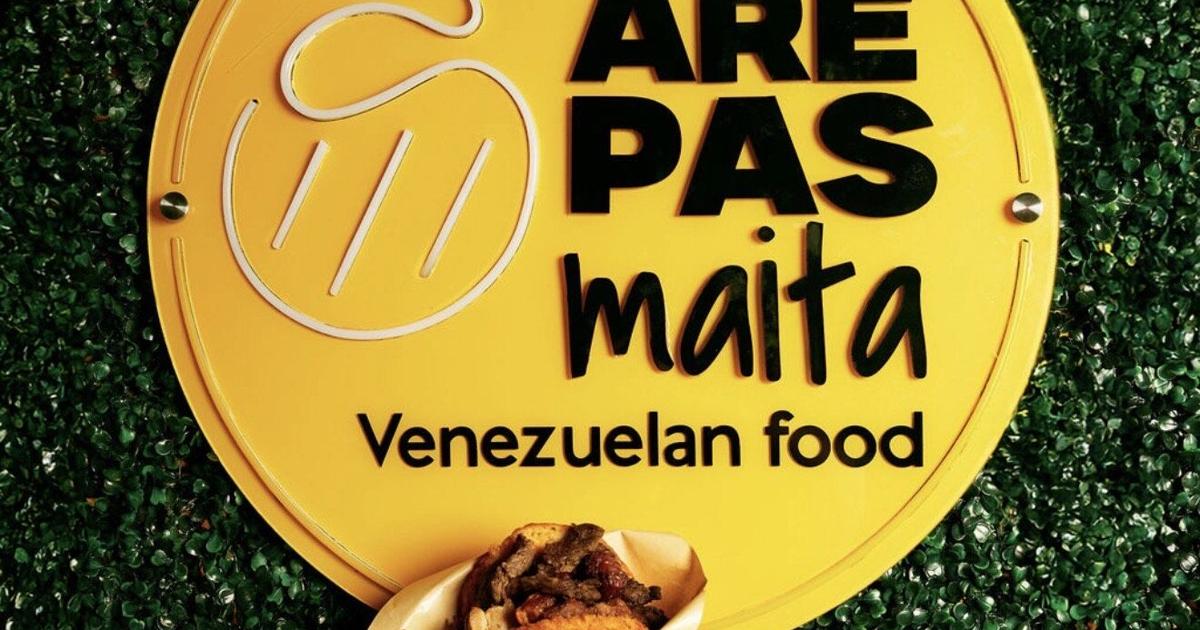
That makeshift dining room became Arepas Maita, which opened in 2023 in a Clearwater strip mall and has since become a gathering place for Tampa Bay’s growing Venezuelan community.
The origin of flavor
Bordón named the restaurant after her 90-year-old grandmother. “Everyone at home calls her ‘Maita.’ I decided to open an arepera with her name, remembering what it was like to eat at her house,” said Bordón, who studied culinary arts in Valencia, Venezuela, and combines eastern and central Venezuelan flavors from the regions where she grew up.
Her grandmother co-founded a small settlement in Piñonal, Maracay. “I carry both flavors with me,” Bordón said.
Her professional training began in Venezuela, where she worked as a sous chef before immigrating to the United States in 2017 on a work visa. She worked at American restaurant chains including Fresh Kitchen, Better Byrd and Southern Hill Farms in Orlando, as well as Latin restaurants including Bocao Restaurant and Red Mesa in St. Petersburg.
Rodriguez, born in Baruta, Venezuela, was signed as an international free agent in July 2013. Baseball America ranked him as the 18th-best international prospect that year, highlighting his advanced left-handed swing, above-average speed and defensive potential. During his minor league career from 2013 to 2018, he played for several Blue Jays affiliates and logged 548 at-bats, hitting .234 with seven home runs and 47 RBIs.
“The connection came through the team,” Bordón said. “We started cooking for them.” From those meals came the idea of creating a space where Venezuelan flavors could have a permanent home.
Over time, that kitchen turned into a gathering place for Venezuelan migrants longing to reconnect with familiar flavors. “The community has grown so much in the last two years. Before, everything Venezuelan was in Tampa. Here in Clearwater, there was almost nothing,” she said.
Fresh off the griddle
Arepas Maita operates as a Venezuelan arepa buffet. Customers choose their fillings directly, combining up to five toppings for $9.99. The menu includes both hot and cold options.
Everything is made to order. On the griddle, fried dough, chicharrón dough and traditional grilled arepas share the spotlight. The most popular are grilled arepas filled with carne mechada — known as Ropa Vieja in Cuba — and yellow cheese.
“People come asking for arepa peluda or arepa de pabellón. Americans just say, ‘Make me the one you think I’ll like,’ and they eat it all — then come back for more,” she said.
The menu offers nearly 30 options: asado negro, barbecue ribs, Brazilian chorizo, black beans, five kinds of cheese — llanero, guayanés, de mano, paisa and Gouda-style — plus salads including chicken, tuna and reina pepiada. The restaurant works with both local and national suppliers. Its queso llanero comes directly from Venezuela through the Paisa company. Traditional sauces include a popular garlic variety.
The public response was immediate. “On the first day, more than 200 people came. The smoke from so many arepas set off the fire alarms,” she said, laughing. Four days later, they installed an industrial hood. “We didn’t expect that many people. It was overwhelming — but rewarding.”
Family effort
Bordón’s mother and brother work in the business, along with a team made up almost entirely of women. “People see us cooking, preparing the fillings, serving the arepas. It’s a family effort,” she said.
The main lesson has been consistency. “This project began in 2023. We faced setbacks, but the key was believing in ourselves.”
The restaurant also supports the community. Recently, it partnered with a nearby church to provide food for people without housing. “We’re organizing an arepa event before Thanksgiving. People have already brought clothes and shoes to donate that day,” she said. The restaurant also offers catering services for residential complexes and local events.
The menu adapts to different diets. “Many people don’t know this, but Venezuelan arepas are naturally gluten-free. We also have vegetarian options with beans and vegetables,” she said. For the holiday season, the restaurant will offer combos with hallacas and pan de jamón.
Taste of home
The signature dish is carne mechada, a recipe passed down from Bordón’s grandmother. “That beef is an icon here. It’s the same one my grandmother used to make, the one my mom learned, and now I do too. Some customers order it plain — just to remember the flavor of Venezuela,” she said.
Bordón believes preserving traditions is essential for immigrants. “We must not lose our culture. We can’t forget what it means to be Venezuelan,” she said.
Many customers get emotional while eating. “I’ve seen clients cry. They say it reminds them of their grandmothers, that they’ve been away from home for years, and suddenly it all comes back with a bite. That’s when you realize food is also a form of belonging,” she said.
Her vision extends beyond the current location. “I dream of creating El Rancho de Maita: a large open space that evokes the Venezuelan plains, the scent of grilled arepas and the rhythm of música llanera. I want to bring Maita to Sarasota and later open that ranch in Tampa.”
To those starting in the food industry, she offers advice: Study, keep permits current and use social media wisely. “Right now, social networks are the engine of work. The more visible you are, the more your business grows.”
More than a restaurant
For many Venezuelans and Latinos in Tampa Bay, Arepas Maita has become more than a restaurant. It’s a community hub where the smell of arepas mixes with familiar accents, laughter and memories of family gatherings left behind.
“When you migrate from your country, there’s a lot of loneliness. People look for a place to feel at home. Many come just to feel close to their roots. At Maita, they can smell their homeland’s food, hear their music and speak their own language,” Bordón said.
Her story, which began with a group of ballplayers looking for lunch, now represents a different kind of game — one about preserving identity and keeping alive the culinary heartbeat of a nation.