
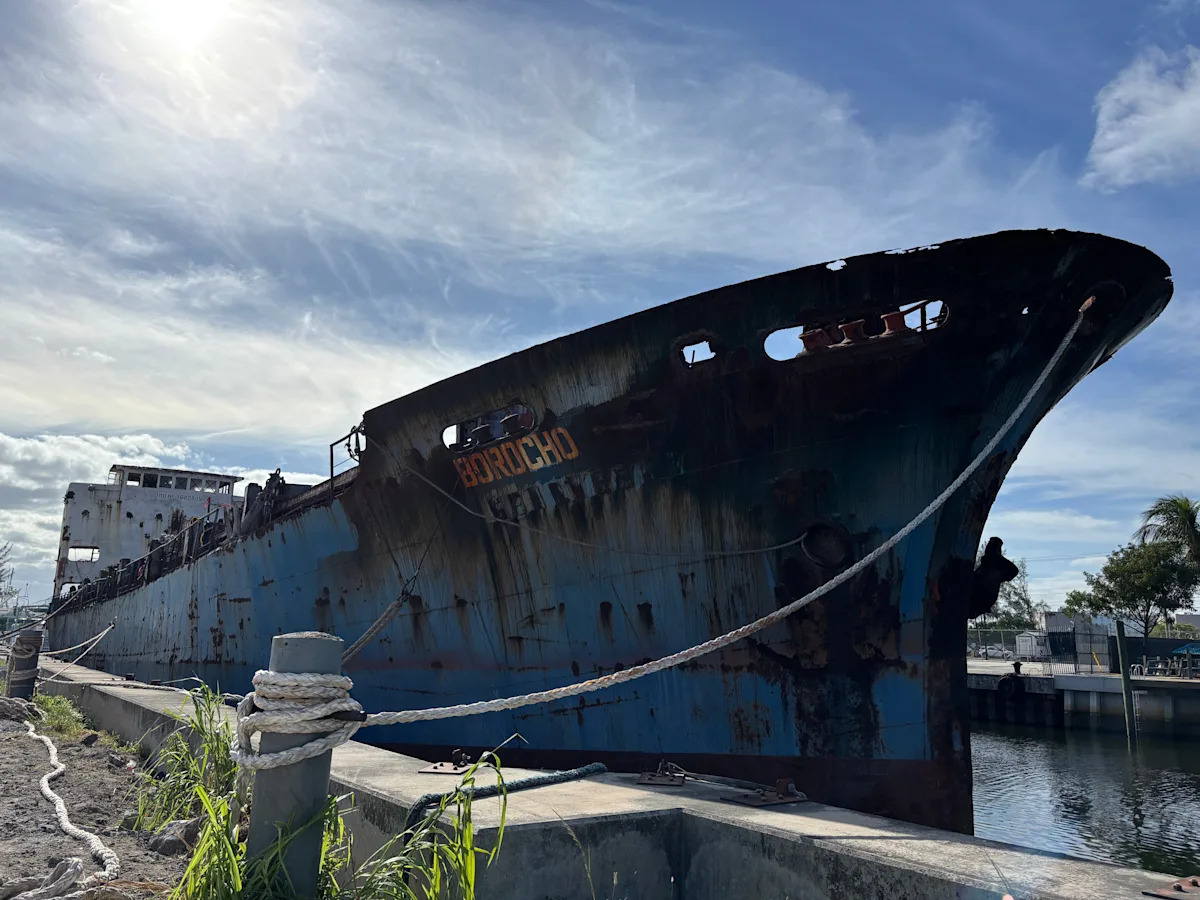
Martin County today will sink a 227-foot-long freighter, once used to smuggle cocaine, to create the Boo McCulley artificial reef in about 200 feet of water nine miles off the St. Lucie Inlet in Stuart.
The ship sinking is scheduled to begin about 9-10 a.m. Nov. 18 and it could take 30 minutes to two hours to come to its final resting place, county Coastal Program Manager Jessica Garland told TCPalm.
Crews cut several large holes in the sides of the ship so it will flood and slowly sink into the ocean. The county chose the location because “it’s deep and there is nothing out there but sand,” Garland said.
“We have been trying to create habitat for fish,” Garland said. “We have different things placed at different heights for different types of fish.”
John “Boo” McCulley, who died November 2020, dedicated over 20 years to Martin County’s Artificial Reef Program and helped create “60 reefs that continue to support marine life, boost local fisheries, and bring joy to countless anglers and divers,” Garland said.
McCulley Marine Services created 60 artificial reefs over 20 years
The last major project McCulley worked on was deploying the Brause Girl off Martin County in 2018, Garland said.
After Boo died, McCulley Marine Services sold its fleet of boats and other reefing equipment over the past two years as work slowed. McCulley built the business from nothing into a successful family-run marine contracting and reef deploying company serving Florida’s east coast.
“This is a very fitting memorial considering the last project our family’s firm did under his leadership was a deployment of a vessel in this area,” son Jack McCulley told TCPalm. “It is somewhere he frequented. We did a lot of work in that area and that is an area he traversed a lot. It’s perfect.”
Martin County Environmental Resources is partnering with the Florida Fish and Wildlife Conservation Commission, with FWC paying $500,000 to clean and sink the vessel, Garland said.
Artificial reefs: Florida artificial reef projects halted since Fort Pierce marine contractor closed shop
Grouper fishing: Expensive fishing technology turns novice anglers into pros, but results in overfishing
The 1977 steel-hulled freighter, previously named the Borocho, was stopped with 27 kilograms of cocaine on it over 10 years ago, Garland said. The government confiscated and eventually sold it at auction.
It’s been kept in the Miami River for over 10 years and the last owner let it fall into disrepair. FWC took possession and made it available to the county for an artificial reef, Garland said.
Florida and FWC invest in artificial reefs
Florida has one of the most robust artificial reef programs among the 15 Gulf and Atlantic coastal states that create artificial reefs, which attract fish, divers and anglers, according to FWC.
The FWC Artificial Reef Program provides financial and technical assistance to local governments, nonprofits and state universities to construct, monitor and assess projects. The agency allocates about $600,000 a year for projects throughout the state, and has distributed over $26.5 million for reefs and related activities.
Since the 1940s, over 4,442 reefs have been placed in state and federal waters off Florida’s coast.
Tim O’Hara is TCPalm’s environment reporter. Contact him at tim.ohara@tcpalm.com.
This article originally appeared on Treasure Coast Newspapers: Florida FWC creates Stuart artificial reef from ship sinking Nov. 18