
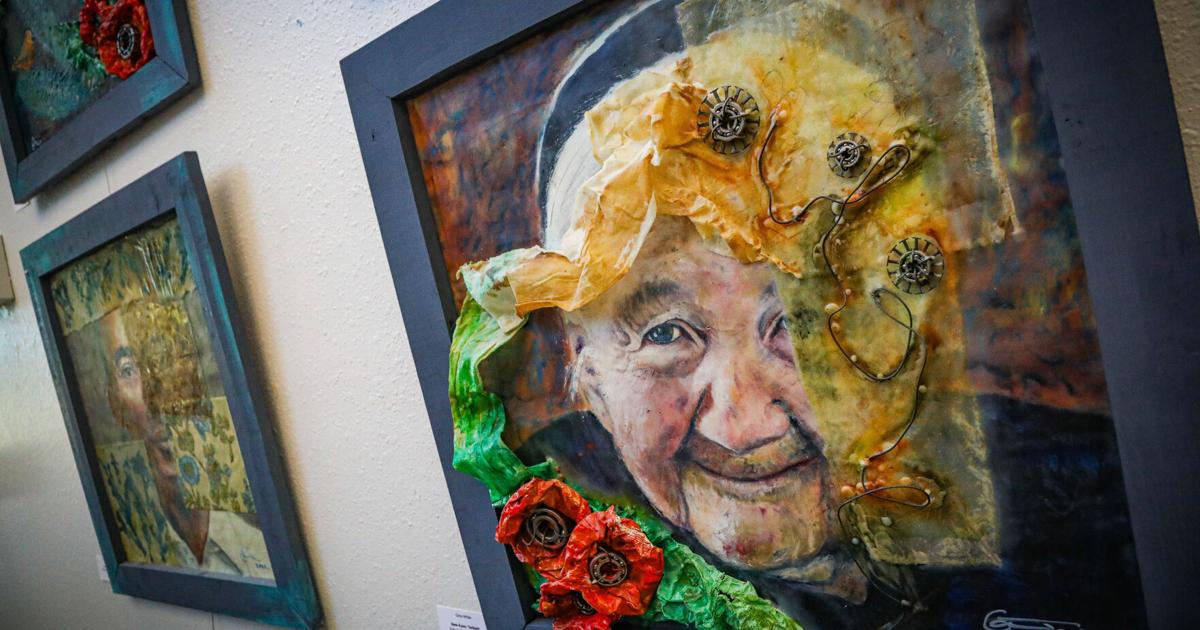
CARROLLWOOD — Encaustic Impressions, A Florida Wax Show, runs through Feb. 2 and features pieces created using heated beeswax, resin and pigment.
The artists use encaustic, a painting technique that combines beeswax with a hardener like damar resin and pigment. Heat fuses the molten mixture to paintings, sculptures and photographs.
The exhibit was collected and displayed by Florida Wax, a chapter of the International Encaustic Artists group founded in 2017, with Shelley Jean as president and Anne-Marie Bercik as vice president.
“I meet artists, literally all over the world, that have never heard of it,” Jean said. “And it even sounds bad — like the word sounds agnostic, but it actually comes from the Greek word ‘enkaustikos,’ which means to ‘burn in,’ and some date back to the 5th century B.C. — that’s how long it’s been around.”
Jean said artists use several methods to heat the wax, from stovetop griddles or hot plates to blow torches, which she prefers.
“The Egyptians and the Romans, when they were doing encaustic, they didn’t exactly have griddle hot plates,” Jean said.
Florida Wax members have exhibited at more than two dozen venues statewide, including Tampa Museum of Art, Morean Art Center, Orlando Museum of Art and Florida CraftArt Gallery. The group was also featured in IEA Wax Fusion Magazine in fall 2021.
Jean said the group’s purpose is “to celebrate art through educational opportunities and supporting the community of artists in the state of Florida working with encaustic. We seek to raise the level of excellence in fine art encaustic work while encouraging innovation in the rich tradition of art made in this ancient medium.”
Jean, a Tampa native, said the Carrollwood Cultural Center exhibit promotes the art form locally. She said patrons and visitors will be able to see the real luminosity of the pieces.
“It’s very textural, very much a layering process,” she said. “And what I love about it is that anyone can do it. It’s one of the most versatile mediums out there.”
Artists can use different paintings, photos, sculptures and inks with encaustic — but not acrylic paint, which will melt.
“People are just learning about encaustic for the first time, even if they think the word itself is bad,” Jean said. “Because it’s exactly the opposite!”