
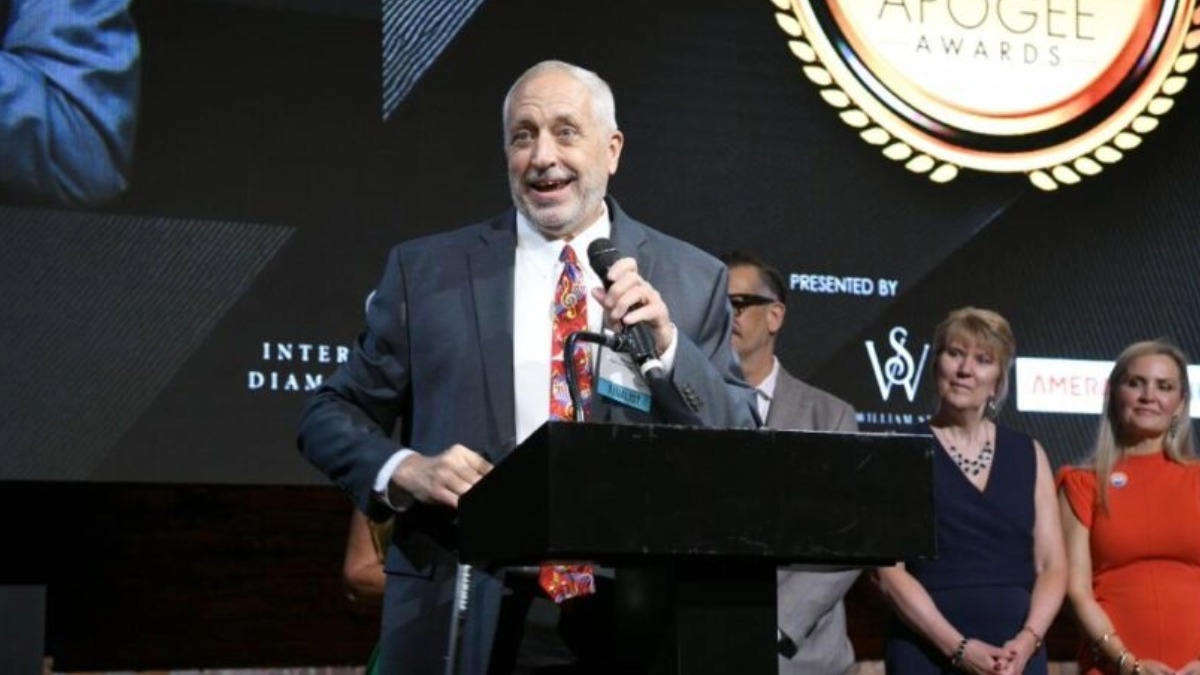
When Steve King arrived at Meals on Wheels of Tampa in 2006, the organization was delivering fewer than 300 meals a day out of a small building with a leaking roof. The space was tight, the facility was aging and the program operated with limited capacity.
Today, the picture is entirely different. As King prepares to step aside after 20 years as CEO, the program now prepares about 2,200 meals a day and serves more than 1,000 homes. It operates from a modern kitchen built with $5.3 million in community support and has grown into one of the strongest Meals on Wheels programs in the country.
Through all that growth, King stayed focused on a simple belief. Meals on Wheels is not only about food. It is about helping older and disabled neighbors remain in the place where they feel safe and grounded. King often says that home is more than a physical space, and that independence matters to the people they serve in deeply personal ways.
“Everybody wants to be in their own home for as long as they can,” King said. “That is our mission at Meals on Wheels to help people remain as healthy and as independent as possible for as long as possible so they can stay right where they want to be.”
King shared his thoughts with TBBW on his journey from the pulpit to nonprofit leadership, the growth of Meals on Wheels of Tampa and the legacy he hopes to leave in the community he has served for two decades.
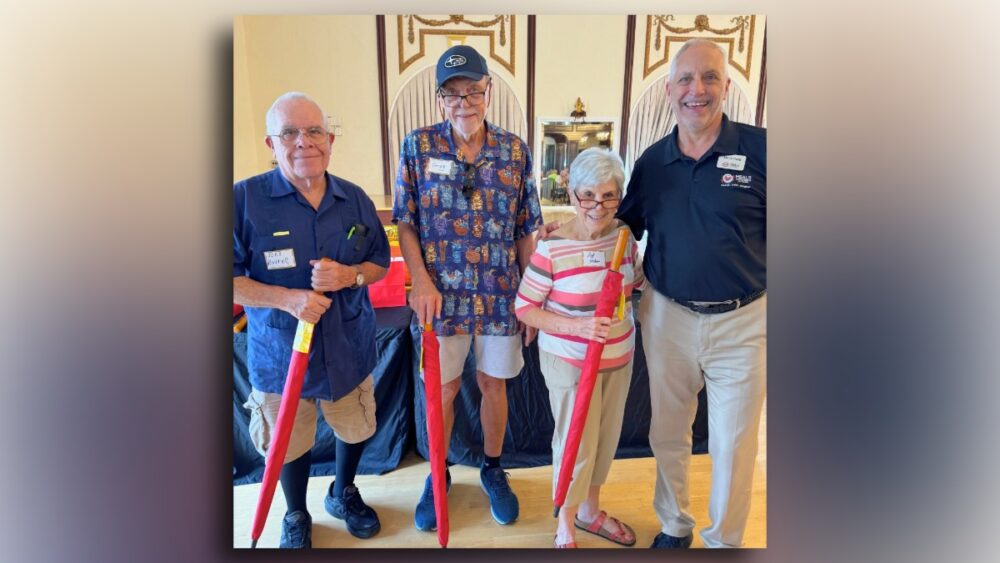 Steve King spends time with some of the older adults he serves through Meals on Wheels Tampa.
From the pulpit to Meals on Wheels
Before he ever led a kitchen, King spent 25 years as a United Methodist pastor. He guided Van Dyke Methodist Church (now Bay Church) in North Tampa for 13 years, and then served at Palma Ceia United Methodist Church for 14 years.
His transition to Meals on Wheels of Tampa followed a difficult period in his personal life, during which he stepped away from church leadership and considered other forms of service.
The move into nonprofit work was not based on religious ties. It was based on a sense of purpose.
“Meals on Wheels does not have religious roots,” King said. He saw the opportunity as a continuation of his calling to care for others. He viewed the mission as a new form of ministry, centered on compassion and service to seniors who needed support.
A mission shaped by his mother
King’s understanding of aging in place is shaped by his experience caring for his mother during the last four years of her life. She died at 92. Although those years were challenging, she made it clear that she wanted to stay at home with her son rather than move into a facility.
He remembers the day she moved in with him at age 88. She stood near the front door, only 5 feet tall and about 110 pounds, while his children carried out the furniture she had built her life around. She cried because she felt she was leaving behind the memories and independence that defined her sense of home.
READ: Hotel ORA buys 2nd property in downtown Tampa for $13.5M all-cash
The memory of that day guides how King sees Meals on Wheels. It reminds him that the people they serve are not just recipients. They are mothers and fathers, aunts and uncles, brothers and sisters who want to remain in familiar environments for as long as they can.
His mother’s experience became a constant reminder of the emotional weight behind the mission.
Scaling meals, routes and impact
When King joined Meals on Wheels of Tampa, the organization delivered about 280 to 290 meals a day and worked out of a facility that could no longer meet the needs of a growing community.
Over time, demand increased, and the program expanded to serve about 650 homes while preparing another 600 meals for partner nonprofits.
To support that growth, the organization launched a capital campaign in 2018 and 2019 to build a larger kitchen. The project cost $5.3 million and was fully funded through community support. The new kitchen opened in August 2020, and the organization moved in with no debt.
READ: Allegiant adds new nonstop route from St. Pete Clearwater to Trenton
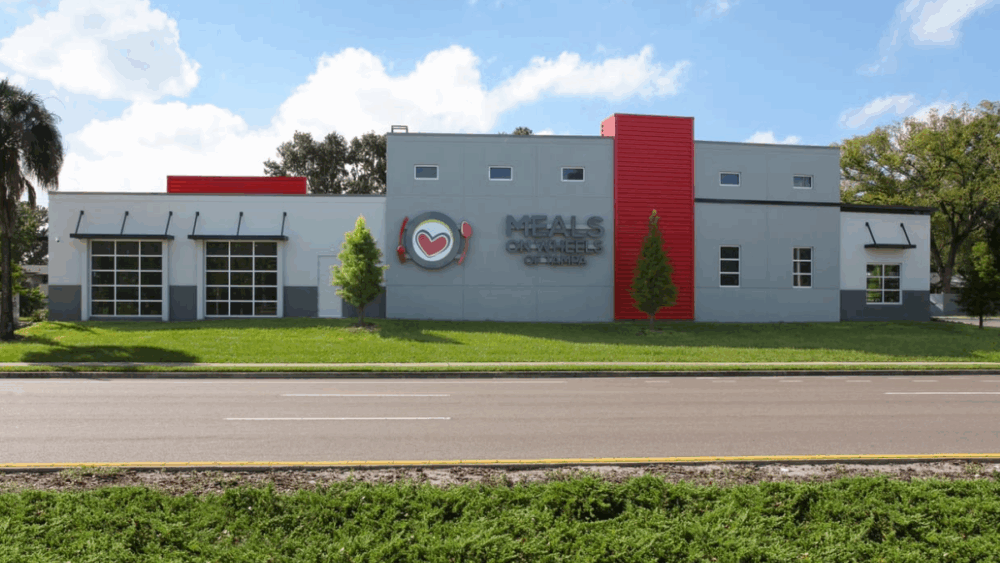 Meals On Wheels of Tampa is headquartered on Hillsborough Avenue, where staff and volunteers prepare and deliver thousands of meals to homebound residents each week.
King credits the Tampa community for its generosity, which made the project possible.
Today, the program prepares about 2,200 meals a day and operates 112 routes. Each route serves seven to 14 recipients. The work depends on more than 100 volunteers who knock on doors across Tampa every weekday.
Unseen neighbors
King often explains that there is a clear difference between the homeless and the homebound. The homeless are visible at intersections and in public spaces.
Homebound neighbors, however, remain inside their homes and are easy to overlook, even though they live in every part of the city.
“We know the homeless are out there because we see them every day,” King said. “But not a lot of people think about the homebound because they do not see them. They do not get out.”
King reminds people that these neighbors spent their lives contributing to the community.
READ: Tampa home values dropping, giving investors first real opening since 2020
They coached local teams, taught in schools, worked in restaurants and banks and raised families. Now, age, illness or disability keep many of them confined to their homes.
About 60% live alone and have no family nearby, which makes the daily knock on the door essential.
Nourish, enrich and strengthen
Meals on Wheels of Tampa grounds its work in a simple, straightforward mission. Nourish the body. Enrich the spirit. Strengthen the community.
Nourish the body:
The kitchen prepares hot, healthy meals each weekday. On Fridays, recipients also receive two frozen meals for the weekend. The menus are crafted to support heart health, diabetic needs and renal care.
Enrich the spirit:
Volunteers offer vital social contact. For many older adults, the brief visit at the door may be the only face-to-face conversation they have that day.
Strengthen the community
The program also supports families. Many adult children live outside the state and rely on Meals on Wheels to ensure their parents are safe and well cared for.
One story stays with King. A volunteer delivered a birthday cake to a man on her route and sang Happy Birthday as she handed it to him. The man broke into tears and told her that no one had sung to him since he was a teenager.
The moment captured what King believes sets the organization apart. Meals on Wheels is not a delivery service. It is a relationship.
MEET MEALS ON WHEELS OF TAMPA’S NEW CEO
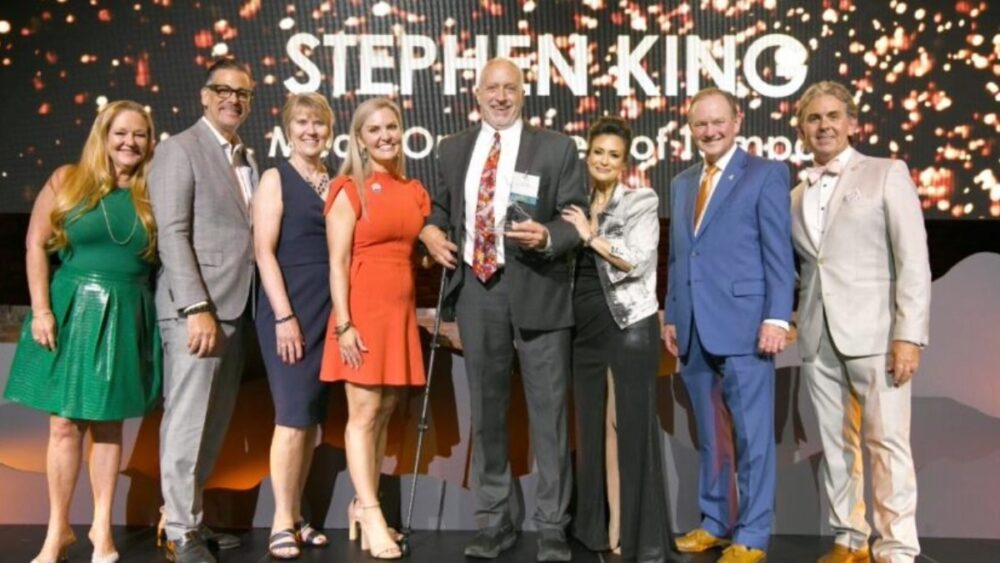 Steve King stands with fellow honorees and presenters at the TBBW Apogee Awards after being named a winner.
Aging, isolation and the growing need
King believes several trends explain why so many older adults rely on Meals on Wheels.
People are living longer, which creates new challenges. In 1900, the average age of death in the United States was about 48. Today it is close to 80. Medical advances have extended life, but they have not solved the social and emotional challenges that accompany aging.
Families also live farther apart than they once did. Many older adults find themselves alone with limited support. King felt the effects of isolation during Covid, even as the organization continued to operate, with limited social contact.
He said the feeling of isolation gave him a deeper understanding of what many recipients face every day.
A step above
Meals on Wheels of Tampa is one of about 5000 Meals on Wheels programs across the country. Most are smaller and King estimates that Tampa’s program is in the 85% range in size.
Two factors set it apart:
“We are totally and completely privately funded,” King said. About 92% of programs receive government support. Tampa is in the 8% that do not.
The organization was founded on the idea that it would be built by this community and for this community. Every meal and every route depends on local donors and volunteers.
A full kitchen of their own
Many programs buy food from vendors that supply school lunches. Tampa cooks its own food. They have their own kitchen staff and nutrition expertise, enabling them to prepare meals that meet specific health needs.
“If it were not for those who have been so generous, Meals on Wheels of Tampa would not exist,” King said.
Legacy and leadership
When asked how he hopes people will remember his leadership, King does not talk about buildings or numbers. He points to values.
“Simply put, that I loved and cared about our mission and the people we had the opportunity to serve,” he said.
He is proud of the organization’s financial stability and service expansion. He is proud of the facility and the volunteer base that now includes more than 1,000 active volunteers. Yet he believes the core of the work has always been simple.
“It is about community taking care of community and neighbors caring for neighbors,” he said.
King hopes his leadership will be remembered for kindness and compassion, and that his example will encourage others to continue building a stronger, more connected Tampa.
As he steps aside, the need continues to grow and the work continues. The doors will keep opening each weekday to a warm meal and a familiar face, which he believes is the heart of the mission.
Stay Connected