
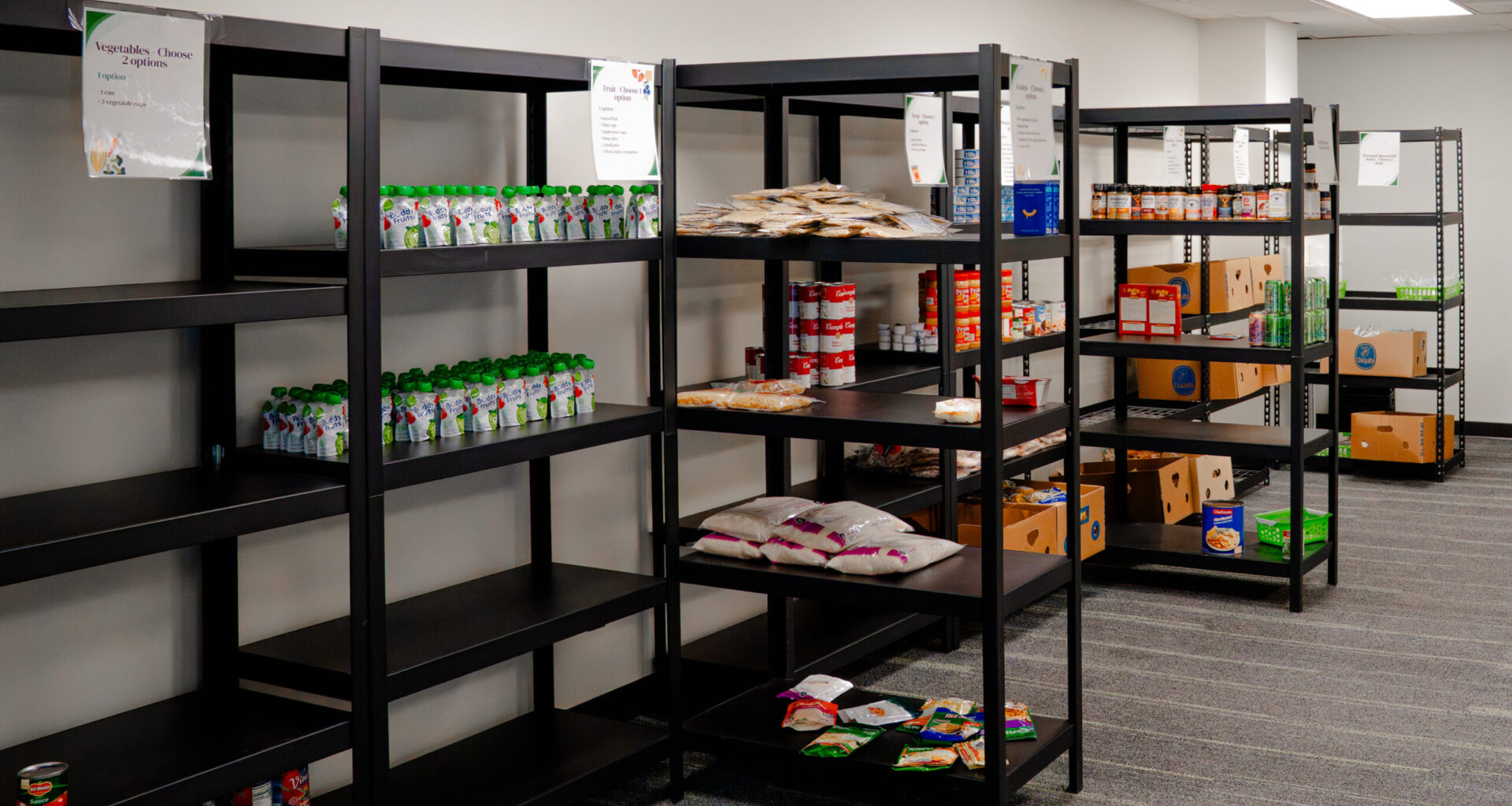
 Food pantry workers said Feed-A-Bull’s inventory is running out faster as more students seek food assistance. ORACLE PHOTO/THOMAS MARRS
USF Feed-A-Bull volunteers said the pantry has seen an increase in visits due to rising grocery costs.
Grocery prices in the Tampa Bay area rose by around 3% from last year, according to the U.S. Bureau of Labor Statistics’ Consumer Price Index.
Liz Berner, a junior education major and third-year Feed-A-Bull volunteer, said some students can’t afford higher grocery prices and rely on the pantry to fill the gap.
“Publix prices on campus are now even more expensive than stores off campus,” she said. “Students who can’t leave campus end up paying even more.”
Berner said Feed-A-Bull has already reached nearly 4,000 visits this semester — matching last fall’s total — with three weeks to go.
And while Feed-A-Bull expanded over the summer, Berner said the pantry’s inventory has not been able to keep up with the growing demand.
“We’ve gotten a lot more new students, but sadly, we just haven’t had too much in terms of stock,” Berner said.
Some USF students who depend on Feed-A-Bull for weekly groceries said the increase in visits and low inventory underscore the importance of the campus pantry.
Related: USF’s Feed-A-Bull completes expansion, opens more cold storage
The Mosaic Company donated $100,000 to Feed-A-Bull in January, which Berner said allowed the pantry to double its space and add cold storage for items like produce and dairy through its summer expansion.
For students to shop in the pantry, they must complete a short intake survey to measure eligibility and determine how much food they can take.
Students are also able to order online — though orders must be placed a day in advance — through Feed-A-Bull’s website, and can pick up orders at the Marshall Student Center.
However, students can only get food from the pantry once a week, whether in person or through pickup.
Lyndsay Schuler is a senior health sciences major and has volunteered at Feed-A-Bull for the last three years.
Schuler said the pantry’s shelves are often nearly empty by midday due to high student demand.
“Students come in and there just isn’t much for them to grab,” Schuler said. “With benefits going away and prices rising, people need more, and we can’t always provide that.”
The pantry receives donations every other Monday from Feeding Tampa Bay, once a month from Publix and one or two times a week from other community donors.
Berner said the increase in student need for groceries has made it difficult for Feed-A-Bull to maintain a steady stock, even with routine donations.
“Usually, if a student comes in once, they come back every week,” Schuler said. “But when the shelves are low, it’s hard for them to rely on the pantry.”
Related: USF seniors launch Bulls Give Back to fight food insecurity in Tampa Bay
Berner said Feed-A-Bull heavily relies on outreach events to raise awareness, but high demand has kept associates from tabling on campus.
“We used to participate in the Bull Market, but we haven’t been able to this semester because we just need everyone inside to keep up,” Berner said.
Berner and Schuler said their priorities for next semester are simple — keeping shelves stocked and increasing Feed-A-Bull’s visibility.
“We already have the expanded space — now we just need more food,” Berner said.
Schuler said it is equally important to raise awareness about the pantry to reach students who need food assistance as well as those who can donate to it.
“Anytime a group wants to set up a drive, we immediately say yes,” Berner said. “We want students to know we’re here, and we want students who can help to know how much we need them.”
Related: USF’s Feed-A-Bull could see reduced food supply amid USDA cuts
Aurelia Vo, a junior business analytics major from Vietnam, said she first learned about the pantry during her freshman year and still visits whenever her budget is tight.
“I come every now and then,” Vo said. “It really depends on what they have and what I need.”
Vo said she typically looks for protein, like canned chicken or beans, but does not shop the pantry with a specific list in mind.
“It’s convenient and has most of the essentials students need,” Vo said. “As an international student, it helps me save a good amount of money.”
Vo said the pantry’s expansion and new refrigerator allowed her to access fresher items, which had not been available since the pantry opened in late 2015.
“They’ve improved a lot already,” Vo said. “They have fresh groceries now, a bigger space and a better system.”
Clark Thompson, a senior computer science major, said he appreciates the convenience of picking up groceries through Feed-A-Bull without leaving campus.
“I used to get a week of groceries for under $40, [and] that’s impossible now,” Thompson said.
Thompson said he visits the pantry about twice a month and looks for food staples that he can stretch into multiple meals — such as pasta, canned protein and rice.
Still, Thompson said the “inconsistent” stock has been challenging because the items he needs for meals aren’t always available.
“There are weeks where the shelves feel full and others where everything’s wiped out,” Thompson said. “You never really know what you’re going to get.”
Even with the shortages, Thompson said Feed-A-Bull is a vital resource for students in need.
“A lot of students don’t even know this resource exists,” Thompson said. “[And] without this place, I’d definitely be skipping meals or buying cheap, unhealthy food.”