
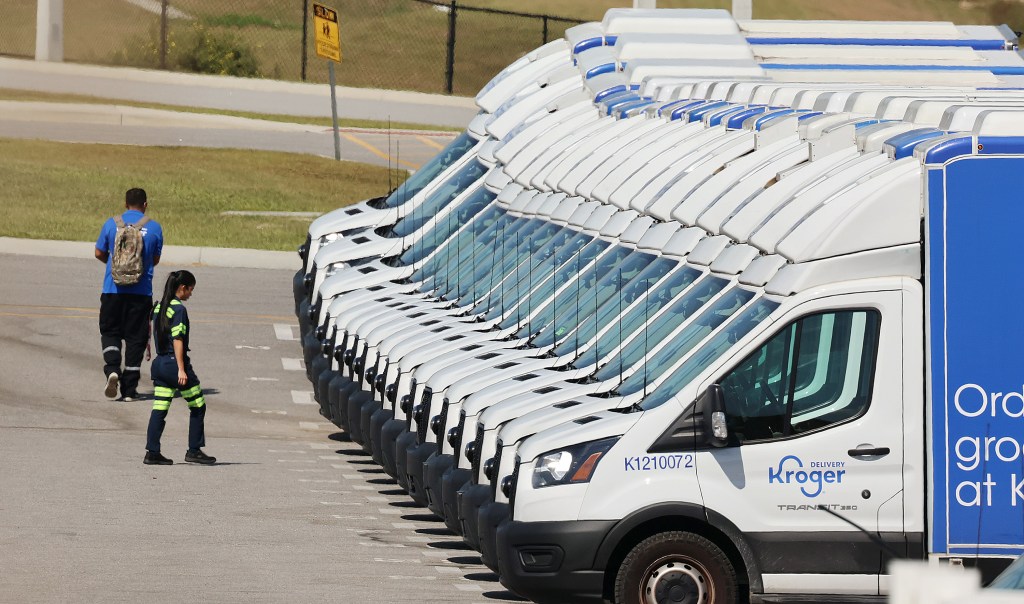
National grocery retailer Kroger Co. announced plans Tuesday to close three eCommerce fulfillment centers, including one in Groveland, a move that will lead to the loss of about 1,400 Florida jobs.
The closing of the Groveland fulfillment center will impact about 935 employees at that facility and nearly 500 others, many of them delivery drivers, stationed in Jacksonville, Rockledge and Tampa, according to notices the company filed with the Florida Department of Commerce.
“This is an especially difficult time for employees to hear this news, and our hearts go out to those affected,” the City of Groveland wrote in a statement.
The facility is expected to close sometime in January 2026, according to the city. The company’s notices said the workers’ employment will end on Feb. 1.
The Groveland facility, similar to other Kroger fulfillment centers across the country, uses more than 1,000 product retrieval robots that allow customers to order on Kroger.com, or the Kroger app, and have groceries delivered in temperature-controlled vans.
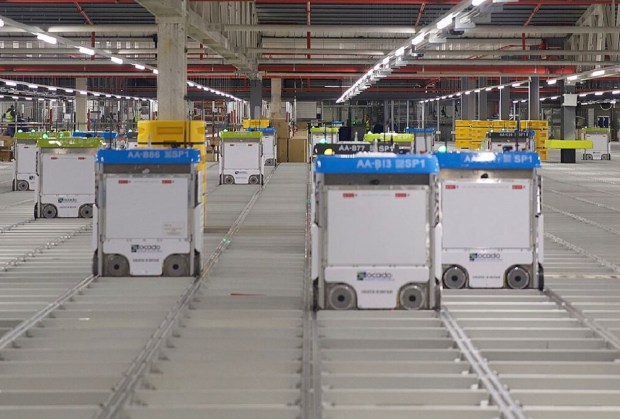 Supermarket chain Kroger announced it will be closing its robot-operated Kroger fulfillment center in Groveland, impacting approximately 1,400 employees, most of whom are Groveland residents. (Photo provided by Kroger/Ocado)
In its announcement, Kroger said it expects the closures to have “a positive effect” on their projected eCommerce operating profit of approximately $400 million in 2026. The moves were made in an effort to “drive profitable sales growth,” the company said.
Kroger had strengthened its partnership with online grocery and food delivery firms such as Instacart, DoorDash and UberEats, Reuters reported, reducing the need for its own fulfillment centers.
“The pandemic bump didn’t hold, and shoppers moved back to stores quickly, so the economics of running dedicated ecommerce facilities may no longer make sense,” eMarketer analyst Suzy Davidkhanian told the news agency, adding the Kroger’s partnerships with the online platforms provide it more reach among consumers.
Kroger’s move is the second major Central Florida plant closure announced this month. Frito-Lay announced two weeks ago that it was shuttering two Orlando facilities, eliminating about 500 jobs.
With the closures likely impacting thousands of county residents, Lake County said it will support affected employees by ensuring they “have access to the resources and opportunities they need in the months ahead”.
“Lake County is actively coordinating with partners such as CareerSource Central Florida and Lake Economic Area Development (LEAD) to establish a strong network of workforce assistance,” county officials said in a prepared statement. “The County is prepared to connect affected employees with our partners who provide job-placement services, training programs, and career guidance. We remain committed to helping our residents through this transition and will continue to share updates as more information becomes available.”
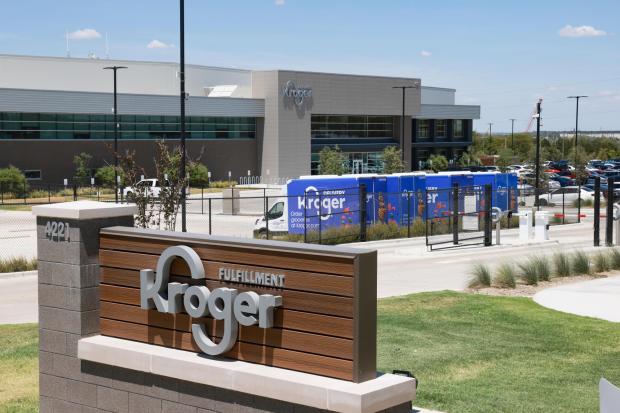 FILE – The exterior of Kroger’s fulfillment center is shown on July 27, 2022 in Dallas, Tex. (Rebecca Slezak/The Dallas Morning News via AP, File)
Groveland and Lake County officials were able to lure Kroger to the Christopher C. Ford Commerce Center by offering financial incentives potentially worth more than $3 million in an agreement approved back in 2019.
At the time of their initial foray into Lake County, Kroger was expected to receive about $1.1 million in an incentive package offered by Groveland.
The city offered to pay $431,000 in impact fees, $213,750 in building permit fees — for plan reviews and inspections during construction — and up to $500,000 in job growth incentives.
Lake County commissioners also approved a property tax rebate with an anticipated value of about $2 million over 10 years if all stated requirements were met. The rebate came from an estimated $4 million in property tax revenue the center was projected to generate across 10 years, cut short by Tuesday’s announcement.
Kroger agreed to invest $51 million in the fulfillment center and British online grocery company Ocado was set to pitch in $70 million for “robotics and other technology”, bringing the total cost of the facility to $121 million.
Kroger broke ground on the fulfillment center in July 2019 and shipped its first groceries from the facility in 2021. When the center opened, it was projected to operate at full capacity with 400 employees, but the staffing level had more than tripled since then.
Kroger operated stores in the state in the 1980s that were called Florida Choice supermarkets. It also owned part of Lucky’s Market, but divested from that chain before Lucky’s closed all of its Florida stores back in 2020.
Kroger is also closing eCommerce facilities in Pleasant Prairie, Wisconsin and Frederick, Maryland.
Earlier this year, Kroger and Ocada announced plans to open two more fulfillment centers — one in Charlotte, North Carolina and one in Phoenix, Arizona — in fiscal year 2026.
Contact me at twilkins@orlandosentinel.com or 407-754-4980.