
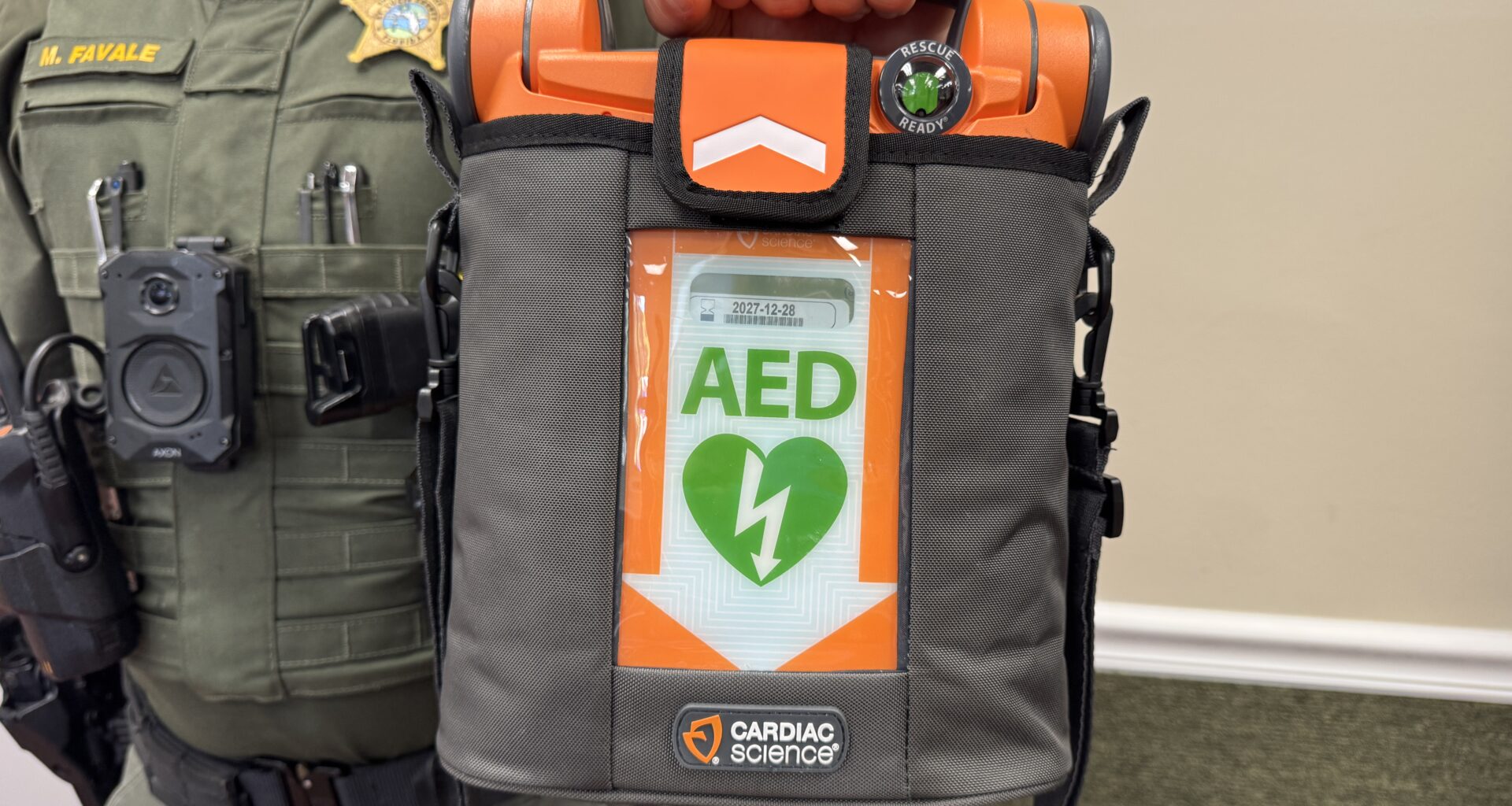
St. Lucie County, Fla. (CBS12) — Deputies in St. Lucie County now have a new life-saving tool with them on patrol: automated external defibrillators, better known as AEDs.
The Sheriff’s Office recently added nearly 90 of the devices to patrol cars and school resource deputies, with a goal of eventually outfitting every deputy countywide. The move aims to give deputies the ability to begin critical care during a cardiac emergency, often before fire rescue arrives.
Sheriff Richard Del Toro says the decision came after recognizing how frequently deputies arrive first to medical calls.
“The faster you can implement the use of an AED, the better chance you have for survival when it comes to a cardiac case,” Sheriff Del Toro said. “And I just don’t believe you can put a price tag on somebody’s life.”
According to the Sheriff’s Office, deputies respond to hundreds of cardiac-related calls every year. Because they are already out patrolling neighborhoods around the clock, they often reach people in distress before paramedics can get to the scene.
Del Toro says having the AED in the front seat allows deputies to act within seconds.
“Every second counts when it comes to a cardiac issue,” he said.
CBS12 News rode along with Sgt. Michael Favale as he patrolled the county. He says being equipped with the new devices gives deputies more confidence during emergencies.
“We get a call where we’re usually the first ones there,” Sgt. Favale said. “We can respond quickly because we’re ready and equipped, especially now with these new AEDs. It’s so small, so simple.”
Deputies have also completed training on how to use the devices. But even without it, the AEDs are designed to guide the user through each step in real time.
“I could pull one off the wall right now, start the machine, and it would give me step-by-step instructions of what to do,” Del Toro said.
The AEDs include clear voice prompts like, “Begin by exposing the patient’s bare chest. Remove or cut clothing if needed,” instructing deputies exactly what to do during a cardiac arrest.
While the Sheriff’s Office hopes the devices won’t need to be used often, they say having them on hand could make all the difference in a high-stakes medical emergency.