
New national data shows the multifamily sector once again outperforming the broader commercial real estate market.
A new Newmark report highlights how returns are shifting across the country and which metros are seeing the strongest investor performance.
In this post, we break down the findings, explain why the data matters for Tampa, and outline what developers, owners and stakeholders should watch next.
What happened?
Newmark’s latest multifamily capital markets report shows the sector delivered 5.48% annual returns in Q3, beating the NCREIF All Property Index at 4.65%.
Key takeaways from the national report include:
West Coast metros, including San Jose, Orange County and San Diego, posted returns above 7%, driven by supply constraints and strong demand.
Miami and Houston were the only Sun Belt markets to break into the national top ten.
Oversupplied metros like Austin, Raleigh and Phoenix saw some of the lowest returns nationwide.
Regulatory-heavy markets such as New York and Portland underperformed major peers.
The report highlights sharp differences between metros with tight supply and those overwhelmed by new development.
Why this matters
For Tampa stakeholders, the national picture helps frame how local performance compares.
While some Sun Belt markets have slowed due to construction volume and moderating rent growth, Tampa continues to show strong resilience, posting 6.5% annualized multifamily returns.
This matters because:
Investors still see Tampa as a healthy and stable bet.
Tampa’s job growth and population increases continue to support demand.
Compared to cities seeing oversupply, Tampa’s pipeline remains balanced.
In short, Tampa isn’t overheating — and it isn’t falling behind either.
What you should know
Here are the most important implications for Tampa’s multifamily market:
Tampa remains a preferred Southeast market for long-term investment stability.
Vacancy levels remain healthier than other metros experiencing heavy construction.
Rent growth may moderate, but demand remains strong enough to support continued absorption.
Investors seeking markets that blend stability with growth may find Tampa more attractive than oversupplied metros like Austin or Phoenix.
For owners, developers and brokers, this data can guide strategy for acquisitions, raises, repositioning or long-term portfolio planning.
What’s next?
Looking forward, Tampa’s multifamily performance will be shaped by:
Population and job growth remain strong across the region.
Interest-rate policy, which impacts deal flow and cap rates.
Construction pipelines, especially in areas like Channelside, Midtown, Tampa Heights and Westshore.
Investor sentiment continues to favor Florida metros with stable fundamentals.
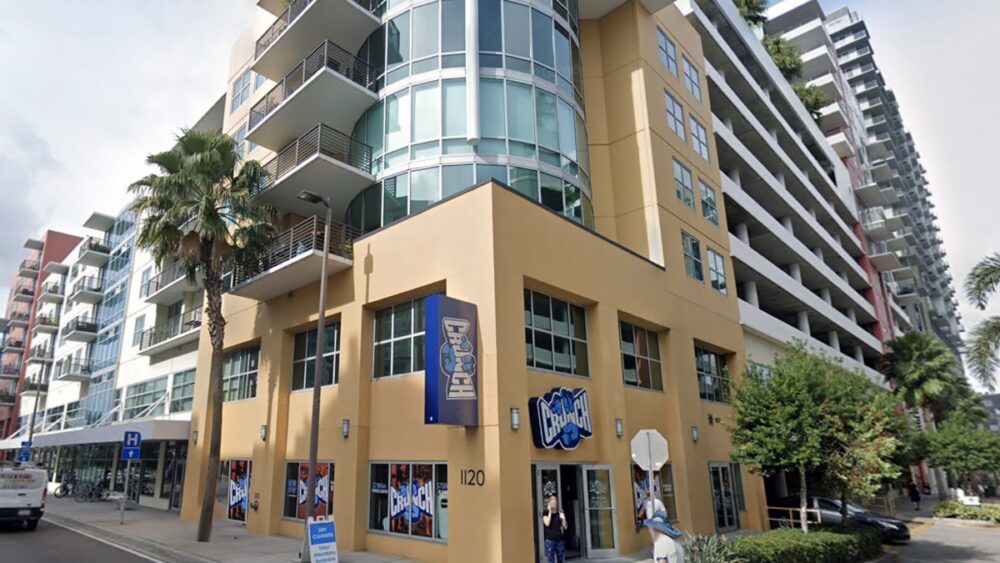 A mixed-use building in Tampa’s Channelside district, home to Crunch Fitness and several residential units.
Expect steady performance rather than extreme highs or lows. Tampa appears well-positioned for 2026 as developers continue adapting to national market conditions.
Takeaway
The new data reinforces Tampa’s position as a strong, resilient market in a shifting national landscape. With 6.5% returns and continued demand, Tampa remains a key multifamily investment market and a driver of long-term growth.
Stay Connected