
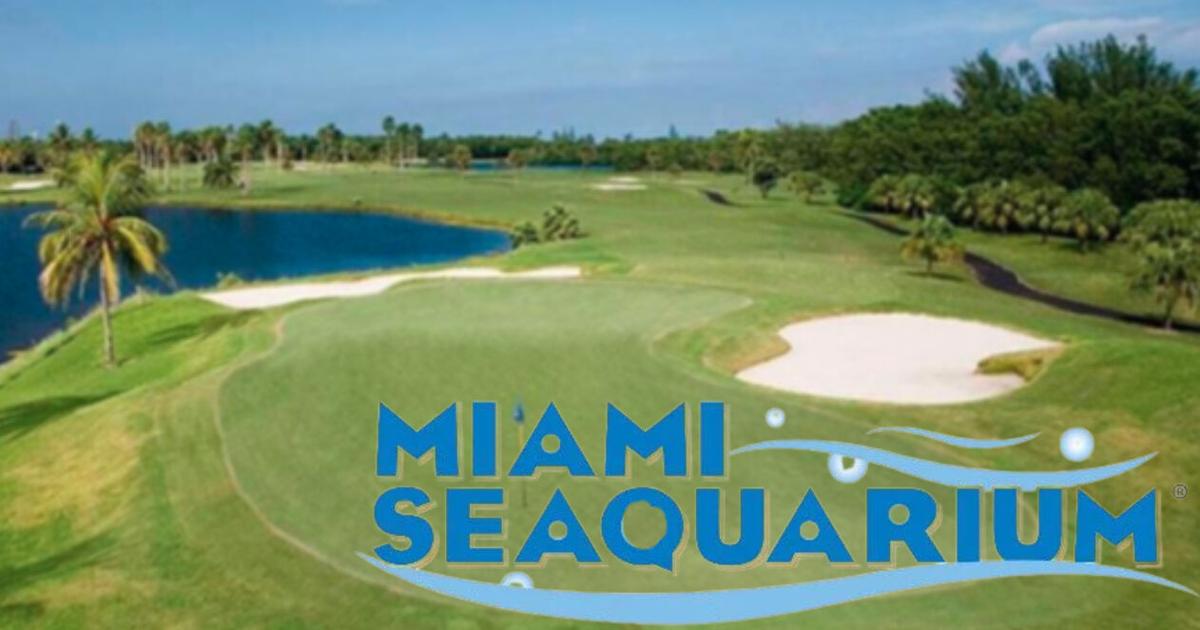
Two major polluters of Biscayne Bay sit on Miami-Dade County land: Crandon Park Golf Course and the former Miami Seaquarium. Their environmental impact is historic, structural, and—until addressed—ongoing.
Crandon Park Golf Course, built in 1972, was designed before environmental safeguards were standard. Its lakes are directly connected to the Bay, allowing stormwater to carry fertilizers and chemicals into sensitive waters. During high tides, bay water enters the lakes; during low tides, contaminated water flows back out. This tidal exchange contributes to nutrient loading, seagrass die-offs and worsening algal blooms.
Modern golf design offers solutions like isolated tee systems and reengineered lakes that retain rather than release runoff. While recent upgrades to Crandon’s irrigation and turfgrass are a start, they don’t fix the central issue, unfiltered water flowing into Biscayne Bay.
On Virginia Key, the Miami Seaquarium, closed in 2025, long operated under an industrial wastewater permit. It drew up to 10,000 gallons per minute of bay water, circulated it through tanks, and discharged the used water back into the bay. Though filtered and chlorinated, this system placed continuous strain on the ecosystem. Plans to redevelop the site offer a chance to eliminate this pollution legacy with modern, closed-loop systems.
Biscayne Bay is in crisis. When the county is the landowner, it must also be the steward. These two properties sit on extraordinary coastal land yet have contributed to the bay’s decline for decades. The opportunity to reverse that damage is now.
Miami-Dade must lead by example: redesign Crandon’s hydrology and ensure the new aquarium is truly bay-safe. Public lands must support, not harm, the environment they occupy.
The Bay’s recovery depends on it.