
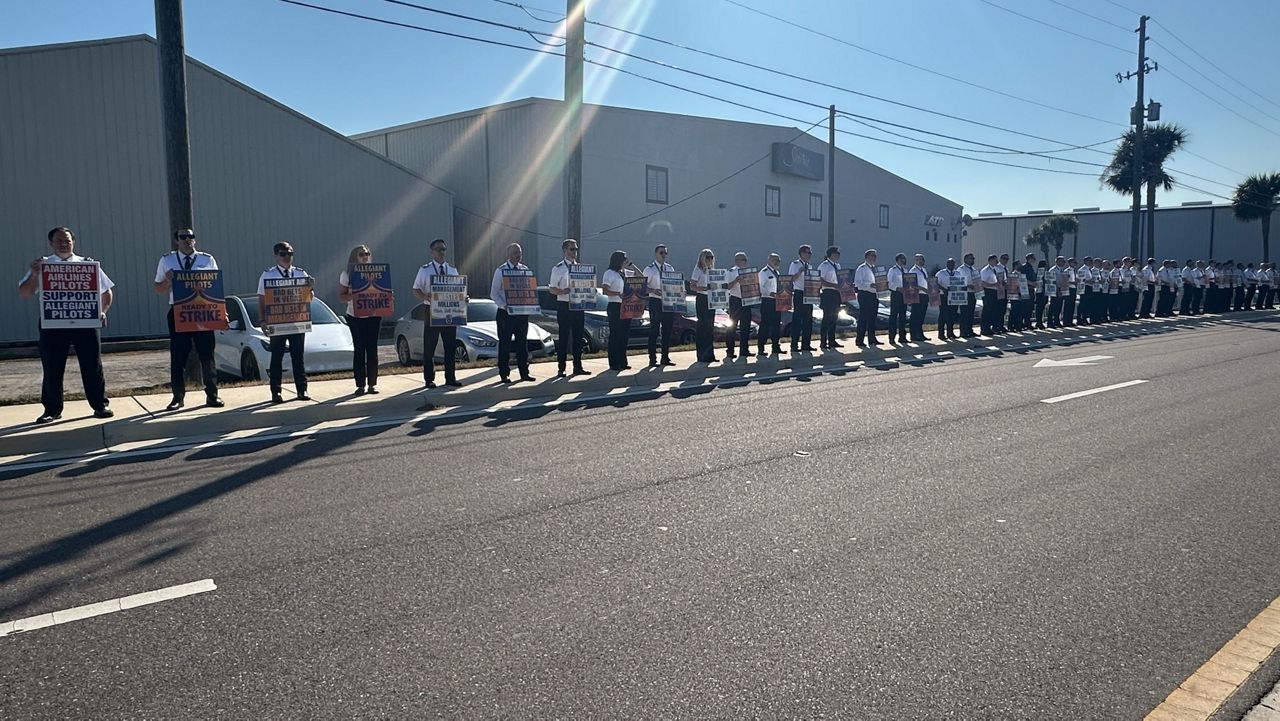
ST. PETERSBURG, Fla. — Pilots for Allegiant Airlines hit the picket line Tuesday at airports across the country, including St. Pete–Clearwater International Airport. The informational picket was part of a coordinated effort at 22 U.S. locations, aimed at pushing the airline to end delays in long-running contract negotiations.
What You Need To Know
Allegiant Air pilots stood silently outside the airport, holding signs and calling for updated compensation and improved benefits
Over 1,400 pilots took part in the informational picket nationwide. While this is not a strike, tensions are rising as over 95 percent of union members have voted to authorize one if negotiations continue to stall
Allegiant responded to Spectrum News with a statement saying the company has offered a competitive package
Pilots say they enjoy working for Allegiant but contend they make less than half of what pilots at other airlines earn. They have been working under the same contract since 2016 and argue that their pay and benefits have fallen far behind industry standards.
The pilots stood silently outside the airport, holding signs and calling for updated compensation and improved benefits.
“We’re asking for Allegiant management to come to us and negotiate a fair contract,” said Allegiant pilot Ryan Serra.
Serra says the lack of competitive pay is affecting pilots at every level. Some of the airline’s newer first officers, he says, cannot afford an apartment in the cities where they are based. He also noted that Allegiant is struggling to retain pilots, with many leaving for competitors offering higher pay and stronger benefits.
According to Serra, the staffing challenges could affect local routes and potentially jeopardize some service in the community.
Over 1,400 pilots took part in the informational picket nationwide. While this is not a strike, tensions are rising as over 95 percent of union members have voted to authorize one if negotiations continue to stall.
Allegiant responded to Spectrum News with a statement saying the company has offered a competitive package, including an immediate 50 percent average increase in hourly wages that would scale to 70 percent over five years, along with a 50 percent increase in retirement contributions. Serra argues that the proposed raises come with significant trade-offs, such as flying more hours and receiving fewer days off.
For many pilots, Serra says, the issue comes down to fair and affordable compensation. He notes that pilots are members of the community — neighbors, friends, and parents — and that it has become increasingly difficult for some to afford basic housing without taking on roommates or renting rooms.
Despite the overwhelming strike authorization vote, the pilots say they hope negotiations progress and that a full strike can be avoided.