
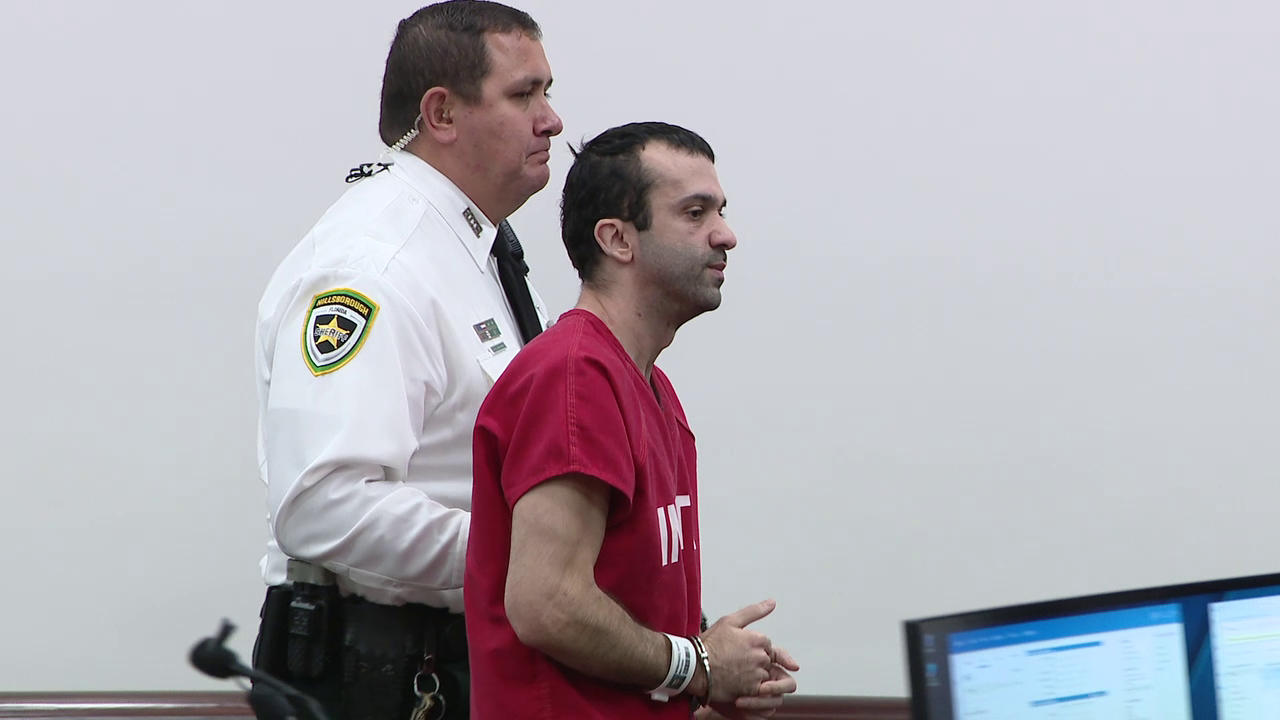
TAMPA – Among his co-workers, Daniel Hernandez was known to like fast cars.
It was his behavior behind the wheel of such a vehicle in 2021 that brought him to face Judge Susan Rice in Hillsborough County Court on Friday.
The backstory:
It was August 2021, when Daniel Hernandez was behind the wheel of his Ford Mustang driving on Dale Mabry Highway.
That August evening, he was traveling at 109 miles per hour when he approached an area where Khrista Richter and her husband were driving. Richter pulled onto the roadway into the path of the Mustang that was traveling more than double the posted 45 MPH posted speed limit.
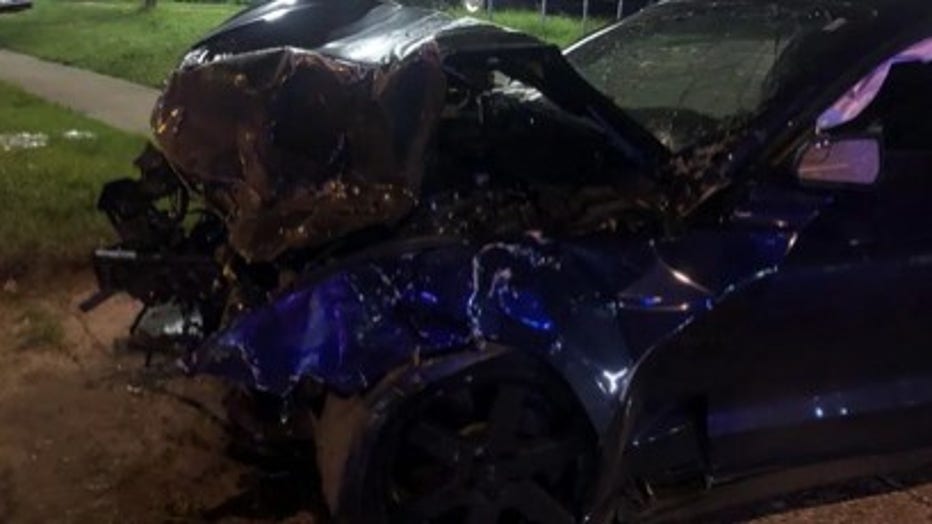
Hernandez attempted to avoid the collision, but it was impossible as he overtook the slower vehicle. They collided with such force that all three people were seriously injured.
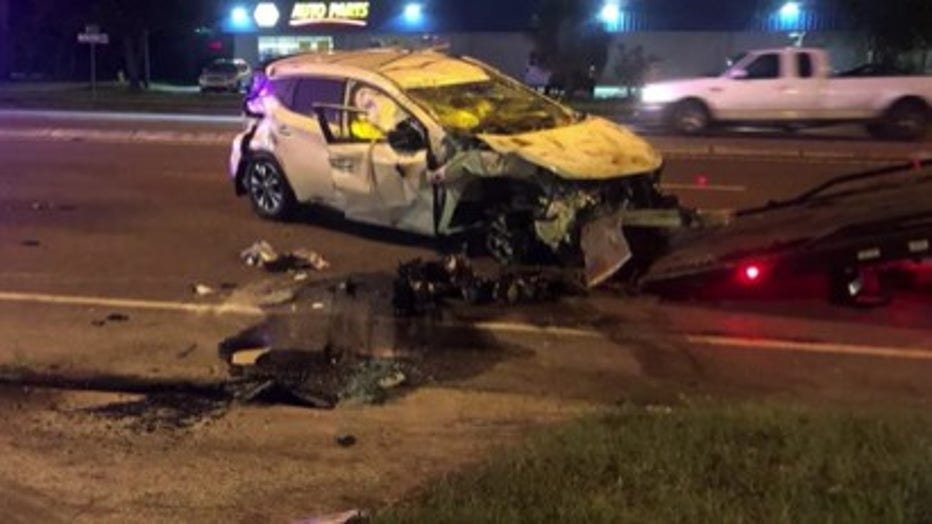
Khrista Richter died from her injuries days later. Her husband, Peter Richter, was seriously injured and was hospitalized for several days before beginning rehabilitation.
At the time, Hernandez was a detention deputy with the Hillsborough County Sheriff’s Office and had been since 2016.
Following the crash and the reconstruction of what happened, the initial appearance at the scene was that Richter had violated the right of way of Hernandez by pulling into his lane.
In fact, Hernandez initially sued the Richters over the accident in order to recover the loss of the vehicle and time at work.
It was that lawsuit that triggered the recovery of the data recorder in the wrecked Mustang. Upon reviewing the data showing the excessive speeds 5 seconds prior to the accident, the Florida Highway Patrol brought charges against Hernandez in April 2022. He resigned from his job with the Sheriff’s Office and turned himself in. He was arrested and charged with vehicular homicide and reckless driving with serious bodily injury.
Over the years since the arrest, he and his attorney managed to delay and prolong the trial as they put together a defense.
The biggest problem for them was that data recorder from the Mustang. It was tough to justify the speed of the vehicle as shown in the moments before the crash.
Dig deeper:
Hernandez had no prior record and was a military veteran. The prosecution offered a plea deal that would send him to prison but would allow for his record and his service to be taken into account. The defense rejected that plea.
The case finally came to trial in September of this year. It did not go well for Hernandez.
The survivor, Peter Richter, was a sympathetic witness. The excessive speed was an issue.
The person responsible for driving the Mustang was someone who should have known better. Although he resigned from the Sheriff’s Office before his arrest, he was still someone who had been through the process of becoming a deputy and had served with the detention staff for almost 5 years.
The jury returned a guilty verdict on both criminal counts.
Why you should care:
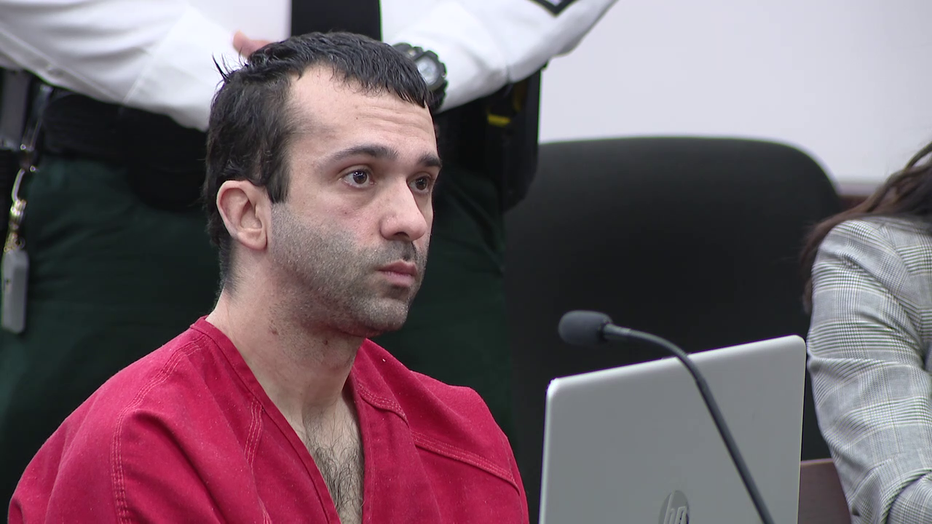
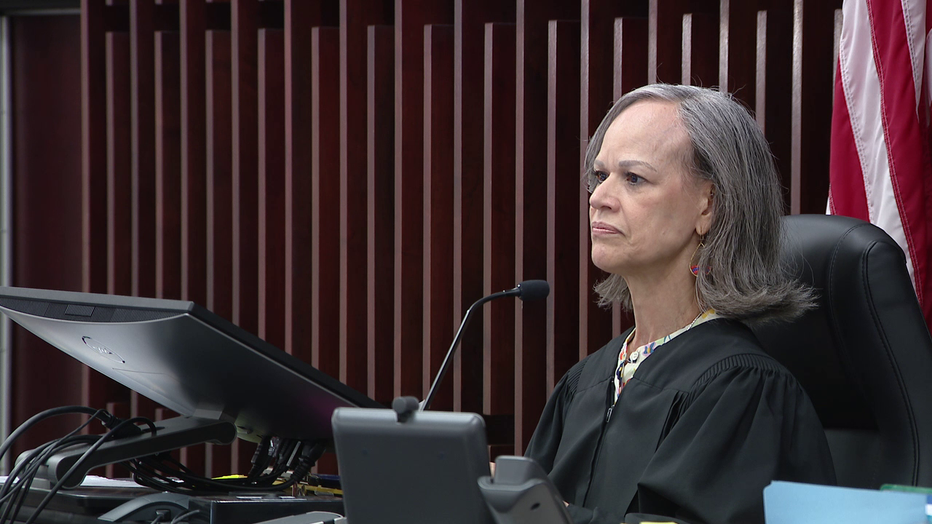
On Friday, Daniel Hernandez was back in court to face Judge Susan Rice for his sentencing.
In the trial, his attorney tried to frame the case as just a tragic traffic accident. His speed was the only factor that contributed to the accident, but that was hardly criminal behavior. He asked for a new trial based on that basis.
The prosecution told the judge that was not the case. Hernandez was willfully and deliberately breaking the traffic laws by going more than double the speed limit posted in the area. His actions were criminal.
Judge Rice denied the defense motion for a new trial.
His defense attorney, Bryant Camareno, presented the court with a plea for leniency in the case. He pitched the idea that Hernandez could speak about the dangers of speeding to high schools and drivers’ education classes. The defense characterized the accident as an isolated single incident.
They brought forth character witnesses that included Hernandez’s mother, step-father, sisters and other family members.
Each one asked for the same leniency.
The prosecutor disagreed with those character witnesses. Dawn Hart described the incident not as a tragic accident, but as an egregious act, a dangerous act.
She called out the fact that, as a deputy, Hernandez, of all people, knew better and, but for his actions, the accident would never have happened.
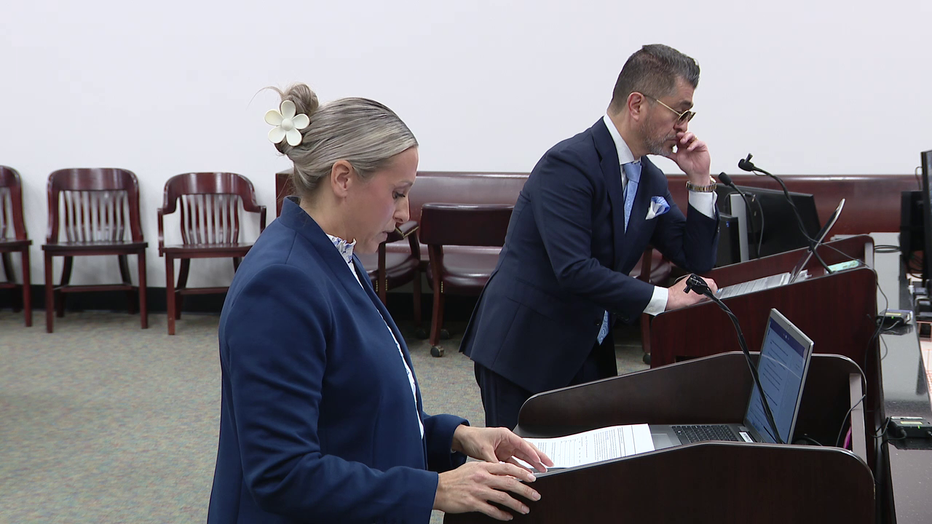
Prosecution and Defense in Daniel Hernandez case
Hart told the judge that deterrence isn’t a part of the criminal justice system, but that punishment is.
She then called for the victim impact statements.
The court seemed to slow down as the husband of the victim slowly came forward to deliver his statement.
Peter Richter was injured in the accident. He endured not only the death of his wife, but was hospitalized himself for 5 days and went through extensive physical therapy to overcome his injuries.
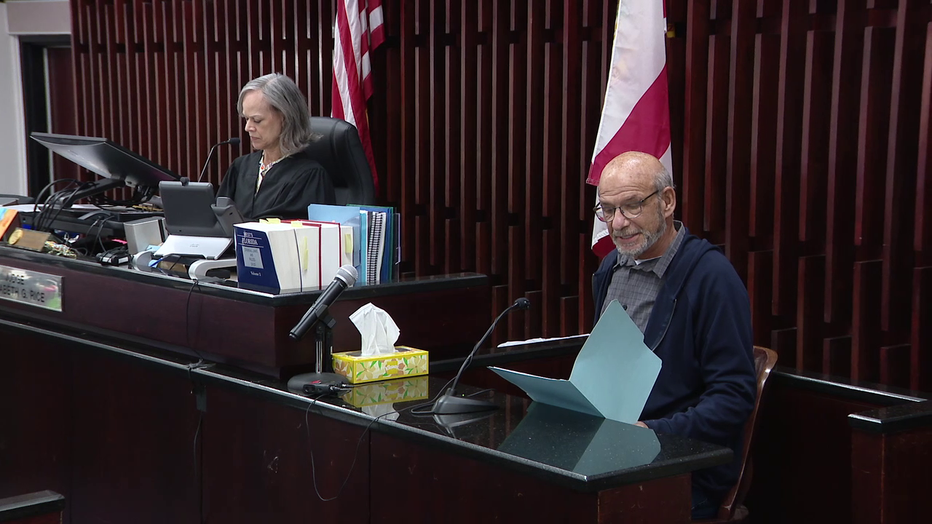
He related to the court that he still has a traumatic brain injury, depression and anxiety as a result; but, in the most telling moment, he called his wife the lucky one. He said that she died, and he has had to learn to live with surviving her death as well as the trial and everything that has come with it. He called on Judge Rice to give Hernandez the maximum sentence.
Judge Rice addressed the court.
She found the victim’s statement persuasive and convincing. She agreed with the prosecution that the irony of an officer sworn to protect and serve is the defendant is important and that 5 seconds prior to the crash, he was going 109 miles per hour. Judge Rice addressed Hernandez directly, saying that had he been going the speed limit, Khrista Richter would have cleared the path and there would have been no crash.
She told him that he had broken the law that night, and she declined the defense request for downward departure.
What’s next:
Judge Rice sentenced Hernandez to the maximum: 15 years in Florida State Prison followed consecutively by 5 years of probation.
With that probation, he will have permanent revocation of his driver’s license, he must pay a $5000 fine, and he must pay restitution with the amount reserved until the defense addresses the amount. He must take a defensive driving course in the event he ever gets a work permit to drive again. In addition, he must serve 1500 hours of community service. Of those, 120 hours must be served at a trauma center. He will also have to pay all court costs and fees.
The Source: This story was prepared based on the court hearing for Daniel Hernandez’s sentencing.