

Ashley Mercier and her family saw the last of their Bengal cat Murray on July 4. They have little doubt that the culprit was a coyote roaming their Winter Park neighborhood.
“Our neighbors called us and said they found his head and a leg bone in their backyard,” she said. “Their backyard was like a crime scene and my kids saw that. To find an animal you love like that is just horrible.”
Mercier and her two daughters took their story and photos of Murray, 15, to a Winter Park City Commission meeting several weeks ago. Because of that, along with coyote concerns other residents have conveyed to Mayor Sheila DeCiccio and commissioners, the city hosted a community meeting Thursday evening to share information about how to live with the animals in Orange County — and how to avoid them.
“Over the past several months many of you have reached out about coyote sightings and heartbreaking losses of pets,” DeCiccio said. “We scheduled this meeting because I believe in facing concerns head-on and bringing everyone who has the authority and expertise to the same table.”
The mayor said coyotes are not a city-by-city issue and trying to solve the problem in Winter Park alone is not enough — which is why County Commissioner Kelly Martinez Semrad was involved in the meeting. Semrad represents District 5 which includes the city.
 Jessica Moore is a wildlife assistance biologist with the Florida Fish and Wildlife Conservation Commission. (Brian Bell/Orlando Sentinel)
Jessica Moore, wildlife assistance biologist with the Florida Fish and Wildlife Conservation Commission, said coyotes are in all 67 counties of Florida. The state doesn’t have population estimates but they are considered common in rural, suburban and even urban landscapes in Central Florida.
Moore said one reason coyotes have proliferated is the concerted effort in the early part of the 20th century to eradicate wolves — one of their main predators. Efforts to eradicate coyotes have historically failed because of their unusual reproduction cycle.
“When there’s a lot of space and food their bodies naturally signal to increase their birth rates,” Moore said. “If you go into an area that has a healthy coyote population and you remove multiple coyotes from it … they react to that as though there’s a surplus (of space and food).”
The most important thing people can do to lessen interactions is eliminate food sources, she said. Coyotes are omnivores — eating plants and animals — and their diet is highly opportunistic, meaning they’ll scavenge through garbage, eat pet food and prey on small livestock as well as cats and small dogs.
“The biggest key is prevention and securing your attractants (which are) anything that brings wildlife into your yard,” Moore said.
The next step is to encourage them to leave, she said, and that’s where hazing comes in, which basically means scaring them without causing them harm.
“We want you to make yourself big and loud, as big and loud as you can … and that is going to help remind those coyotes that when they see a human they need to go in the other direction,” Moore said.
Property owners experiencing nuisance behavior — property damage, a threat to public safety or causing an annoyance within, under or upon a building — can undertake removal efforts themselves (such as trapping) or work with a nuisance wildlife control operator.
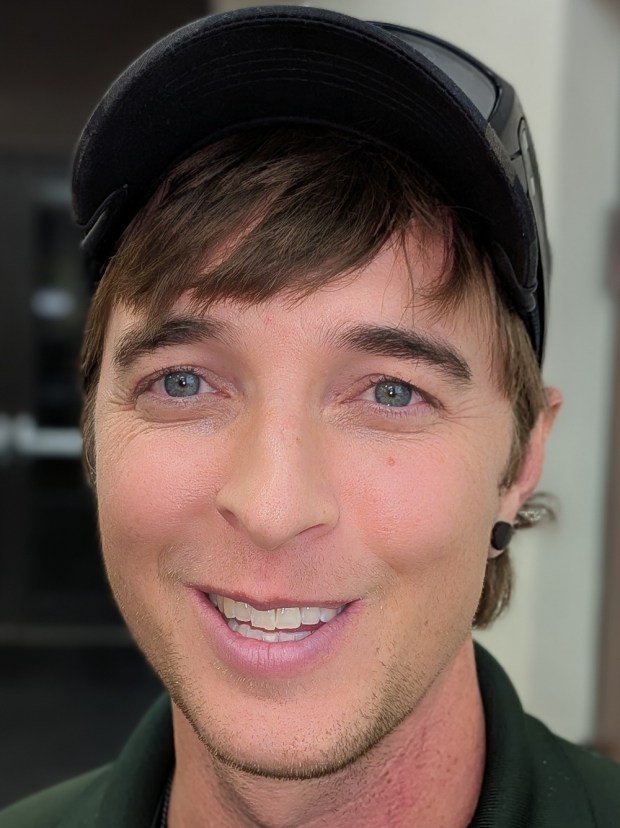 Daniel McCracken is a senior officer with Orange County Animal Services. (Orlando Sentinel/Brian Bell)
Daniel McCracken, senior officer with Orange County Animal Services, said the agency does not handle complaints about nuisance wildlife but will respond to calls about dangerous, sick or injured animals.
“We only handle animals that will fit in our trucks, so we’re not going to be coming out for bears or 10-foot alligators,” he said.
Mercier attended the meeting and said afterward she still plans to pressure the city to take additional steps. She started a petition earlier this week on change.org. As of Friday afternoon it had 174 signatures.
The petition asks the city to acknowledge coyotes as an invasive nuisance species requiring direct intervention; conduct a formal assessment of local coyote populations and known dens; implement a citywide coyote management plan; and establish clear communication channels so residents know how to report sightings, attacks and risks.
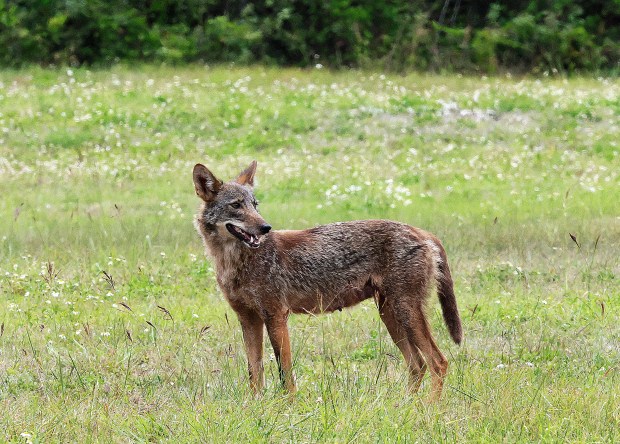 A coyote roams the Central Parc community in Tamarac on April 22. According to the Florida Fish and Wildlife Conservation Commission, coyotes can and do prey on domestic cats and small dogs. A Winter Park community meeting took place Thursday, Nov. 20, 2025, in response to residents’ concerns about the animals in the community. (Carline Jean/South Florida Sun Sentinel)
Assistant City Manager Michelle del Vale said Friday by email that Winter Park plans to continue efforts to educate the community about coyotes.
“We are grateful that Orange County and the Florida Fish and Wildlife Conservation Commission are taking the lead on this regional concern and offering educational messaging regarding best practices,” del Vale said.
An FWC interactive map that logs reports about coyotes shows 333 across Lake, Orange, Osceola and Seminole counties this year through October. The map shows 140 in Orange, 113 in Seminole, 51 in Lake and 29 in Osceola. In 2024 the map shows 218 in Orange, 133 in Seminole, 43 in Lake and 27 in Osceola.
The nature of incidents reported includes threats to animals or humans, missing pets, sick/injured animals, sightings and animals possibly killed by coyotes. It does not include reports received by other government agencies that are not also reported to FWC.