
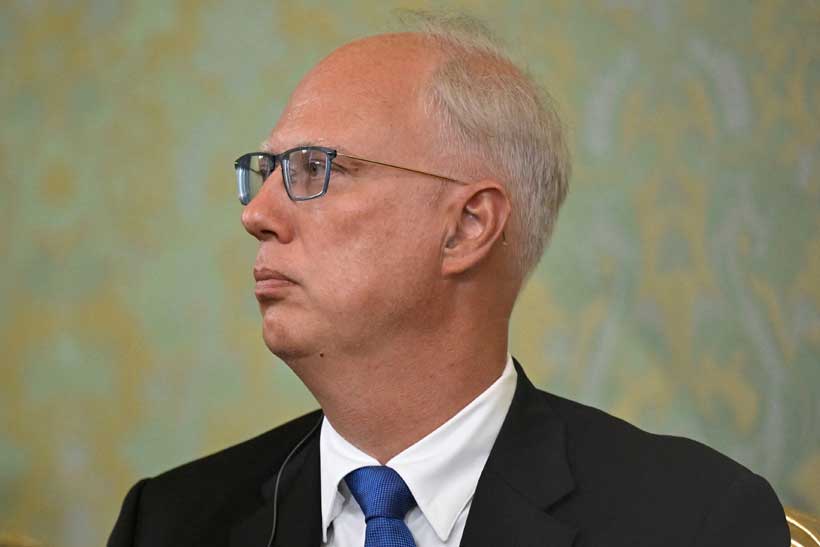
U.S. officials and lawmakers are increasingly alarmed by a recent meeting involving the Trump administration and Kirill Dmitriev, a sanctioned Russian envoy, aimed at drafting a peace plan for the ongoing war in Ukraine. This gathering occurred in Miami at the end of October and involved key figures such as special envoy Steve Witkoff, Jared Kushner, and Dmitriev, the head of the Russian Direct Investment Fund (RDIF). Dmitriev, a close associate of President Putin, has been active in U.S.-Russia discussions regarding the conflict and had previously met with Witkoff throughout the year. To facilitate his entry into the U.S., the Trump administration granted a special waiver, according to a senior U.S. official.
Dmitriev’s negotiations followed U.S. sanctions imposed in 2022 targeting him and his fund due to Russia’s invasion of Ukraine. The resulting meeting produced a 28-point plan aimed at ending the conflict, which was unexpectedly shared publicly by Axios, confounding various officials across the U.S. government and sparking concern among Ukrainian officials. Critiques emerged regarding the plan’s perceived bias toward Russian interests, with Ukrainian President Volodymyr Zelenskiy pledging not to compromise Ukraine’s sovereignty.
The proposal demands significant concessions from Ukraine, appearing to contradict the Trump administration’s recent hardline approach towards Moscow, particularly concerning energy sector sanctions. It remains unclear whether specific Russian demands influenced the contents of the plan. Notably, Rustem Umerov, Secretary of Ukraine’s National Security and Defense Council, reportedly visited Miami to discuss the plan but characterized his involvement as technical, asserting no substantive discussions occurred.
Witkoff later presented the plan to Umerov, subsequently relaying it to Ukraine through Turkey before a direct briefing in Kyiv. White House spokeswoman Karoline Leavitt emphasized that any peace framework must guarantee security for Ukraine and Europe while incentivizing both parties economically. Trump expressed optimism that Zelenskiy would endorse the proposal before Thanksgiving, with looming threats from the U.S. of reduced military aid if Ukraine does not comply.
Concerns about the meeting’s lack of transparency surfaced, with many senior officials within the State Department and National Security Council reportedly left in the dark regarding the discussions led by Witkoff and Kushner. While Secretary of State Marco Rubio was noted to have been briefed on the plan, accounts vary regarding the timing and extent of his involvement. Officials disputed claims that proper coordination occurred, indicating that several aspects of the plan had previously been rejected by the secretary.
This situation has heightened anxieties within the administration and Congress about the potential for a peace proposal skewed towards Russian desires, including demands for territorial concessions from Ukraine, recognition of Crimea as Russian territory, and commitments from Ukraine not to pursue NATO membership. Critics, including Senator Roger Wicker, articulated skepticism about the viability of a proposal that could compel Ukraine to yield its rightful territory to aggressor Vladimir Putin.
Experts have voiced additional concerns regarding the proposed deal, given Putin’s framing of the outlined plan as merely a starting point for further negotiations, suggesting possible additions that may further disadvantage Ukraine. The nature of discussions with Dmitriev has also raised alarms within U.S. intelligence circles, where apprehensions regarding his previous attempts to gain influence through the RDIF have been noted.
Historically, Dmitriev has sought to cultivate connections with the Trump administration, a relationship underscored by previous contacts aimed at improving U.S.-Russia relations. Reports from Special Counsel Robert Mueller indicated that Dmitriev had discussions with Trump allies to facilitate warm relations. Notably, during the pandemic, he collaborated with Kushner to coordinate the importation of ventilators to the U.S., an action that raised red flags at the Treasury Department about potential violations of existing sanctions.
In more recent engagements, Dmitriev has appeared on various American news platforms and at significant events like the World Economic Forum, promoting the idea of strengthening trade affiliations between the U.S. and Russia. His discussions in Miami reportedly echoed similar sentiments regarding Trade relations, and he conducted a meeting with U.S. Representative Anna Luna, where the dialogue revolved around enhancing economic ties.
The interactions included controversial moments, such as Luna ostensibly accepting a symbolic gesture involving Russian memorabilia, underscoring the complex and often fraught nature of congressional dealings with Russian figures. The scenario paints a picture of potential fractures within U.S. external policy regarding Russia and raises questions about interests that may favor Moscow at a time when a unified front in support of Ukraine is crucial.
With information from Reuters