
Fort Myers officials aim to transform the city’s downtown riverfront with a sweeping makeover stretching from roughly Hendry Street to the Edison & Ford Winter Estates, setting the stage for future growth and economic development.
The project, called The Innovation Walk, aligns with other waterfront makeovers around the country — from Jacksonville to Queens, New York — that create social hubs and drive investment. Fort Myers’ history and a riverfront that planners view as a mostly blank slate make its plans distinct.
Seven urban planning teams gathered at Fort Myers City Hall on Nov. 24 to vie for the chance to reimagine a mile-long swath of Caloosahatchee River walkways, weaving the city’s history and the theme of innovation throughout design elements.
A six-member Innovation Walk committee made up of city staff and Fort Myers Community Redevelopment Agency officials spent the day listening to presentations and interviewing each team for the opportunity to create what they called a “bold, implementable master plan.” The walkway runs alongside downtown streets before passing under the U.S. 41 bridge, through Centennial Park pathways and past broken piers and a shoreline battered by recent hurricanes.
The committee ranked the teams based on their “experience, design approach [and] community engagement philosophy.” The team from global design firm Perkins&Will received the highest score, though the firm has not secured the job yet. The committee voted unanimously to recommend Perkins&Will to the CRA board, which must vote in favor before contract negotiations can begin.

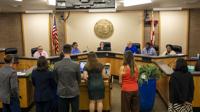
The Innovation Walk committee listens to presentations from urban planning firms at Fort Myers City Hall. The group later voted unanimously to recommend Perkins&Will for contract negotiations.
Evan Williams
“This is something that can fundamentally change downtown Fort Myers,” said urban planner Cassie Branum, principal with Perkins&Will and the team’s Innovation Walk project lead based in Atlanta. “It’s a big lift.”
Like other firms, the Perkins&Will team included a mix of local and out-of-town representatives with varied professional specialties, including a landscape engineer and an archeologist. The other candidates included teams from Studio for Architecture, Sasaki Associates, Stantec, Claire Weisz Architects (WXY Studio), Brooks + Scarpa and Vanasse Hangen Brustlin.
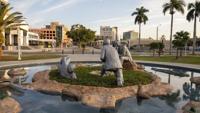
Centennial Park along the Caloosahatchee River is included in the proposed Innovation Walk route. The area features open waterfront space that planners say has potential for public gathering areas.
Evan Williams
At this stage, the ideas are dominated by lofty but not fully realized goals. Some early phases could be completed in the next few years, while other elements could take far longer. Designers and city planners anticipate the project influencing the city for decades.
“The Innovation Walk is an opportunity to finally and fully connect the city to its waterfront and unlock its civic, economic and ecological potential,” Fort Myers architect Joyce Owens said during a presentation with Brooks + Scarpa.
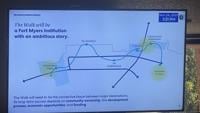
The Innovation Walk review committee meets at Fort Myers City Hall on Nov. 24 to score and recommend a design team. Committee members evaluated firms on experience, approach and community engagement.
Evan Williams
The project is expected to foster community, attract tourists, spur real estate development and fill the downtown/midtown CRA district coffers with tax-based revenue.
“Economic development is at the heart of this (Innovation Walk), as well as placemaking,” Fort Myers CRA Executive Director Michele Hylton-Terry said. “… We see it that way, but we don’t really know what that looks like.”
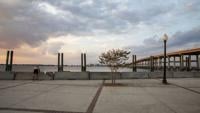
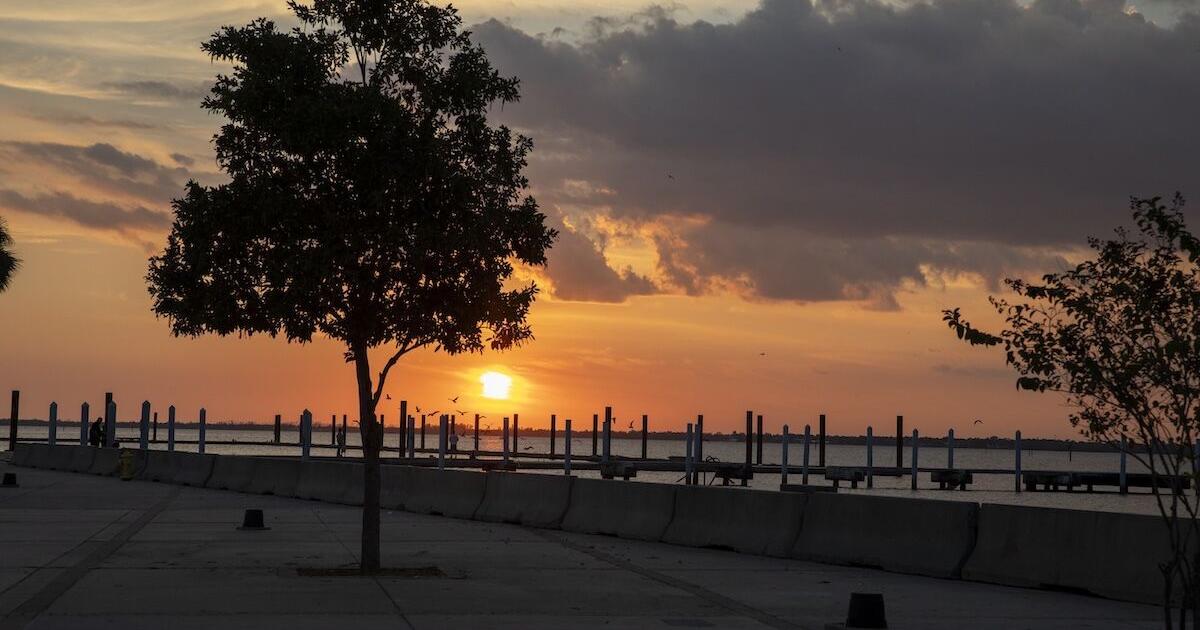
A view of the Caloosahatchee River from Centennial Park, where damaged piers and shoreline sections may be reimagined in the Innovation Walk design. The project aims to strengthen the city’s connection to the water.
Evan Williams
During their presentations, planning firms emphasized details that city officials requested, including funding and maintenance realities, the complexity of public and private entities sharing space along the river and ways to tell the city’s history through urban design that is truthful and engaging for all ages and abilities.
They discussed features, such as resilient landscape design, high-tech interactive artwork, history lessons tied to local schools, water attractions, rebuilt piers, shade trees and other potential elements. Additional components might include bioswales that collect stormwater or artworks that play on shadow and light in a nod to the early film work of the city’s most famous innovator, Thomas Edison.