
The Athletic has live coverage of the latest release of the 2025 College Football Playoff rankings.
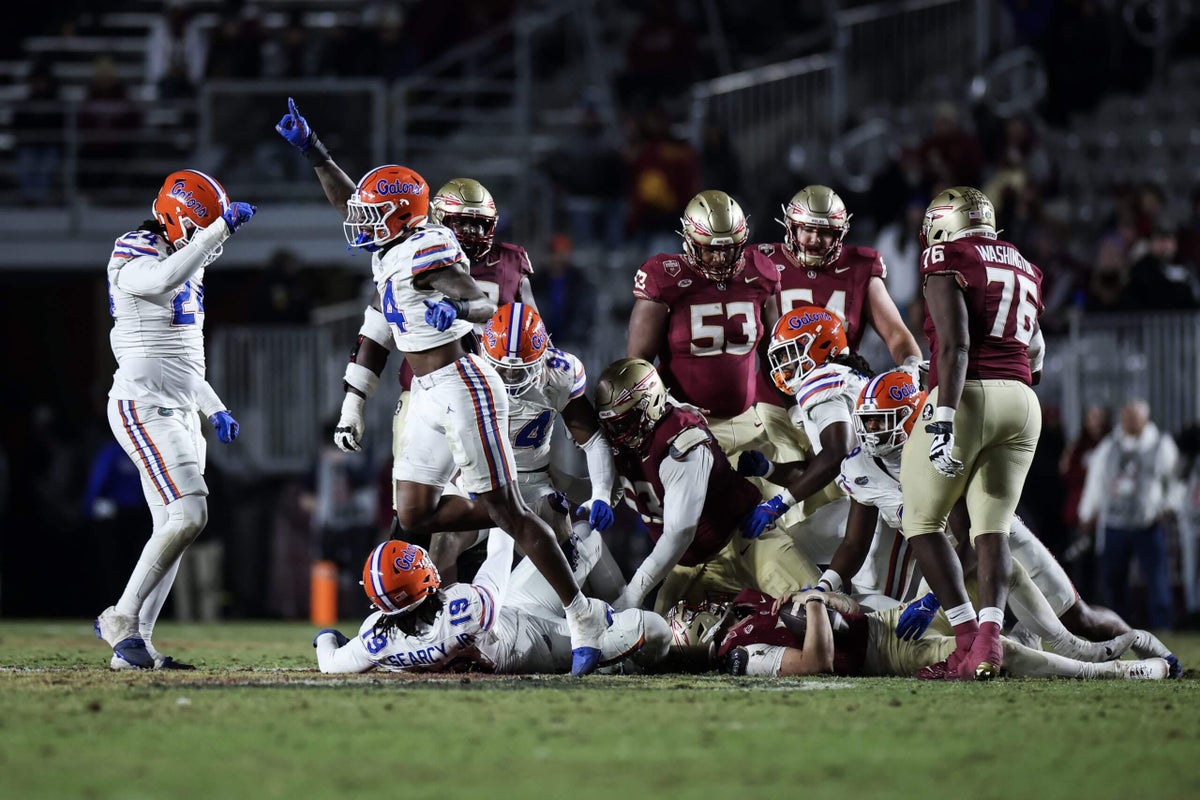
The most important drama around Saturday’s game between Florida and Florida State will, again, be off the field.
The once-great rivalry will feature an interim coach (Florida’s Billy Gonzales) for the fourth time in the last eight meetings, as the Gators search for Billy Napier’s long-term replacement. The Seminoles aren’t in the market this time after announcing Sunday that Mike Norvell will remain at FSU next year for his seventh season. But that decision won’t stop long-term questions about a coach with a 38-33 record and a program in danger of its sixth losing season in the past eight years.
The coaching uncertainty (including Florida’s apparent waiting game for a Lane Kiffin decision) and instability lead to a question much more interesting than whether Florida State will clinch bowl eligibility: Which is the better job?
Here’s the case for each school after conversations with four people who have worked with or at both places (some were granted anonymity in exchange for their candor):
The case for Florida
Unlike Florida State, the Gators don’t have to eye a spot in the Power 2. They’re safe in the SEC, which leads to several advantages, starting with money. In the 2023-24 fiscal year, Florida’s athletic department brought in $11 million more than FSU, according to figures reported to the U.S. Department of Education. That’s before the SEC’s new TV deal took effect, which could cause the gap to grow (we’ll come back to that).
When The Athletic published hypothetical valuations of every Power 4 program in the summer, Florida came in at No. 12, six spots ahead of FSU.
“From the standpoint of fiscal support, Florida outweighs Florida State every day of the week,” said an NIL agent who has dealt with both programs.
Although verifiable NIL and revenue-sharing figures are scarce, Florida is regarded in the industry as nationally competitive. Florida State is generally considered strong, too, but there are more questions and doubts about the Seminoles than the Gators.
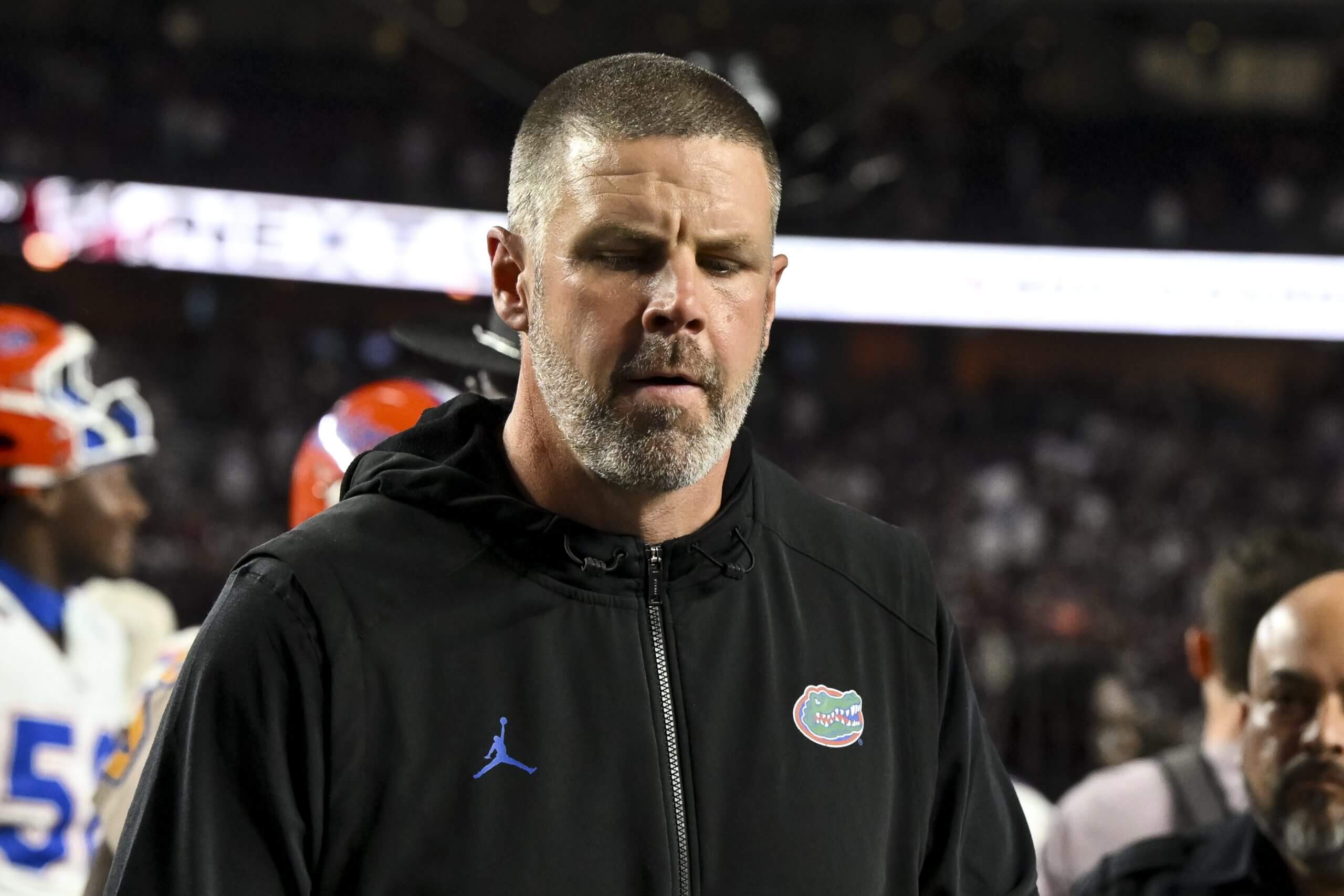
Florida fired Napier in October with a 22-23 record in less than four seasons. (Maria Lysaker / Imagn Images)
The SEC’s strength helps Florida in other ways. On the recruiting trail, the next coach can tout the fact that the conference consistently produces the most NFL Draft picks. The College Football Playoff committee has routinely given SEC programs a bump, like placing 12-1 Alabama in the four-team field over 13-0 FSU in 2023 or putting 9-3 Alabama on the bubble ahead of 10-2 Miami last year. The ACC has stabilized after its legal in-fighting with Florida State and Clemson, but it’s unclear how long that will last. No one, however, questions the SEC’s future as a power conference or Florida’s place in it.
“There’s nothing like coaching in the SEC,” said Marc Nudelberg, a support staffer at Florida under Jim McElwain and at FSU under Jimbo Fisher.
Though both programs have the same ceiling (three national championships each since 1993), Florida State’s 2-10 record last season showed its floor is lower. Since 2020, the Seminoles have signed four recruiting classes that ranked 20th or worse in the 247Sports Composite. Florida has signed only one such class since 2002 … and it happened during the coaching transition from Will Muschamp to McElwain. Even with an interim coach, the Gators’ unsigned 2026 class is ranked No. 13 — one spot ahead of FSU.
Although Florida still has an interim president, the Gators have had only two athletic directors in the past three decades: Jeremy Foley and incumbent Scott Stricklin. FSU has had three in the past dozen years.
The case for Florida State
FSU’s recent history is better. The Seminoles have won a conference title (2023) and national title (2013) more recently than Florida (2008 for both) while accounting for the state’s only Playoff appearance. Since the start of the 2014 season, the Seminoles (89-60, .597 winning percentage) also have a better record than Florida (87-63 record, .580 winning percentage). Florida State has won nine of the past 15 matchups, too.
The biggest differentiator in the Seminoles’ favor is the other side of the ACC-SEC coin.
“Florida … they play in the toughest football conference in America, period,” said a former assistant at both schools. “Florida State plays in a lesser conference. End of story.”
Napier signed the nation’s No. 9 class (including transfers) last cycle, according to the 247Sports Composite. That’s good, but it still ranked below five other SEC teams. The Gators’ conference schedule this season featured five teams ranked in the CFP selection committee’s top 20: Texas A&M, Georgia, Ole Miss, Texas and Tennessee. Six of next year’s SEC opponents are in this week’s rankings, too, compared to two ranked ACC opponents for FSU.
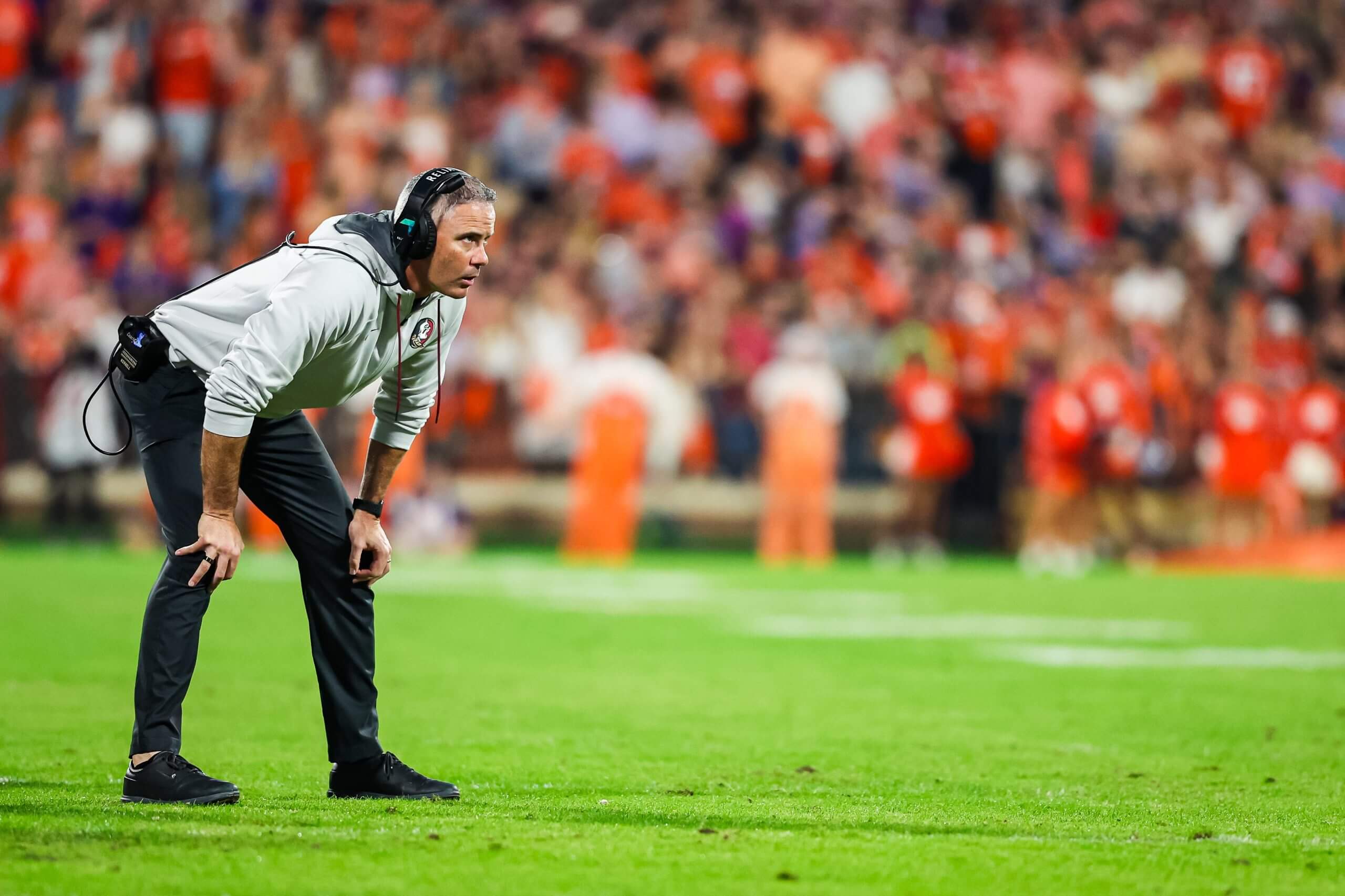
Florida State has lost 17 of 24 games since starting 13-0 in 2023. (David Jensen/Getty Images)
Although the ACC’s lower/middle class is ticking upward, Clemson and Miami are the only two programs that should be able to match Florida State (unless James Franklin rebuilds Virginia Tech immediately). The Seminoles have an easier path to the CFP through an ACC championship than Florida has by finishing fourth or fifth in the SEC.
“If you were a head coach and you were looking at where I can go win faster, it’s at Florida State …” said Nudelberg, now the president of a leadership coaching agency, On the Ball. “Day 1, you have expectations of being the best team in the league, and you’re not that far off.”
Florida’s financial edge is a concern, but the ACC’s new payout structure gives more money to schools based on their on-field success and TV viewership. The change roughly eliminates the Gators’ gap — if FSU returns to national relevance. It’s also hard to scrutinize Florida State’s financial commitment considering Norvell would have been one of the 10 highest-paid coaches in the country this year had he not taken a $4.5 million pay cut after last year’s struggles.
The verdict
Florida and Florida State are about the same in most of the traditional factors that determine the quality of a job like facilities, salary, history and proximity to talent. That makes the conference affiliation a deciding factor … and that’s why three of the four industry sources we consulted would prefer the Seminoles to the Gators.
“If you’re trying to win, Florida State is the better football job,” said a second staffer who has worked at both places.
We’ll agree. Either program can still win a national championship if it’s operating at peak capacity, but the Seminoles have the easier path to the CFP through a conference in which there are only two true peers (Clemson and Miami) instead of the heavyweights of the SEC. Florida’s last four coaches all failed to last four full seasons, while Florida State’s administrators have shown more patience this time by giving Norvell another crack at a rebuild. The jobs are comparable, but we’ll give the slight edge to the Seminoles.