
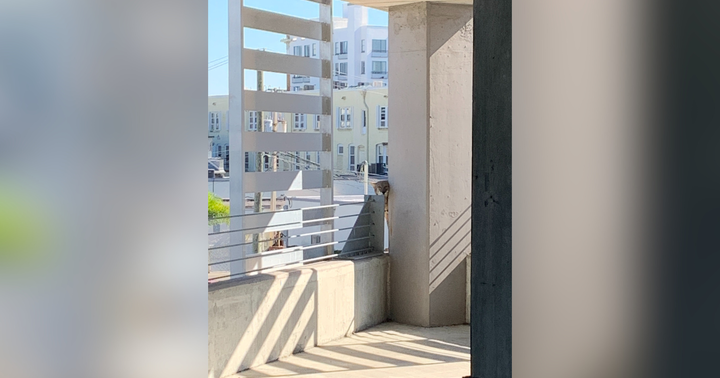
A coyote perched several stories up on the ledge of a hotel in downtown Fort Myers turned heads, but experts say such sightings are more common than people realize.
Dr. Christina Anaya, an assistant professor of biology and mammalogy at Florida Gulf Coast University, explained the situation.
“He got himself in a pickle, a coyote out on a ledge,” said Anaya.
While a coyote in the heart of downtown Fort Myers might seem unusual, Anaya said these animals often navigate human environments without detection.
“They’re amongst us and navigating our world and our infrastructure all the time, and many times you don’t even know they’re there,” said Anaya.
Anaya suggested this particular coyote likely spent the night in the quiet and dark Luminary Hotel parking garage before morning activity spooked it, leading to its precarious position on the ledge.
“Then with the morning came a lot of hustle and bustle. And eventually he probably got spooked, and then tried to jump over that ledge, over the pylon, to the ledge, and then realized he couldn’t get down, so he lost his courage to go back right away,” explained Anaya. “But after a couple of hours, as you saw, he finally realized he could jump back over and get out.
Coyotes are known for their resilience and ability to thrive in urban and suburban areas. Humans, unfortunately, supply them with a lot of food.
“They do really well and flourish and actually live in urban and suburban areas, and the research suggests there are differences between urban, suburban, and wildland coyotes,” said Anaya.
The sight of a coyote often draws crowds, but Anaya cautioned against getting close.
“All the people gathered around kind of makes it worse for them,” she said. “They are in the dog family, and so our heart goes out to them when we see them like that, but we have to remember they are wild animals, and they’ll eventually find their way,”
Coyotes are found in all 67 Florida counties.
“Coyotes actually arrived in Florida as part of their natural range expansion from western states, and they now live in every state across the US except Hawaii. They are incredibly adaptable,” said Meredith Budd, deputy director of the Live Wildly foundation.
“With feeding, whether it’s intentional or unintentional, they’re going to lose that fear of humans, or it’s going to lend losing that fear of humans,” said Budd. “You always want to secure your garbage cans if you have pet food outside or any sort of fallen fruit on your property, you want to try to keep that inside. If you live in an area where there’s livestock, chickens, goats, you want to make sure you keep your livestock secured in a predator resistant enclosure.”
Groups like Defenders of Wildlife or the Conservancy of Southwest Florida can help construct predator-resistant enclosures.
Coyotes are a necessary part of our ecosystem in Florida.
“If we have coyotes around, that can help maintain those populations of other rodents and smaller animals, that actually helps overall our entire ecosystem,” said Budd.
Pet owners should always remain vigilant for coyotes while walking their pets or letting them out into yards, just as they do with bears and alligators. Coyotes can be found in rural, suburban, and urban places.
If a coyote appears to need help, it’s essential to contact the Florida Fish and Wildlife Conservation Commission rather than attempting to handle the animal yourself. Coyotes can carry rabies.