
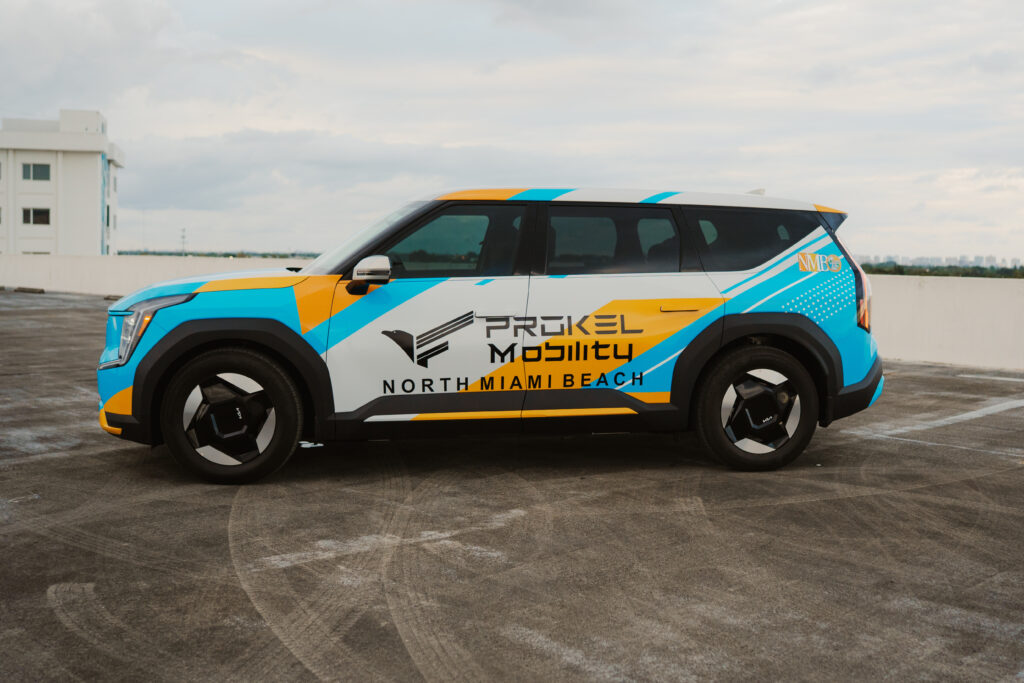
Logan McLeod talks about traffic with both empathy and ambition. The former Lyft exec has spent years in the trenches of urban transportation, launching ride-share programs across more than 300 college campuses. But now, as Senior Vice President at ProKel Mobility, he’s turning his focus to something bigger: fixing how cities like Miami actually move.
“Everyone complains about congestion, but the real issue isn’t just cars – it’s that public transportation options don’t talk to each other,” McLeod told Refresh Miami. “You need three different apps just to take one trip. That’s the problem we’re solving.”
That solution is RideKel, a mobile platform developed by the South Florida–based startup. The app combines every local transit mode – buses, trains, trolleys, and even on-demand electric SUVs – into one system. Instead of bouncing between apps or waiting for an unpredictable connection, users can plan, book, and track their entire journey in real time.
ProKel’s first major rollout, in North Miami Beach, has made the city a quiet model for how tech can reshape public mobility. Through RideKel, residents can summon free, electric on-demand rides that connect directly with Miami-Dade Transit and Tri-Rail services. It’s the first system in the county to integrate city and county transit networks under a single digital umbrella.
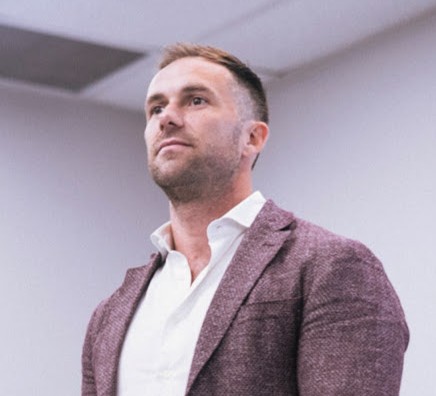
“Our goal isn’t to replace public transportation, it’s to make it finally work the way it should,” McLeod [pictured below] said. “If you can get off a bus and immediately hop into an on-demand electric SUV that’s already waiting for you, that changes the entire experience.”
It’s a small but meaningful shift in a region where car dependency runs deep. McLeod knows that for most Miamians, convenience beats good intentions. That’s why ProKel designed its system to feel familiar to anyone who’s used Uber or Lyft while still cutting down on emissions and congestion.
“It’s the same user experience people already know,” he asserted. “But instead of adding more cars to the road, we’re connecting people to existing transit.”
Behind the app is a full-service operation with 150+ employees in Florida. ProKel manages everything from driver recruitment to vehicle maintenance to scheduling. That approach gives cities a ready-made solution that can be customized for local needs. The company now runs more than a dozen mobility programs across the U.S., including in Orlando, Jacksonville, and New York, and aims to reach 45 cities by 2028.
The North Miami Beach project, McLeod said, has already caught the attention of city leaders across Florida and beyond. “They see what’s happening here and say, we want that,” he said. “This is about creating something that can scale – a system that improves access to jobs, healthcare, and education while making cities more efficient.”
For McLeod, who’s launched more than 200 mobility services in his career, the most rewarding part isn’t the technology itself. It’s seeing what happens once the system is live.
“When you build something that helps a person get to work, or lets someone visit a doctor who couldn’t before, that’s when it all makes sense,” he said. “We’re moving people and helping communities grow.”
READ MORE IN REFRESH MIAMI:

I am a Miami-based technology researcher and writer with a passion for sharing stories about the South Florida tech ecosystem. I particularly enjoy learning about GovTech startups, cutting-edge applications of artificial intelligence, and innovators that leverage technology to transform society for the better. Always open for pitches via Twitter @rileywk or www.RileyKaminer.com.
Latest posts by Riley Kaminer (see all)