
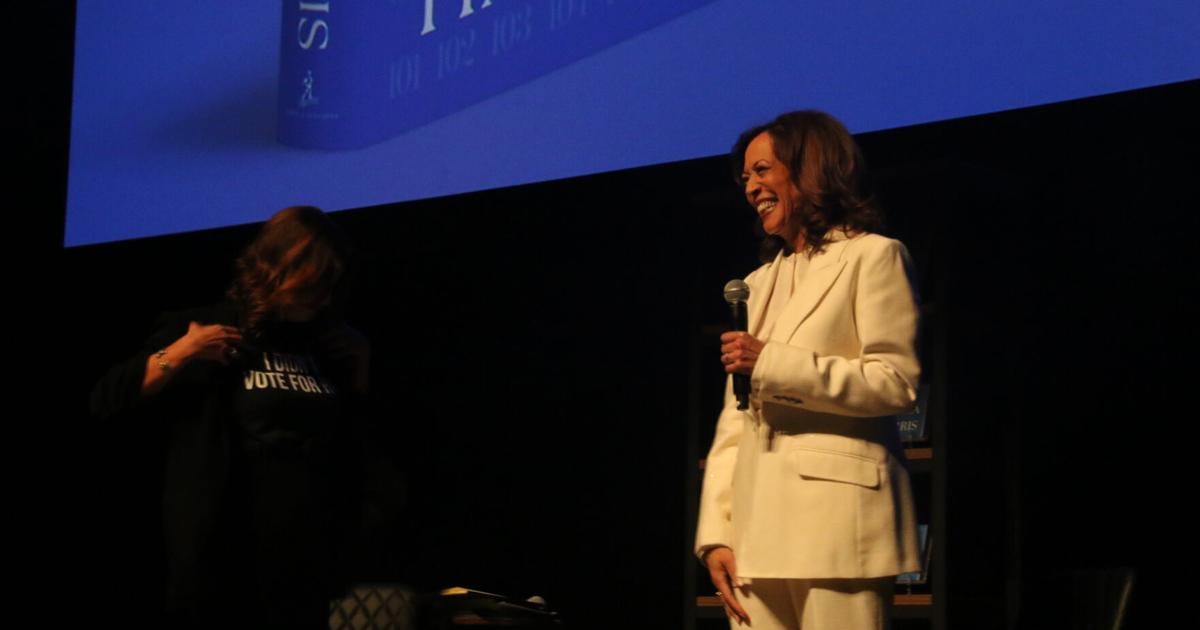
More than 2,000 supporters cheered for former Vice President Kamala Harris on Thursday as she stepped onto the stage of the Ziff Ballet Opera House at the Adrienne Arsht Center, dressed in an all-white suit.
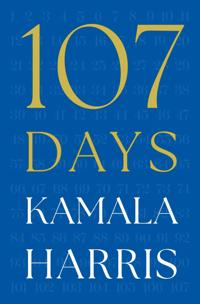
The former vice president was in Miami to conclude a promotional tour for 107 Days, her recent memoir. The book tells the story of her historically short presidential campaign, beginning on July 21, 2024, when incumbent Joe Biden pulled out of the race, and ending with her crushing defeat on Nov. 5, 2024, 107 days later.
Released on Sept. 23, the book sold 350,000 copies in its first week, according to publisher Simon & Schuster, and became a New York Times bestseller. It has received mixedreviewsfrom critics, with some praising it for its frank behind-the-scenes look, and others arguing the book lacked reflection on the causes of the Democrats’ defeat.

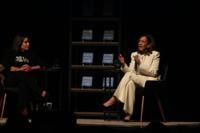
The discussion was moderated by Ana Navarro (left), political commentator and co-host of ABC’s “The View.”
(Béatrice Vallières for The Miami Times)
Harris has been traveling the country for the past two months to promote the memoir. Previous stops on the 18-date tour have been interrupted bypro-Palestineprotesters, but Thursday evening’s talk went on without disruption.
Harris sat down with Ana Navarro, co-host of ABC’s The View, to discuss her experience on the campaign trail, the genesis of the book, and the country’s current political climate in front of a sold-out audience.
(Simon & Schuster)
From Biden’s phone call announcing he was quitting the race to her endorsement by Puerto Rican singer Bad Bunny the day after comedian Tony Hinchcliffe called Puerto Rico a “floating island of trash” at a Trump rally — a coincidence, she noted — Harris revisited some of the defining moments of her campaign.
She described writing the memoir as a way of “processing” the loss, which she called “traumatizing.” The chapter recounting election night was the hardest to write, she said, adding that drafting it was also the first time she and her husband, Douglas Emhoff, had ever spoken about that evening.
“We all believed we were gonna win,” she said, comparing the grief she felt after the election to the one she felt after her mother’s death.
Harris also reminded the audience of her concession speech at Howard University the day after the election, in which she had told her supporters that “sometimes the fight takes a while.” “I told everyone, when we fight, we win. And I had to reconcile that for them,” she explained, adding she didn’t want people to be “completely deflated” after the election.
Asked about the role that sexism and racism might have played in her losing the presidency, the former vice-president gave a measured answer. “Do these things exist in America? Yes. Have I ever let them deter me?” she said, noting her history as the first woman vice-president and as the second Black woman to serve in the U.S. Senate.
Navarro also asked Harris to respond to former First Lady Michelle Obama’s recent remarkthat the United States was “not ready” for its first female president. Harris declined to address the comment directly, but said she was “not hearing that America is not ready” and added that “that’s not the message we should be sending to Americans.”
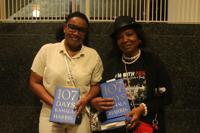
I feel positive, and I think she [Harris] encouraged all of us not to give up, to continue to fight,” said Isadora Adams (right), a retired education worker, who attended Thursday’s talk with her daughter Rasheba Adams (left). “I think we’re going to win this fight. Eventually, we are going to win.”
Harris was also asked to comment on her relationship with former President Biden, after her criticism of him in the book drew attention from the press. “It’s a very good one, we’ve been through fire together,” she said, while also admitting that “it’s a complicated relationship.”
The conversation drifted to current events, including the impending release of all case files involving convicted sex offender Jeffrey Epstein. Harris drew on her background as a prosecutor to call for the rich and powerful to be held accountable.
She also took the opportunity to slam the Trump administration’s prosecution of political enemies, deploring the “destruction of the rule of law.” “As president, I would never have told the Department of Justice who to prosecute, who to go after,” she said.
Replying to an audience member’s question about feeling helpless, Harris acknowledged the difficult political climate, but called on her supporters to remain hopeful. “Don’t ever let your spirit be defeated, because then they’re winning,” she said.
“We have to see the goodness that we see everyday and not let the darkness overshadow,” Harris said, adding that “there is joy in the fight.”
Still, Harris offered no clarity on the evening’s lingering question: whether she plans to run again in 2028. When Navarro asked which factors one weighs when making that decision, Harris pointed to the toll campaigns can take on families — a topic she noted is “no longer off-limits” for political attacks. “It’s a brutal environment right now to be running for office,” she said.
She also spoke about the physical and emotional demands of a presidential campaign. “You gotta have the stamina, those are long days,” she said. When Navarro asked whether she had it, Harris laughed. “Oh, I definitely have it,” she said. But running for president, she noted, “looks easier than it is.”