
November marks National Family Caregivers Month, honoring the nearly one in four U.S. adults who provide essential, often unpaid care — a strain particularly acute in Florida, where 4.45 million adults serve as family caregivers.
For mothers like Sabrina Darling and Ebony Stevens, who shoulder the unrelenting demands of caring for children with Sickle Cell Disease (SCD), this month highlights a lifelong reality: emotional exhaustion, financial strain, and constant advocacy in a system that often misunderstands the illness.
The introduction to SCD

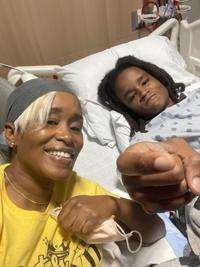
For Sabrina Darling, mother of two adult sons with SCD, the diagnosis was an abrupt and terrifying introduction to a lifelong fight.
(Courtesy of Sabrina Darling )
For Darling, the mother of two adult sons with SCD, the diagnosis was an abrupt and terrifying introduction to a lifelong fight. Though informed of the genetic risk during pregnancy, she was unprepared for the reality that hit during her oldest son’s first crisis around age two.
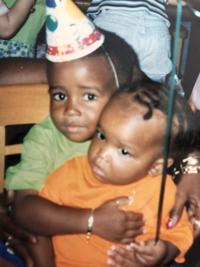
Sabrina Darling’s sons, when they were babies, were told they wouldn’t live past 21. They are now 29 and 31.
(Courtesy of Sabrina Darling)
“It wasn’t described to me. I didn’t know what to expect. He’s crying one minute, and then he’s laughing the next minute,” she said.
The challenge doubled when her younger son was also diagnosed. At times, both children were hospitalized at once.

Kastin and Kj Marley, Sabrina Darling’s sons.
(Courtesy of Sabrina Darling)
“One would be on one side, the other would be on the other side, and I would literally get the chair and sit it in the middle, because you’re not going to make me choose which room I’m going to be in,” Darling said, before successfully insisting they be placed in the same room.
Stevens, the mother of three sons with SCD, including identical twins, learned of the disease in her family only after a moment of crisis revealed her husband had it.
“He never told me what was wrong,” she said.

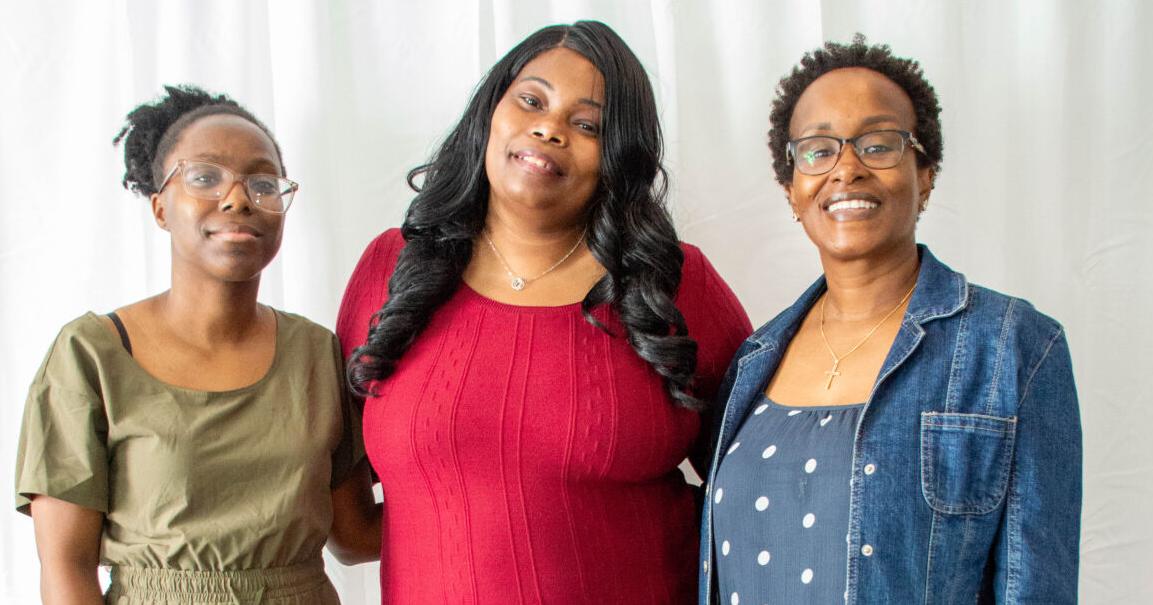
Ebony Stevens, left, mother of three sons with SCD, learned of the disease in her family only after a moment of crisis.
(Courtesy of Naomie Pigatt)
Her deeper understanding began when Dr. Ofelia Alvarez, a pediatric hematologist at the University of Miami, informed her that her newborn twins screened positive for SCD. The disease became painfully real when one twin, at just five months, screamed uncontrollably during his first crisis. Stevens initially mistook the crisis for typical baby behavior, later realizing the child was in intense pain.
“I was so uninformed that I didn’t even know how to nurture him in that moment,” she recalled, highlighting the immense guilt that followed.
Daily life

Ebony Stevens credits her support system, including her husband and her oldest children, who help her when a crisis hits.
(Courtesy of Ebony Stevens)
For SCD caregivers, daily life is medical vigilance. Nearly all must constantly monitor symptoms, track pain, and stay in close communication with providers.
Dr. Alvarez said the biggest challenge is unpredictability.
“The child may be perfectly well, and then they start developing fever or pain. Whatever plans they had may be totally changed.”
Stevens manages complex medical needs for three young boys — 8-year-old twins and a 4-year-old — including six to seven medications each, and a constant rotation of appointments. The condition’s unpredictability forced her to homeschool them.
“When they were in public school, they were getting sick from anything. A minor cold would cause them to go into ICU with Acute Chest Syndrome or pneumonia,” Stevens said.
She maintains a constant state of readiness, including a comprehensive plan of care and a hospital bag “already packed in the closet, just a grab and go.” Crucially, she has focused on teaching her children to self-advocate.
“I need you to know your full name. I need you to know what your condition is. I need you to know that I don’t get an IV. I have a port,” Stevens explains to her children.
Darling’s constant triage — spending days trying to manage a child’s fever at home before heading to the hospital — underscores how heavily she relied on her mother and grandmother to care for her other sick child during those crises.
Mental health
Caregiving for a child with sickle cell can be emotionally overwhelming. Nationally, SCD caregivers report emotional stress at about twice the rate of general caregivers.
Darling coped by pushing her emotions aside.
“I just did what I had to do, and it didn’t leave any room for that. If I created any kind of space for that, then I felt like that was a weakness and that I couldn’t show up as my best self for them,” she said.
Her sons, now 31 and 29, today thrive as artists, defying the early prognosis that they “would not live past 21.”
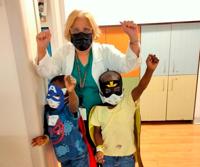
Dr. Ofelia Alvarez, pediatric hematologist at the University of Miami, with Ebony Stevens’ twins.
(Courtesy of Ebony Stevens)
Stevens describes a complex emotional trajectory, finding the guilt — feeling she was the reason her children suffered — to be the most debilitating. Though this has transitioned into healing, the profound anxiety remains.
“I live with this anxiety of, when is the next crisis? Like this is too long of no crisis. We’re doing a little bit too well. It has to be around that corner, right?”
Dr. Thomas Harrington, a hematologist who treats adults with SCD at UM/Jackson, said the strain is significant.
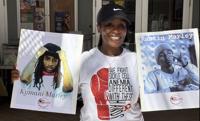
Sabrina Darling now advocates for sickle cell patients and often offers massage services at SCDAA events.
(Courtesy of Sabrina Darling)
“One child with sickle cell in a family puts a huge burden on the family. The family will do everything, take care of them, but it’s a stress, and the patients themselves feel their burden on their family, and depression is very common.”
Dr. Alvarez says many caregivers develop PTSD from repeated emergencies and watching their children in extreme pain, emphasizing the importance of emotional support.
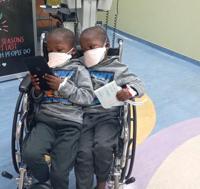
Ebony Stevens’ twins each take six to seven medications.
(Courtesy of Ebony Stevens)
Financial burden
In Florida, caregiving is also financially devastating. According to the AARP Florida Caregiver Report, 80% of caregivers pay an average of $7,200 out of pocket each year — about 25% of their income, leading to financial setbacks and drained savings.
Both mothers recount sacrificing their careers for their children’s health. Darling left her postal service job for temporary work that allowed flexibility.
“I wasn’t obligated to anyone’s assignment, and if they got sick, then I could always leave, so that’s what I did.”
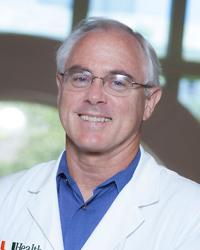
Thomas Harrington, M.D., an assistant professor of Clinical Medicine in the Division of Hematology at the University of Miami Miller School of Medicine. He directs the Adult Sickle Cell Program and the Adult Program at the University of Miami Hemophilia Treatment Center.
(Courtesy of Naomie Pigatt)
Later, Darling worked overnight shifts in medical records at Baptist Hospital to stay close to her sons during hospitalization, before eventually pursuing her passion for massage therapy, which helps her sons manage pain. She started her own business, With These Hands, for the explicit purpose of creating a flexible schedule around her children’s needs.
Darling credits her mother, who provided housing when her children were young, and public assistance like Medicaid, which helped cover specialty medications costing $1,200 to $3,000 monthly.
Stevens said corporate America was incompatible with SCD caregiving.
“I’ve always had to choose the boys’ health over my job. I’ve walked off of numerous jobs, or I quit numerous jobs. I’ve been fired from numerous jobs because an employer doesn’t understand,” she said.
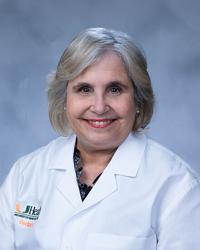
Ofelia A Alvarez, M.D. Professor of Pediatrics at the University of Miami and the Director of the Pediatric Sickle Cell Program.
(Courtesy of Naomie Pigatt)
Stevens has been out of work since 2022, relying on dwindling savings and strict budgeting to sacrifice their wants for basic needs. Though her children are on disability, the strain is immense for a family of eight, forcing them to live paycheck to paycheck.
Navigating the system and finding support
Both mothers describe frequent battles against the stigma around pain management, a common issue for Black patients with SCD. Darling recounted one time when her sons, who viewed medication as a “very last resort,” were labeled as drug seekers.
Stevens recounted another experience with her husband: “He was crying in pain, and an attending doctor told him, ‘Do we need to call security?’”
She believes the mistreatment stems from cultural misunderstanding and racial bias, saying Black patients “don’t look like what they’re going through.”
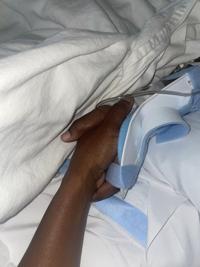
When both of her sons were hospitalized at the same time, Sabrina Darling would pull a chair and sit in the middle of the hallway between both children’s rooms.
(Courtesy of Sabrina Darling)
Critical support came from the Sickle Cell Disease Association of America (SCDAA) Miami-Dade Chapter and their physicians, including Alvarez and Harrington. Darling was connected to patient advocate and sickle cell warrior Naomie Pigatt during a breaking point, which pulled her into advocacy. Stevens also connected with Pigatt through the doctors.
Both women now advocate for increased awareness, better school resources, and more mental health support for families dealing with chronic pain. Stevens is starting a non-profit to support and offer resources to SCD caregivers, and her children are launching a YouTube channel to share their experiences.
Stevens emphasizes that caregiving requires a community:
“This isn’t just a woman’s show. It is a team effort,” she said, crediting her husband, doctors, and older children for helping her raise three “sickle cell warriors.”