
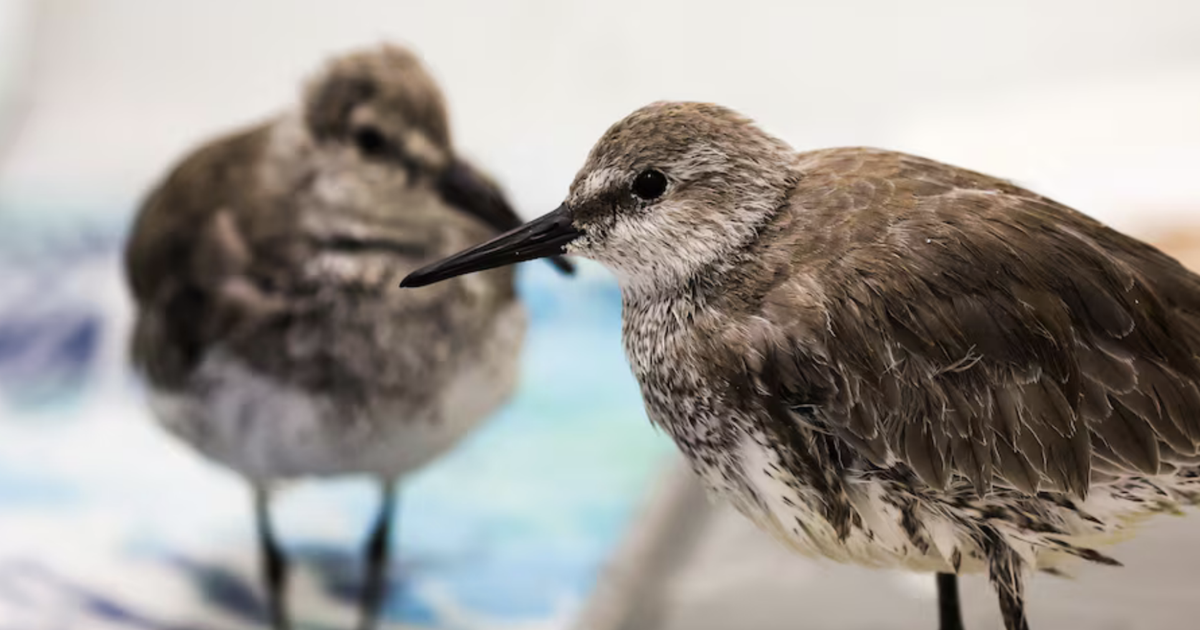
In a room about the length of three beach towels, several small, hobbling birds splashed in shallow water tins and nibbled at mealworms — a favorite food.
Their chirps were high and clipped, like stepping on a dog toy over and over again.
These red knots, a threatened shorebird species, were recuperating at the Seaside Seabird Sanctuary’s hospital last week. The Indian Shores sanctuary houses about 80 permanently injured birds and rehabilitates thousands more each year.
Over the past month, the sanctuary has taken in about a dozen red knots. Park rangers from Fort DeSoto Park brought in a majority of them. One had injuries from a predator, another likely struck something. But most were weak and unable to support themselves or fly away.
When the hospital admits red knots, it’s typically multiple at a time because they arrive to Tampa Bay in flocks for a pit stop during one of the longest animal migrations in the world. In years past, they’ve had dozens of these shorebirds in their care after red tide blooms poisoned them.
“For this particular group it seems more related to migration exhaustion,” said Melissa Edwards, the sanctuary’s avian hospital director. “They’re all pretty emaciated.”
Habitat loss, combined with scarce food sources, means red knots are often weaker during their migration and more susceptible to environmental toxins or predators, the sanctuary said in a post on Facebook.
“They’re one of my favorite patients that we get,” Edwards said. ”Although it’s a little more stressful because they’re a threatened species.”
A red knot’s stocky body is less than a foot long, but its wingspan about doubles that. The bird, a type of sandpiper, sports a white, sooty chest in the winter and rusty, vibrant colors in the spring.
They travel up to 18,000 miles each year, breeding in the Canadian Arctic and traveling to South America for the winter, according to the U.S. Fish & Wildlife Service.
“You wonder what they’ve seen and how many miles they’ve traveled in their lives,” Edwards said. “You feel a lot of pressure to get them back out there.”
The federal government listed red knots as a threatened species in 2015 after their population declined.
During their migrations, red knots face several threats.
In Delaware Bay, for example, overharvesting has caused horseshoe crab populations to dwindle. Their eggs are a primary food source for the red knot and a vital last meal before they nest in Canada’s Arctic tundra.
But all along the red knot’s flight path, development and sea-level rise caused by human-caused climate change have shrunk habitats where the birds rest and fuel up, federal officials said.
Red tide is another pain point for the shorebird. In 2018, the Tampa Bay Times reported a spike in red knot admissions to the sanctuary caused by the toxins.
Birds become poisoned after eating marine life killed by red tide.
“With the frequent red tide events, it doesn’t really leave the ecosystem, even if there isn’t an active bloom,” Edwards said.
Low levels of red tide were recorded in northwest Florida but nowhere else in the state last week, according to state wildlife officials.
Researchers have found birds with the toxin in their systems simply from chronic red tide exposure, Edwards said.
In 2022, the sanctuary reported a rush in red knots to its hospital after the birds showed signs of poisoning from red tide, despite no active blooms.
“Unfortunately, it’s all related to us,” Edwards said.
The sanctuary has been treating the most recent arrivals with fluids and medications to help the red knots dispel environmental toxins. They’ve also been feeding them a high-calorie diet to get their weight up.
“Because they’re so small, their metabolism is much higher, so they require just constant nutrition,” Edwards said.
Once the birds feel better, a group can eat thousands of mealworms daily. About 10,000 mealworms, which the birds can go through in a few days, cost about $100.
“Our insect budget goes up quite a bit whenever we have red knots,” Edwards said.
Edwards said most of the red knots recovered well in their makeshift hospital room. Over the weekend, the birds were moved outside after gaining more strength. Edwards hopes to release them late this week.
“You want to give them their space on the beach because they’ve traveled thousands of miles,” Edwards said. “They need to rest.”
“The more they’re constantly disturbed and flushed, the more likely they’re going to become compromised and potentially end up in our hospital.”